
When camping, hiking, or traveling off-grid, having access to clean drinking water is essential. The right portable water filter reduces bacteria, protozoa, and particulates, while staying lightweight and easy to use. This guide highlights five highly capable camping water filters and purifiers, spanning compact squeeze models, gravity-fed straws, and rugged inline systems. Each option below emphasizes portability, filtration performance, and practical use scenarios—from solo backcountry trips to family RV adventures. Read on to compare key features and find the best fit for your outdoor routine.
| Product | Brand | Type | ||
|---|---|---|---|---|
| Sawyer SP128 Mini Water Filtration System | Sawyer | Mini inline filter | 0.1 micron | Backpacking, travel, emergencies |
| Waterdrop Gravity Water Filter Straw (1.5 gal bag) | Waterdrop | Gravity-fed straw | 0.1 micron | Group outings, long hikes, base camps |
| Camco Tastepure RV Water Filter (40043) | Camco | Inline filter | Multi-stage filtration with GAC & KDF | RV camping, vehicles, on-site water |
| Sawyer SP129 Squeeze Water Filtration System | Sawyer | Squeeze system | 0.1 micron | Lightweight backpacking, travel |
| Survivor Filter PRO X | Survivor Filter | Electric purifier | Virus, bacteria, parasites | Emergency kits, bug-out bags, expeditions |
Choosing the right filter depends on how you travel, how much water you need, and how much weight you’re willing to carry. The selections below cover compact personal filters and more capable options suitable for group use or RV trips. Each product section provides practical usage notes and key features to help you decide which model best fits your adventures.
Sawyer SP128 Mini Water Filtration System

The Sawyer SP128 Mini is a palm-sized inline filter designed for solo travelers and emergency kits. It weighs about 2 ounces and uses a 0.1 micron absolute filter to remove bacteria and protozoa. The unit attaches to compatible drinking pouches, 28 mm bottles, or hydration bladders, and can be used with the included straw to drink directly from a water source. Its compact construction makes it ideal for ultralight hiking and quick-fill scenarios where space is at a premium.
Waterdrop Gravity Water Filter Straw
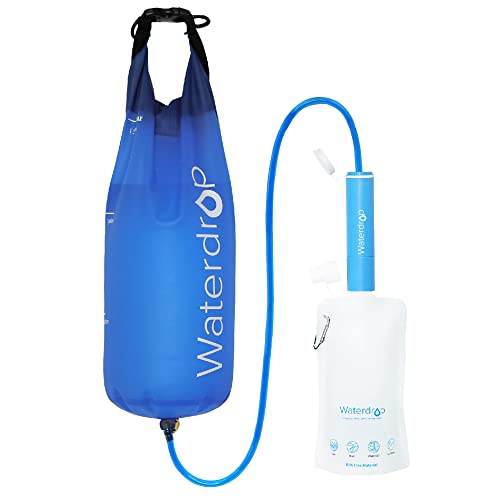
The Waterdrop Gravity Straw pairs a 0.1-micron ultrafiltration membrane with premium coconut shell activated carbon in a 5-stage filtration system. It ships with a 1.5-gallon gravity-fed bag, allowing you to fill from a distant source and filter without pumping. Capable of handling all-day hydration needs, it also maintains a robust flow rate up to 700 ml per minute. This setup suits campers who prefer gravity-fed simplicity and greater water capacity for groups or families.
Waterdrop 1.5 Gal Gravity Water Filter Straw (Pack of 2)
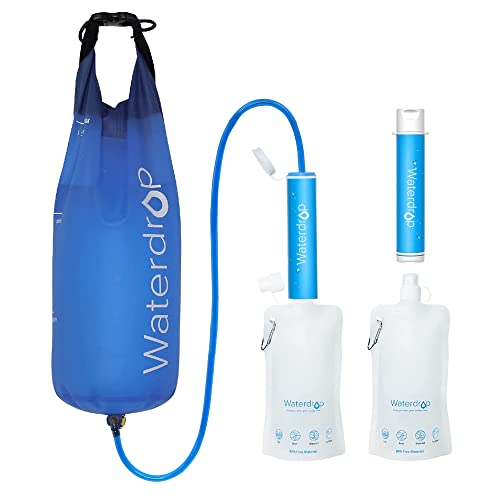
This 5-stage Waterdrop pack features two gravity-fed straws with the same 0.1-micron filtration and effective chlorine, sediment, odor reduction. The 1.5-gallon bag supports longer trips or small-group outings, delivering a higher volume of clean water with each fill. With a shared bag, you can reduce refills and keep everyone hydrated on longer hikes or camping weekends.
Camco Tastepure RV Water Filter

The Camco Tastepure inline filter uses Hex-Flow technology and a six-step filtration process, combining GAC and KDF media to reduce chlorine, taste and odor, sediment, and contaminants. It’s NSF/ANSI tested for lead-free compliance, offering reliable inline filtration for RVs and shore power trips. The compact design fits most standard inline housings, making it a practical upgrade for those who value consistent taste and water safety in mobile setups.
5 High-Capacity Emergency Water Straws

This set includes five lightweight, compact filters designed for rapid deployment in emergencies or off-grid situations. Each filter removes over 99.99% of bacteria and parasites and can handle microplastics down to 0.1 micron. With a total weight around a few ounces, these straws are designed for quick field use, bug-out bags, or adding a safety layer to longer treks where access to clean water might be uncertain.
Survivor Filter PRO X

The Survivor Filter PRO X is an electric, portable water purifier weighing 13.5 ounces, designed for those who require filtered water from diverse sources with minimal effort. It removes a broad range of contaminants including bacteria, parasites, and some viruses, according to NSF/ANSI standards. It supports USB or battery-powered operation and is highly suitable for emergency kits, bug-out bags, or expeditions where access to power and water quality varies significantly.
Buying Guide: Key Considerations For Choosing A Camping Water Filter
- Filtration efficacy: Look for micron size and tested standards (0.1-micron filters are common for bacteria and protozoa). Some devices also target viruses or heavy metals—understand your typical water sources and required protection.
- Capacity and flow: For solo trips, compact filters with fast flow are ideal. Group trips benefit from gravity-fed systems or higher-capacity options. Consider your daily water needs and refill frequency.
- Weight and bulk: Ultralight hikers prioritize compact filters like mini squeeze systems. RVers may accept a bit more weight for higher reliability and ease of use.
- Source compatibility: Some filters attach directly to bottles or pouches, while others require separate bags or gravity setups. Ensure compatibility with your existing gear.
- Maintenance: Reusable cartridges and the availability of replacement parts are important. Look for easy cleaning procedures and field-replaceable components.
- Power needs: Electric purifiers offer convenience but require power sources. Manual or gravity systems are power-independent, which can be critical in remote areas.
- Durability and environment: Consider temperature ranges, rugged construction, and UV exposure. Water quality varies by location, so a versatile system is advantageous.
- Taste and odor: Activated carbon components help improve taste and odor, which can affect hydration adherence during long trips.
When selecting a setup, balance filtration strength with practical factors like weight, maintenance, and how you plan to use it. For solo hikers, a compact 0.1-micron filter that attaches to a bottle or pouch may be ideal. For families or extended trips, gravity-fed systems with larger storage help maintain steady water supplies. For emergencies, having a lightweight set of high-capacity straws or a compact purifier as a backup can enhance preparedness without sacrificing emergency readiness.