
Finding the right 55 qt cooler depends on your outdoor plans, storage needs, and transport style. This guide highlights five popular 55-quart options, explained for different buyers—from campers needing rugged durability to beachgoers wanting lightweight transport. Each profile notes who it’s best for, why it stands out, and one practical limitation to consider. A quick comparison table is included to help you decide at a glance.
| Product | Best For | Key Benefit |
|---|---|---|
| Titan Hard Ice Chest Cooler | Heavy-use outdoor enthusiasts | Deep Freeze insulation with Microban protection |
| Lifetime Hard Cooler | Bear-prone or rugged environments | Bear resistance up to an hour and durable construction |
| Igloo Marine Cooler | Budget-conscious boaters and anglers | UV protection and comfortable, non-slip handles |
| VEVOR Ultra-Light Hard Cooler | Travelers needing light transport | Much lighter at 20.5 pounds with long ice retention |
| AYAMAYA Backpack Cooler | Active day trips with easy carry | Leakproof backpack design with 40-can capacity |
Lifetime Hard Cooler, High Performance Ice Chest

The Lifetime Hard Cooler is designed for rugged outdoor use and bears protection. Its 55 qt capacity supports long trips with stacked ice and beverages. Notable features include a drain spout compatible with garden hoses for easy cleanup and a stainless steel bottle opener that integrates with padlock compatibility for security and convenience.
Best for: Outdoor enthusiasts in bear-prone areas or those who value quick, clean drainage and security features. Why: The bear-resistance claim and practical drain design help maintain ice and reduce cleanup time.
Limitation: Details on overall ice retention time are not specified beyond the bear-test feature, so keep expectations in line with your trip length.
Igloo Marine Cooler | Insulated Hard Shell Ice Chest

The Igloo Marine Cooler emphasizes sun resistance and practical handling for boaters and anglers. UV inhibitors protect against sun damage, and non-slip, comfort-grip handles improve control in wet conditions. The latch design combines stainless steel in the hinge area for durability with plastic in the snap area for a longer life and secure closure.
Best for: Boat owners and waterfront campers seeking a budget-friendly, durable model with comfortable transport. Why: UV protection and water-ready handles address typical outdoor exposure.
Limitation: The configuration relies on standard latching rather than premium locking mechanisms, which may matter in high-traffic areas or with valuable contents.
Titan Hard Ice Chest Cooler with Microban
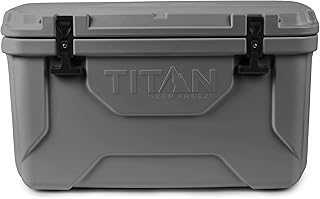
The Titan hard cooler uses uni-body roto-molded construction with thick polyurethane insulation to keep ice for up to four days. It includes Microban antimicrobial protection to reduce odors and stains over time, and heavy-duty, corrosion-resistant latches for reliable operation. The 55-quart size accommodates substantial food and drink loads.
Best for: Campers and tailgaters who need long ice retention with easy cleaning and odor control. Why: The four-day ice retention and Microban protection are strong advantages for multi-day adventures.
Limitation: Microban protection is built into the product; however, real-world performance can vary with load and ambient temperature.
Backpack Cooler – AYAMAYA Upgrade

The AYAMAYA Backpack Cooler combines a large 40-can capacity with leakproof design and multiple storage pockets. Its five-layer insulation, thick PEVA liner, and waterproof insulation foam provide cold, hot, or fresh keeping capabilities for extended periods. The sealed waterproof zipper and RF welding help prevent leaks, making it suitable for beach trips, picnics, or travel.
Best for: Day-trippers and hikers who want hands-free transport without sacrificing insulation. Why: The backpack format enables easy mobility and access while keeping contents organized.
Limitation: Not a traditional stationary cooler; capacity is solid but may feel smaller for very large gatherings compared with full cooler totes.
Buying Guide
What matters most when choosing a 55 qt cooler?
- Ice retention: Consider insulation thickness, gasket quality, and whether the cooler is roto-m molded or made with other construction. Longer ice retention helps reduce daily topping up of ice.
- Durability and build: If you’ll expose the cooler to bear areas, rough terrains, or frequent transport, opt for rotomolded designs or heavy-duty latches and robust hinges.
- Weight and portability: A lighter model eases transport, especially for hiking or beach trips. Backpack styles offer mobility but may compromise internal layout.
- Drainage and cleaning: A drain spout and easy-clean interior liner reduce maintenance. Leakproof linings help prevent spills inside packs or cars.
- Protection features: UV resistance, antimicrobial protection, and lid design contribute to longevity and odor control in hot climates and long trips.
- Security and accessories: Consider locking compatibility, bottle openers, and secure latches if you’re leaving the cooler unattended.
Frequently Asked Questions
- What is the advantage of a 55 qt cooler over smaller sizes?
Answer: A 55 qt cooler offers more ice and food capacity for longer trips, reducing the need for frequent reloading while still staying manageable in transport. - Which cooler is best for long-range camping?
Answer: Models advertising up to several days of ice retention with robust insulation, like roto-molded options, are typically best for multi-day camping. - Are lightweight coolers less durable?
Answer: Lighter models can be easier to carry but may use thinner insulation or lighter materials; balance weight savings with desired durability. - Do all 55 qt coolers come with built-in drains?
Answer: Most do, but it is best to verify drain type and compatibility with garden hoses if you plan to drain large amounts of water. - Is antimicrobial protection important?
Answer: Microban and similar protections help reduce odors and stains, especially with long-term use and frequent opening. - Can I stack ice with beverages in a 55 qt cooler?
Answer: Yes, but consider ventilation and organization; separating foods and liquids can improve cooling efficiency and access.