
Outdoor LED spot lights are ideal for lighting walkways, landscapes, walls, and entryways while saving energy. This guide highlights five reliable options that fit common outdoor needs, from garden accents to security-focused flood lighting. Whether you want subtle landscape illumination or broad-area brightness, these picks balance efficiency, durability, and ease of installation for American homes. The products below are grouped by best use cases to help you decide quickly.
Summary table of selected products:
- Gonhom Par38 Outdoor Flood Light Bulbs (2-pack) — Best for general porch and yard lighting with wide 180° beam.
- Onforu 120W Flood Lights — Best for large outdoor areas and security with high lumen output.
- SUNVIE 12W Landscape Lights — Best for garden paths and decorative accents with adjustable heads.
- REEGOLD 12V Landscape Lights — Best for low-voltage landscapes with durable aluminum housing.
- LUTEC 6222W Dual-Head Floodlight — Best for flexible coverage and security lighting with dual heads.
Gonhom Par38 LED Flood Lights Outdoor Bulb
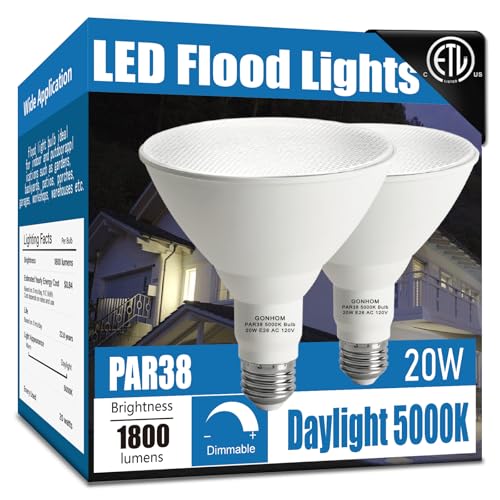
Best for: Homeowners who want bright porch or garage lighting with simple bulb replacements. These are dimmable, 1800 lumens, and replace up to 200W with a 20W design. They provide daylight 5000K illumination and a wide reach, suitable for broad exterior areas without complex installation. The 180-degree beam angle makes them useful for façades, driveways, and entryways.
Why this pick: The Gonhom bulbs emphasize energy savings and long life. With a claimed lifespan around 25,000 hours, they reduce maintenance. The dimmable feature helps tailor brightness for different evenings or events. Aluminum and plastic construction aids cooling and resilience against outdoor elements. The 110V–120V operation aligns with standard American wiring.
Best for: People seeking a straightforward, energy-efficient alternative to high-wattage bulbs who don’t require smart controls or sensors.
Limitations: This option is bulb-based, so it depends on compatible fixtures and might require a suitable dimmer for smooth brightness control.
Onforu 120W Flood Lights Outdoor

Best for: Large outdoor spaces such as yards, garages, and building perimeters that require strong, broad illumination. These flood lights deliver up to 12,000 lumens and a 120° beam, helping deter intruders and reduce dark zones after dusk.
Why this pick: The high-lumen output combined with a wide beam makes it a strong security-oriented option. The fixture uses energy-efficient LEDs and offers a straightforward plug-in setup, avoiding complex wiring. The design supports wide-area coverage, which is ideal for open spaces or long driveways.
Best for: Property owners who want powerful lighting with simple plug-and-play installation and no motion sensor or dusk-to-dawn feature.
Limitations: It does not include motion sensors or integrated dusk-to-dawn features, so it relies on manual operation or an external switch or automation solution.
SUNVIE Outdoor Landscape LED Lighting
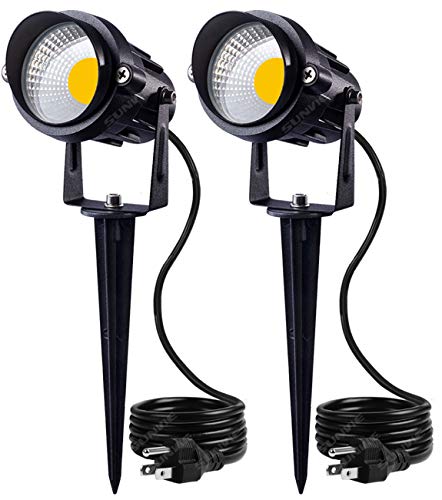
Best for: Garden paths, patios, and subtle landscape accents. These 12W LEDs provide a warm 3000K glow with a 900-lumen output and rotatable heads, making them flexible for highlighting trees, fences, and architectural features.
Why this pick: The IP65-rated waterproof design ensures reliability in rain and snow. The thick aluminum body and glass lens balance durability with aesthetic appeal. The 120° beam angle and 270° adjustable head offer versatile installation options for uneven landscapes and unique focal points.
Best for: Homeowners who want an affordable, weatherproof option for decorative and safety lighting along walkways without needing high brightness.
Limitations: This option uses a warmer 3000K color temperature, which may not match daylight or cooler white tones preferred for some security setups.
REEGOLD Low Voltage Landscape Lights
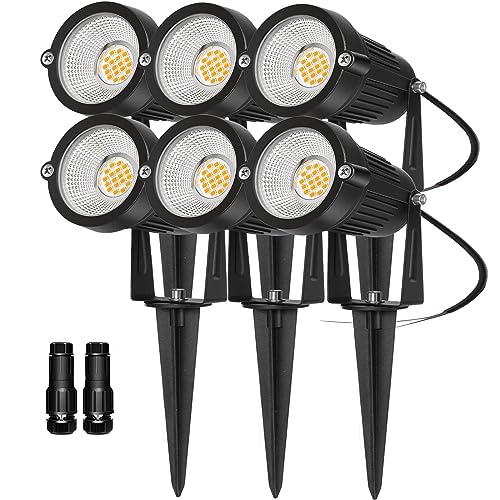
Best for: Customizable, low-voltage landscape lighting along paths, driveways, and tree lines. These 12V–24V lights are designed for steady illumination with components suited to longer-term outdoor use.
Why this pick: The product emphasizes a longer service life (up to 50,000 hours) and a robust aluminum shell for heat management, which supports outdoor durability. The low-voltage setup can be safer for DIY installations and reduces energy use compared with high-wattage options. IP65 rating protects against water jets and condensation.
Best for: Those installing multiple fixtures in a planned landscape with low-voltage wiring and configurable layouts.
Limitations: Low voltage requires proper wiring and transformers, which adds installation planning time for some projects.
LUTEC 6222W Dual-Head Floodlight

Best for: Outdoor spaces needing flexible coverage with two independent light heads. This dual-head design helps target different zones, such as a doorway and a shrub border, without additional fixtures.
Why this pick: The 32W total consumption yields up to 3500 lumens at daylight white (5000K), offering bright, even coverage. The full-metal design provides durability in variable weather, and the dual heads allow adjustment to optimize illumination angles around corners and walls.
Best for: Property owners seeking adaptable, wide-area security lighting with straightforward mounting and lasting construction.
Limitations: The unit is a fixed fixture with limited smart features; for automation, it may require external switches or smart plugs.
Buying Guide
What should you consider before buying outdoor LED spot lights?
Purpose matters. Decide whether you need decorative landscape lighting, security flood lighting, or path illumination. Lumens, beam angle, and color temperature will shape the effect and energy use. For security lighting, higher lumens and wider beams reduce shadows; for ambiance, warmer colors and softer output are preferred.
Beam angle and brightness: how to choose
A wider beam angle (90–120 degrees) covers more area with fewer fixtures, ideal for yards and driveways. Narrow angles focus light on focal points like a statue or flag. For large spaces, aim for high total lumens (thousands per fixture) and consider multiple fixtures to reduce glare and shadows.
Power requirements: line voltage vs. low voltage
Line-voltage lights (120V) are generally simpler to install but may require more robust wiring. Low-voltage lights (12V–24V) are safer for DIY projects and can be more energy-efficient with proper transformers, but they need wiring plans and compatible drivers.
Durability and weather resistance
Look for IP ratings (IP65 or higher) to ensure protection against water and dust. Aluminum housings often offer better durability than plastic, especially in freezing or high-heat environments. Consider corrosion-resistant finishes if you live near saltwater or humid climates.
Installation and maintenance considerations
Plug-in or screw-in designs simplify installation. Dimmable options provide flexibility for ambiance, but ensure your dimmer is compatible with LED bulbs. For landscape lighting, plan routes for cable management and avoid obstructing plant growth or walkways.
Smart integration options
If automation matters, review whether the lights include smart controls, sensors, or compatibility with home assistants. Some models pair with smart plugs or hubs, while others are plug-and-play with no smart features. Consider weatherproof smart options for future upgrades.
FAQ
- What outdoor LED spot light is best for security? Look for high-lumen flood lights with wide beam angles and IP65 or higher protection. Fixtures like the 120W Onforu option offer substantial brightness for large areas, deterring intruders when paired with manual or motion-activated controls.
- Are low-voltage landscape lights safer to install? Yes, low-voltage systems (12V–24V) reduce risk during installation and wiring runs. They still require proper transformers and weatherproof fittings for outdoor use.
- Can I install outdoor LED lights myself? Many models are DIY-friendly, especially plug-in or screw-in designs. Ground-mounted stake lights or wall-mounted fixtures with straightforward wiring are common. Always follow local electrical codes and shut off power during installation.
- What color temperature should I choose for outdoor lighting? 3000K–3500K offers warm, inviting light for landscaping, while 4000K–5000K (daylight) provides crisp visibility for security zones and pathways.
- How many lumens do I need for a yard-wide space? For general safety and visibility, aim for several thousand lumens total across multiple fixtures. Large areas may benefit from 6,000–12,000 lumens distributed among several lights rather than one very bright unit.
- Do these lights require ongoing maintenance? Most outdoor LED lights are designed for long life (tens of thousands of hours). Clean fixtures periodically to prevent dirt buildup, and replace any failing drivers or bulbs as needed.