
Answering the question buyers usually search for: the right prop for a 20-foot pontoon boat depends on engine size, desired speed, and fuel efficiency. This guide highlights five suitable propellers, explaining who they’re best for and why they’re a solid match for 20-foot pontoon setups. It also notes practical cautions to consider before purchasing.
| Product | Best For | Notes |
|---|---|---|
| Quicksilver Nemesis 4-Blade Aluminum Propeller | Small to mid-range Mercury/ MerCruiser engines | Aluminum, good balance of durability and performance |
| CAPTAIN 4 Blades Stainless Steel Propeller | Higher performance, stainless steel for salt and fresh | Premium material, multiple happy drivers; check compatibility |
| Quicksilver Nemesis 4-Blade Aluminum Propeller (Second Variant) | Same family as 1st option, slightly different pitch | Aluminum, optimized for specific engine ranges |
| Mercury Spitfire 4-Blade Aluminum Pontoon Propeller | Mercury-paired engines, proven pontoon choice | Aluminum, classic option for pontoon boats |
| YOUNG PROPS 13 x 21 Upgrade Aluminum Propeller | Mercury engines, broader HP range | Aluminum, value-oriented with kit included |
Quicksilver Nemesis 4-Blade Aluminum Propeller

Features: 13″ diameter, 17″ pitch, right-hand rotation. Designed for use with 40-60hp Command Thrust and 75-125hp Mercury engines. Aluminum with black finish.
Best for: Pontoon boats with Mercury or MerCruiser engines in the 40-125 HP range. This lightweight aluminum propeller offers a balance of ride comfort and efficiency for everyday cruising on a 20-foot pontoon.
Why selected: Aluminum props are typically lighter than stainless options, which can improve holeshot and mid-range efficiency on smaller to mid-range engines. The 13″ diameter and 17″ pitch suit common 20-foot pontoon setups without excessive RPM. Caution: ensure compatibility with your exact engine model and rotation direction before purchase.
CAPTAIN 4 Blades Stainless Steel Propeller

Features: 13″ diameter x 19″ pitch, 15 spline tooth, right rotation. Made from corrosion-resistant 316 stainless steel, includes robust manufacturing processes (balance tests, CNC checks).
Best for: Pontoon setups that require durability in harsh water, or where higher cruise speed and acceleration are desired. Stainless steel generally lasts longer and can improve performance at higher RPMs.
Why selected: 316 stainless steel offers superior corrosion resistance compared to many alternatives, and the multiple quality-control steps can translate to more consistent performance. Caution: heavier than aluminum, which may affect holeshot on lighter hulls or engines with modest power.
Quicksilver Nemesis 4-Blade Aluminum Propeller (Variant)
Features: 12.5″ diameter, 19″ pitch, right-hand rotation. For 40-60hp Command Thrust and 75-125hp Mercury engines. Aluminum with black finish.
Best for: Similar to the first Nemesis option but with a different pitch to tailor to engine performance needs on a 20-foot pontoon.
Why selected: This version helps fine-tune acceleration and top-end speed when engine/power combinations vary. Caution: verify exact fitment with your engine’s prop shaft and spline requirements.
Mercury Spitfire 4-Blade Aluminum Pontoon Propeller

Features: Aluminum construction with 13.8 x 11P sizing. Explicitly marketed as a pontoon prop for Mercury installations.
Best for: Mercury-powered pontoon boats seeking a proven, balanced prop for everyday cruising and stable handling on a 20-foot hull.
Why selected: The Spitfire line is a well-known option for Pontoon boats. Caution: ensure the 13.8″ diameter and 11″ pitch meet your engine’s recommended prop, as mismatches can impact performance.
YOUNG PROPS 13 x 21 Upgrade Aluminum Propeller
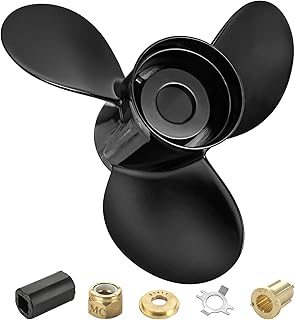
Features: 13″ diameter, 21″ pitch, 3 blades, 15-spline tooth, right rotation. Alloy-aluminum construction; includes hub kit.
Best for: Mercury engines ranging from 40 to 140 HP, serving as a robust backup or upgrade option for improved speed and efficiency on a 20-foot pontoon.
Why selected: A longer pitch can help with higher top-end speed in suitable engine ranges. Caution: higher pitch requires adequate engine RPM and can reduce holeshot if engine isn’t matched well.
Buying Guide: Key Purchase Considerations
- Engine compatibility: Check your engine model, horsepower range, and shaft spline count before choosing a propeller. Mismatches can reduce performance or cause damage.
- Propellor material: Aluminum props are lighter and often cheaper, offering good all-around performance. Stainless steel props are more durable and resistant to bending but heavier and pricier.
- Diameter and pitch: Larger diameter and higher pitch increase top speed but may reduce acceleration. Start with a prop close to OEM specs, then adjust to optimize holeshot and fuel economy.
- Rotation and blade count: Confirm the rotation (left or right) and blade count for your drive unit. Four-blade props can improve acceleration and handling on pontoon boats but may reduce top speed slightly.
- Application: For 20-foot pontoons, prioritize props designed for mid-range horsepower (40–125 HP) and Mercury/ MerCruiser compatibility if that is your setup.
- Durability vs. performance: Stainless steel lasts longer in challenging conditions but is heavier; aluminum offers a lighter option with easier maintenance.
Frequently Asked Questions
- What size prop should I use on a 20-foot pontoon boat?
Choose a prop that matches your engine’s horsepower rating and the boat’s weight. Start with OEM-equivalent diameter and pitch, then adjust for desired holeshot or top speed. - Quick tips for choosing between aluminum and stainless steel?
Aluminum is common and lighter; stainless steel lasts longer and is more resistant to bends and corrosion, but costs more and adds weight. - How do I know if a prop is right-hand or left-hand rotation?
Check the product specs; most consumer props for Mercury/ MerCruiser are right-hand rotation. Incorrect rotation can reduce performance. - Can I mix props on the same boat?
It’s possible but not recommended; consistency in prop type and pitch ensures predictable handling and performance. - What should I do if I notice reduced performance after changing props?
Recheck engine RPM, ensure hub kit compatibility, and verify the prop’s diameter and pitch align with engine specs. Consider a professional assessment if issues persist.