
Answering the quick question: which battery-powered zero turn mower best fits your yard and needs? This article compares five top models designed for residential to mid-size lawns, focusing on battery technology, deck size, and practical run times. It targets homeowners and landscape enthusiasts seeking a quiet, emissions-free alternative to gas-powered zero turns. A compact summary table helps you compare key specs at a glance.
| Product | Deck Width | Battery System | Approx. Run Time / Area | Best For |
|---|---|---|---|---|
| EGO POWER+ Z6 ZT4214L | 42″ | Six 56V 6.0Ah | Up to 1.5 acres per charge | Smaller to mid yards, slope mowing, quiet cuts |
| EGO POWER+ Z6 ZT5216L | 52″ | Six 56V 10.0Ah | Up to 3.0 acres per charge | Larger lawns, longer runtimes |
| EGO POWER+ Z6 ZT4215S | 42″ | Two 56V 10.0Ah + four 56V 6.0Ah | Up to 2.0 acres per charge | Balanced performance with steering wheel control |
| Greenworks 60V 42″ CrossoverZ | 42″ | Four 60V 8.0Ah | Up to ~2.0 acres depending on conditions | Responsive, true zero-turn control |
| Greenworks 80V 42″ CrossoverZ | 42″ | Six 80V 6.0Ah | Up to ~2.5 acres depending on conditions | High-torque, longer runtimes for bigger yards |
EGO POWER+ Z6 Zero Turn Riding Lawn Mower, 42″ Deck, ZT4214L

The ZT4214L uses Peak Power technology to combine up to six 56V ARC Lithium batteries, delivering power equivalent to a gas engine. It is best for small to mid-sized yards, especially where a quiet, low-emission cut is valued. The six included batteries aim to provide a full mowing cycle without frequent changes. The wide frame improves balance on slopes, and the deck suspension helps deliver a quiet cut. Practical for homeowners who prioritize minimal maintenance and reduced noise.
Who it’s best for: Homeowners with yards around 0.5–1.5 acres who want gas-like power without fumes, plus good balance on uneven terrain.
Why chosen: This model offers a solid all-around balance of deck width, battery capacity, and stability for typical suburban lawns. It’s a straightforward upgrade from smaller electric mowers and can handle moderate slopes.
Limitations: Requires storage space for multiple batteries and a charger; weight distribution on very steep slopes may still feel challenging for some users.
EGO POWER+ Z6 Zero Turn Riding Lawn Mower, 52″ Deck, ZT5216L

The ZT5216L expands deck width to 52 inches and uses six 56V 10.0Ah batteries, delivering extended run time for larger properties. It is best for homeowners with medium to large yards where mowing time matters and a broader cut helps reduce sessions. The same Peak Power concept applies, giving gasoline-like performance for those who need more power for thicker growth.
Who it’s best for: Homeowners with lawns up to around 3 acres who want a longer range and a wider cutting deck for faster mowing.
Why chosen: The larger battery pack and deck width provide a practical upgrade for bigger properties while maintaining zero-emission operation.
Limitations: The higher capacity batteries increase upfront cost and weight; ensure your charging setup can support frequent high-capacity charging if mowing becomes daily.
EGO POWER+ Z6 Zero Turn Riding Lawn Mower, 42″ Deck, ZT4215S
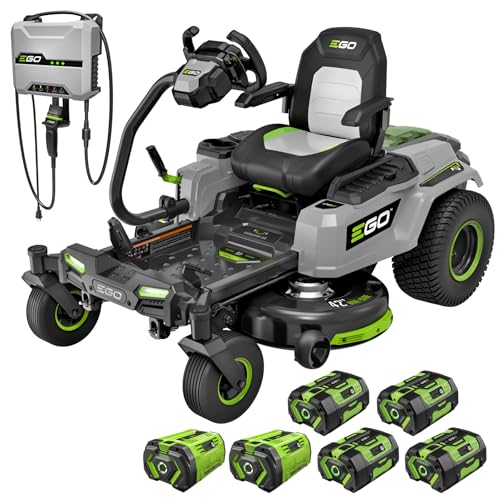
This model combines two 56V 10.0Ah and four 56V 6.0Ah batteries for a mixed pack, aiming to balance weight and power. It features industry-leading e-STEER technology for precise steering via a steering wheel. It is best for users who value steering precision and a steadier push for mid-sized yards. It can handle moderate slopes when equipped with the wheel-based control system.
Who it’s best for: Homeowners who prefer electric zero-turns with advanced steering controls and a flexible battery mix for varied mowing sessions.
Why chosen: The steering wheel control system can improve maneuverability in tight spaces or around features, making it a strong pick for more technical lawns.
Limitations: Battery mix may complicate charging logistics; verify charger compatibility and charging time for the mixed pack before purchase.
Greenworks 60V 42″ Electric CrossoverZ Zero Turn

This kit includes four 60V 8.0Ah batteries and a 600W charger, delivering true zero-turn maneuverability with a brushless motor. It is best for smaller to mid-sized yards where quieter operation and lower maintenance are priorities. SmartCut technology adapts power to grass conditions to maintain blade speed for a clean cut.
Who it’s best for: Homeowners seeking a reliable, emissions-free option with a straightforward battery setup and compatible tool ecosystem in the Greenworks 60V family.
Why chosen: The four-battery package provides a balanced runtime for typical suburban lawns and integrates well with other Greenworks 60V tools.
Limitations: For very large properties, runtime may be a consideration; plan charging around mowing sessions to avoid interruptions.
Greenworks 80V 42″ CrossoverZ Zero Turn
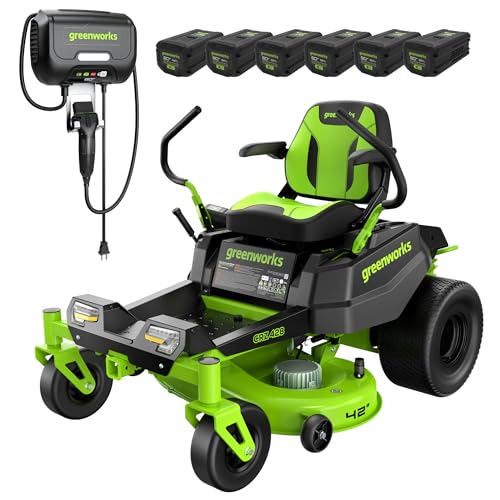
The 80V CrossoverZ is equipped with six 80V 6.0Ah batteries and a 600W charger, delivering competitive torque and extended runtimes for larger properties. It’s best for homeowners with yards that benefit from a longer cutting session without frequent battery swaps. The platform promises quiet operation with zero emissions and strong blade speed for consistent results.
Who it’s best for: Larger yards where longer mowing intervals and gas-like performance are desired without noise and fumes.
Why chosen: The higher voltage platform and multiple batteries offer substantial runtime and torque, supporting longer, uninterrupted mowing sessions.
Limitations: Higher battery count can mean heavier equipment and more complex charging needs; ensure adequate storage and charging capacity.
Buying Guide: Key Considerations for Battery-Powered Zero Turn Mowers
- Deck size and cut width: A wider deck reduces mowing time on large lawns but adds weight. Choose 42″ for tighter spaces or 52″ for bigger yards where maneuverability is less constrained.
- Battery system and runtime: Look at the number of cells and Ah rating. Higher Ah and more packs extend runtime but increase weight and cost. Plan based on yard size and frequency of mowing.
- Charger and charging time: A fast charger helps, but ensure your charging schedule aligns with mowing plans. For multi-battery setups, consider staggered charging to avoid downtime.
- Terrain handling: Slopes and uneven ground benefit from a balanced frame and suspension systems. Wide frames improve stability on slopes.
- Control system: Steering wheels or joysticks offer different handling. Steering-wheel options may provide precision in tight areas, while joysticks can be lighter for some users.
- Ecosystem compatibility: If you already own tools from a brand like Greenworks or EGO, sticking to the same platform can simplify battery sharing and accessory compatibility.
- Maintenance and noise: Electric mowers require minimal maintenance compared to gas engines, and they operate quietly, which is ideal for residential neighborhoods or early morning mowing.
- Storage considerations: Batteries and chargers require safe storage space in temperature-controlled environments to maximize battery life.
Frequently Asked Questions
- Are battery-powered zero turn mowers as powerful as gas models? Modern battery systems deliver comparable power for typical residential lawns, especially with multi-battery setups and appropriately sized decks.
- How long do the batteries last per charge? Run time varies by deck size, yard conditions, and battery capacity. Larger yards (up to several acres) may require multiple battery packs or extended charging sessions.
- Can I use these mowers on steep slopes? Some models offer wide-frame design for better balance on slopes, but always follow manufacturer guidance and avoid excessive slope mowing where safety is a concern.
- Is it cheaper to own a battery-powered mower long-term? Lower maintenance and no fuel costs can offset the higher upfront price, depending on usage and local electricity costs.
- Do batteries work in cold weather? Battery performance can decline in extreme cold; store and charge in moderate temperatures and allow for longer warm-up times in winter.
- Can I share batteries across tools? Many brands design batteries to be compatible with other yard tools in the same platform, which can improve value and convenience.