
Answering the search for reliable outdoor wall-mounted heaters, this guide highlights top options that deliver direct infrared warmth with wall or ceiling mounting. Each pick is suited to a specific space and use case—from residential patios to commercial outdoor seating. The best for small balconies, the best for large patios, and the most resilient for damp environments are covered. This overview helps buyers compare heat output, mounting options, and control features at a glance.
| Product | Best For |
|---|---|
| DR. Infrared Heater Portable Infrared Indoor/Outdoor | Small to mid-size outdoor areas or garages |
| DR. Infrared Heater DR-239 3000W | Medium to large spaces, wall or ceiling mounted |
| sundate Ceiling Electric Outdoor Heater | Wall-mounted or hanging for compact spaces |
| YESERLI Wall Mounted 1500W | Backyards, gazebos, and covered areas |
| ThermoMate 3000W Infrared Heater | Patios, decks, and garages needing strong heat |
DR. Infrared Heater Portable Indoor/Outdoor – 1500W
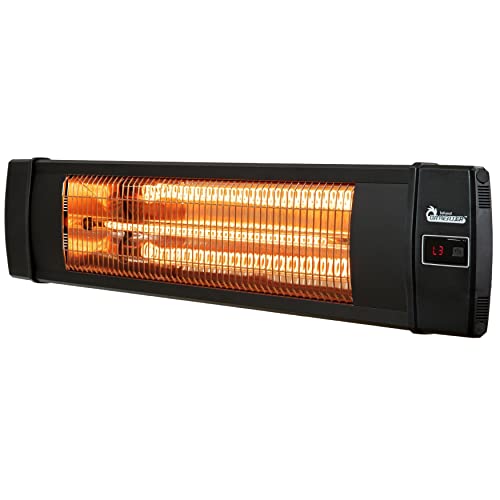
Best for flexible spaces requiring instant heat without installation. This IP55-rated unit performs both indoors and outdoors, ideal for patios, garages, and outdoor dining areas. It offers three power levels—900W, 1200W, and 1500W—delivering clean, odorless infrared warmth with a standard 120V supply and remote control. It’s a strong pick for renters or homeowners who want a plug-and-go option with remote convenience. A caveat: no built-in thermostat means manual monitoring of heat levels is necessary for precise comfort control.
DR. Infrared Heater DR-239 3000W – 220V-240V Wall/Ceiling

Best for larger spaces and demanding installations. This 3000W unit delivers high-efficiency carbon infrared heat with instant warmth, suitable for patios, garages, workshops, and commercial or residential spaces. It’s designed for 220V-240V operation and includes mounting brackets for wall or ceiling installation plus a remote. Choose this if you need robust heat for open or high-occupancy areas. Limitation: requires appropriate electrical wiring and space for mounting.
sundate Ceiling Electric Outdoor Heater – 1500W

Best for compact outdoor spaces where wall mounting saves room. This 1500W carbon fiber infrared heater offers nine heat levels and a 24-hour timer, with WiFi app control and remote operation. Its wall-hanging or ceiling-mount design makes it well-suited for patios, gazebos, balconies, or garages. A limitation to note is the need for stable mounting and a compatible power source for sustained operation.
YESERLI Wall Mounted 1500W Infrared Heater
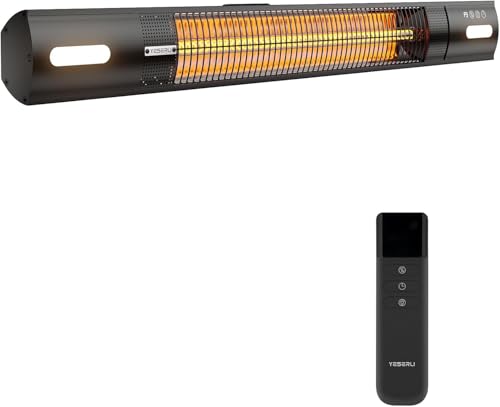
Best for weatherproof outdoor spaces with compact installation. This IP65-rated unit uses carbon infrared heating with a remote and timer. It includes 500W, 1000W, and 1500W settings, making it flexible for varying outdoor conditions. Best for backyards, gazebos, and garages that require IP65 protection. Caution: ensure a proper wall mounting height and secure power connection to avoid overheating or shifting in windy conditions.
ThermoMate Infrared Patio Heater – 3000W

Best for larger outdoor spaces that need strong, durable heat. This 3000W carbon fiber heater provides 3,000W of instant infrared warmth with a 24-hour timer and remote control, suitable for patios, decks, or garages. It is hard-wired for dedicated circuits, which makes it ideal for permanent setups. Limitation: requires professional electrical wiring and a fixed mounting height for optimal efficiency.
Buying Guide: Key Purchase Considerations
- Heat type and coverage: Infrared heaters warm people and objects directly, not just air. Consider the required wattage (900W–3000W) and whether you need wide-angle coverage or targeted warmth.
- Mounting and space: Wall- or ceiling-mounted units save floor space and are preferable for patios, garages, and covered outdoor areas. Check mounting hardware and space clearance guidance.
- Weather resistance: For outdoor use, IP ratings (IP55, IP65) indicate weather resistance. Higher IP ratings generally tolerate rain and dust better.
- Controls and timing: Remote control, touch panel, WiFi app, and 24-hour timers add convenience. Decide whether you want smart features or simple manual operation.
- Power requirements: Electrical supply varies (120V vs. 220–240V). Ensure your space has the appropriate outlet or wiring capacity and consider dedicated circuits for high-wattage units.
- Safety and installation: Look for built-in safety features such as tip-over shutoff or protective grills. Verify that mounting height and clearance meet manufacturer guidelines.
- All-season usability: IP65-rated units are generally more versatile for rain and dust. For indoor-only spaces, IP55 models may suffice and save cost.
Frequently Asked Questions
- What is the main advantage of wall-mounted infrared heaters?
They save floor space, provide direct warmth to occupants, and are usually easy to install with included brackets. - Do infrared heaters require special electrical wiring?
Some models operate on standard 120V, while others require 220–240V hard-wiring. Check your space’s electrical capacity and installation requirements. - Are IP65 heaters better for outdoor use than IP55?
Yes, IP65 offers higher protection against water and dust, making them more durable in harsh outdoor conditions. - Can I use these heaters in a covered but not fully enclosed area?
Yes, many models are designed for covered outdoor spaces like patios and gazebos, but always verify the installation guidance for your exact unit. - Is a built-in thermostat necessary?
Several models rely on remote or adjustable power settings rather than a thermostat. If precise temperature control is essential, choose a model with a thermostat or timer features. - What maintenance is required?
Infrared heaters generally require minimal maintenance beyond ensuring mounting hardware remains secure and the power connections are intact.