
Instant, efficient heat for outdoor and semi-outdoor spaces is easier with wall-mounted electric patio heaters. This guide highlights five top picks designed for patios, garages, balconies, and commercial spaces. Each heater is evaluated for best-use scenarios, safety, and practicality to help you choose the right model for your climate and layout. Ideal buyers include homeowners seeking patio warmth, restaurant or cafe operators needing consistent outdoor heating, and DIY enthusiasts needing compact, space-saving options.
Summary table of chosen products:
- DR. INFRARED HEATER Portable Infrared Indoor and Outdoor Space Heater — Best for flexible indoor/outdoor use and remote control convenience.
- sundate Ceiling Electric Outdoor Heater — Best for WiFi and smart control with wall/hanging installation.
- YESERLI Electric Patio Heater — Best for waterproofing and 3 heat levels with remote control.
- Econat Infrared Heater — Best for versatile wall or ceiling mounting with adjustable thermostat.
- DR. INFRARED HEATER DR-239 — Best for high-power outdoor/indoor spaces with 220V-240V compatibility.
DR. INFRARED HEATER Portable Infrared Heater
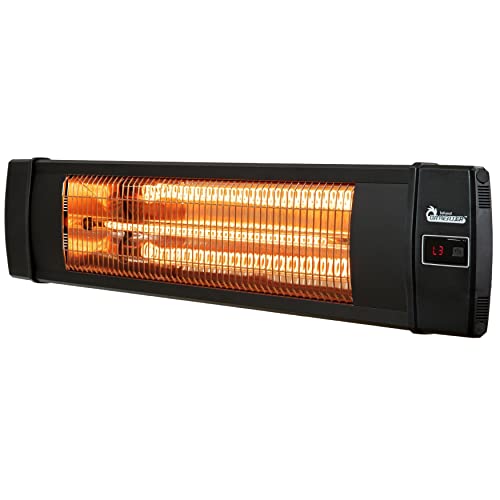
Best for: Flexible use in both indoor and outdoor zones, such as patios, garages, and open-air dining areas. This model is IP55-rated for weather resistance and provides clean, instant infrared heat with multiple power settings (900W, 1200W, 1500W). It operates on 120V and is remote-controlled for convenience.
Why selected: It combines portability with straightforward operation. The remote control and three power levels support quick adjustments without leaving your seat, making it ideal for mixed-use spaces or seasonal transitions. A caution is the lack of a built-in thermostat; you’ll rely on ambient temperature or an external controller.
Ceiling Electric Outdoor Heater by Sundate

Best for: Spaces that need heat directed to people and objects without cluttering floor space, such as gazebos, balconies, garages, and covered patios. This model uses carbon fiber infrared heating with nine heat levels and a 24-hour timer for flexible scheduling. It supports wall-mounted, hanging, or ceiling-mounted installation, conserving space.
Why selected: The multi-mount design and smart timing enable precise heat delivery in compact layouts. A potential limitation is the need for reliable WiFi or remote access for full benefit; manual control is still available via the panel or remote.
YESERLI Electric Patio Heater
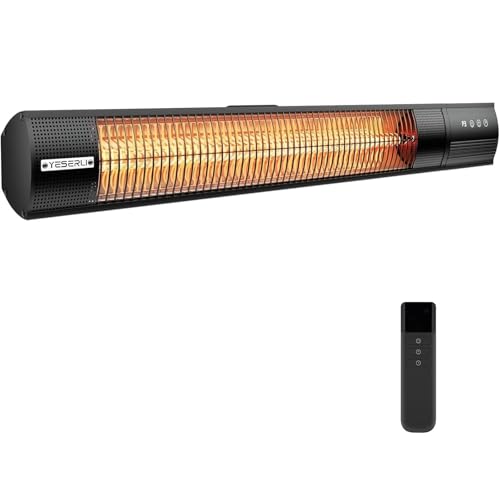
Best for: Outdoor environments with exposure to weather, thanks to IP65 waterproofing. It’s well-suited for backyards, gazebos, garages, and restaurants needing reliable infrared warmth. It features three power settings and a remote control for convenient adjustments from a distance.
Why selected: The high level of weather resistance makes it suitable for year-round outdoor use. A caution is the need to open the master power switch before use, which users should remember to avoid delays in heating.
Econat 1500W Infrared Heater

Best for: Versatile mounting options with a focus on space efficiency. The unit can be mounted on a wall or ceiling, directing heat where needed while keeping floor space clear, making it ideal for patios, balconies, garages, and workshops. The built-in thermostat provides straightforward temperature control.
Why selected: A simple, space-saving solution with precise control. A limitation: basic thermostat control may lack advanced scheduling features found in higher-end models.
DR. INFRARED HEATER DR-239

Best for: High-power spaces, suitable for large outdoor areas or commercial setups needing robust warmth. This 3000W unit operates on 220V-240V and includes mounting options for walls or ceilings, plus a remote to switch among power levels.
Why selected: The high heat output supports larger groups or colder climates. A caution is that installation on 220V-240V requires proper electrical planning and adherence to safety guidelines.
Paraheeter and Colleague Picks: Buying Guide
Key considerations include heat distribution, mounting options, and weather resistance. For outdoor use in windy or humid climates, prioritize IP ratings (IP65 or IP55) and carbon infrared elements for direct warmth. If you have limited floor space, choose wall- or ceiling-mounted units with remote or smart control to adjust temperature without moving the heater.
- Mounting options: Wall, ceiling, hanging, or tripod can influence space usage and heat direction. Consider where people will sit and how heat should travel across the area.
- Power and compatibility: Check voltage requirements (120V vs. 220V-240V). Ensure your wiring supports the heater’s wattage to avoid electrical issues.
- Control features: Remotes, touch panels, and WiFi connectivity add convenience. Decide between basic on/off and programmable timers or multi-level heat settings.
- Water and weather resistance: For outdoor spaces, choose IP65 or IP55-rated units to withstand rain and dust. Indoor use benefits from sturdier build and smoke-free operation.
- Heat source and efficiency: Carbon fiber infrared elements offer fast heat with direct warmth. Consider energy efficiency ratings and 3–4 heat level options for flexibility.
Frequently Asked Buyer Questions
- What mounting option is best for a small balcony?
- Should I choose IP65 or IP55 rated heaters?
- Do infrared heaters heat people or air?
- Is a thermostat important for an outdoor heater?
- Do I need professional wiring for high-wattage units?
Wall- or ceiling-mounted heaters free up floor space and maximize heat direction toward seating areas. Choose models with adjustable tilt if possible.
IP65 provides full protection against water jets and dust, making it better for weather exposure. IP55 offers decent protection for moderate outdoor use and covered spaces.
Infrared heaters primarily warm people and objects directly, with less reliance on warming the air. This leads to faster perceived warmth outdoors.
An adjustable thermostat helps maintain consistent comfort and can prevent overheating. Remote control or smart scheduling adds practicality for outdoor gatherings.
Yes, especially for 240V or high-wattage models. Ensure compliance with local electrical codes and installation guidelines.