
If you need extra cargo space for an RV trailer, travel trailer, or hitch-equipped vehicle, a trailer tray A-frame carrier can optimize storage without sacrificing interior room. This guide highlights five top options that balance capacity, fit, and practicality for different towing setups. Best for: long trips with bulky gear, generators, tools, and camping equipment. The following picks cover A-frame trays, steel and aluminum designs, and tray-sized hitch carriers for 2″ receivers.
| Product | Best For | Capacity | Material |
|---|---|---|---|
| Stromberg Carlson CC-255 Trailer Tray | RV A-frame trailers | Up to 300 lbs | Steel |
| CURT 18110 Tray Cargo Carrier | 2″ receivers | 300 lbs | Steel |
| CURT 18100 Tray-Style Cargo Carrier | General hitch use | 500 lbs | Aluminum (lightweight) |
| MAXXHAUL 70108 Aluminum Carrier | Lightweight, high capacity | 500 lbs | Aluminum |
| Loezora 500LB Aluminum Hitch Carrier | Budget-friendly aluminum | 500 lbs | Aluminum |
Stromberg Carlson CC-255 Trailer Tray

The CC-255 is an A-frame-mounted trailer tray designed to attach over the RV’s A-frame, placing gear over the trailer’s softest riding area. This tray is best for campers who want to maximize travel trailer storage without reducing interior space. It supports up to 300 lbs, suitable for a generator, toolboxes, bikes, or coolers when secured properly. Its curved-leg design aims for a snug fit on most A-frames, simplifying installation.
Best for: RV owners who need a sturdy, over-the-tow solution and/or generators or bulky gear on the A-frame. It is a solid option when you prioritize external storage without modifying the trailer frame.
Caution: Installation can vary with trailer geometry; verify compatibility with your A-frame and ensure weight is evenly distributed during travel.
CURT 18110 48″ x 20″ Tray Cargo Carrier

This CURT tray carrier fits 1-1/4″ receivers and includes a sleeve adapter for 2″ receivers. It’s a versatile, external storage solution with a fabric-friendly 300 lb rating when used within vehicle and hitch limits. The integrated tie-down openings support cargo nets and straps, ensuring items stay secure. It’s a practical choice for larger coolers, camping gear, and luggage that won’t fit inside the vehicle.
Best for: travelers who want a dependable, mid-sized tray with flexible receiver compatibility and built-in tie-down points. Choose this if you need straightforward assembly and predictable payload management.
Caution: Verify receiver openings and pin-hole alignment before ordering to ensure proper fit with your hitch system.
CURT 18100 Tray-Style Trailer Hitch Carrier
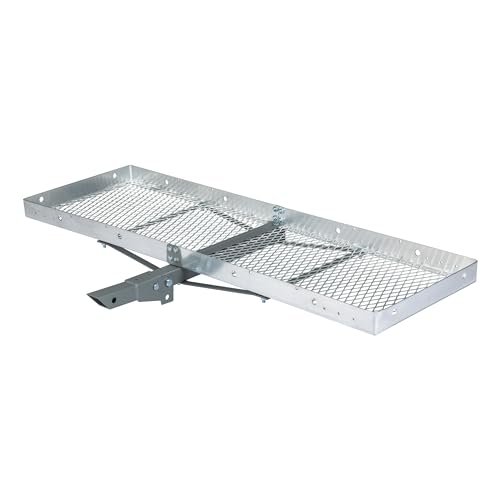
This tray-style carrier emphasizes lightweight aluminum construction with a 500 lb capacity. It’s designed for 2″ receivers and bolts together for quick setup. The aluminum build reduces overall vehicle mass while still providing ample space for cargo like camping equipment, bikes, or gear that needs quick loading and unloading. A good pick where weight savings are a priority without sacrificing cargo space.
Best for: drivers who want a high-capacity, easy-to-handle tray that’s significantly lighter than steel equivalents. It’s ideal when you regularly remove and reinstall the carrier for trips.
Caution: While lightweight, ensure the weight is distributed evenly and not solely toward one side, which could affect handling during acceleration and braking.
CURT 18113 49 x 22-1/2-Inch Aluminum Carrier

This aluminum carrier weighs about 25 pounds and provides a solid 500 lb capacity. Its welded aluminum construction keeps weight down while delivering reliable load-bearing performance for standard 2″ hitch receivers. The design is slim enough for easy handling yet sturdy enough for typical camping and travel gear. The aluminum build minimizes rust and maintenance concerns compared to steel trays.
Best for: users seeking a lightweight yet capable aluminum tray that’s easy to install and remove, especially when frequent cycling of the carrier is necessary. Choose this if weight is a critical factor in your setup.
Caution: Aluminum trays can be pricier; compare overall system cost with other options if budget is a concern.
MAXXHAUL 70108 Aluminum Cargo Carrier

This model blends an aluminum basket-style platform with a sturdy steel under-support frame and a 2″ x 2″ hitch shaft. The high side rails provide extra cargo security, and the design includes multiple tie-down points for versatile securing options. The combination of rust-resistant aluminum and a robust underframe supports long trips and rough terrain better than all-steel counterparts in some cases.
Best for: buyers who want a durable, rust-resistant carrier with high side rails for improved containment and better tie-down flexibility. It’s a strong all-around pick for RVs, trucks, and SUVs with 2″ receivers.
Caution: The aluminum surface, while durable, can still suffer from impact dents if loaded unevenly or subjected to heavy, sharp-edged items.
Loezora 500LB Aluminum Hitch Carrier

The Loezora aluminum carrier offers a 500 lb capacity with a lightweight, rust-proof build. Its 49″ x 22″ platform provides ample space for camping gear, suitcases, coolers, bikes, and more. Weighing around 38 pounds, it’s designed for easy one-person installation and removal, making it convenient for frequent use on road trips or weekend getaways.
Best for: RVers and travelers who value a balance of capacity, weight, and simple installation. The aluminum construction suits those who regularly detach and reattach the carrier for different trips.
Caution: Always confirm the overall vehicle weight and hitch rating to avoid exceeding recommended limits, especially on smaller SUVs or crossovers.
Buying Guide
What size and mounting style should you choose?
- Trailer-tray vs. standard hitch carrier: Trailer trays like A-frame trays are designed to mount around or over the trailer’s frame, often ideal for RVs and towed setups, while standard hitch carriers mount to a receiver for direct exterior storage.
- Weight capacity needs: Consider your heaviest items (generators, coolers, toolboxes) and ensure the carrier’s rating aligns with the total weight, including cargo and distribution.
- Material and maintenance: Aluminum trays are lighter and rust-resistant but can be pricier; steel trays are robust but heavier and may require more protective coatings.
Which features matter most?
- Receiver compatibility: Confirm the shank size (1-1/4″ vs. 2″) and whether adapters are included or needed.
- Security and tie-down options: Look for built-in tie-down points, and consider using cargo nets or bungee cords for extra security.
- Ease of installation and removal: Favor carriers that are quick to mount or detach, especially for seasonal use or frequent trips.
How to use safely?
- Distribute weight evenly: Avoid loading to one side to maintain vehicle handling and stopping performance.
- Secure items: Use multiple tie-downs for large gear, and avoid sharp-edged items that can damage the tray.
- Check clearance: Ensure the carrier does not interfere with taillights, license plate, or exhaust paths, especially when the trailer is in motion.
FAQ
- Can I use a trailer tray on any RV or trailer? Most trays are designed for common trailer frames or 2″ receivers, but always verify compatibility with your specific trailer or hitch.
- Is aluminum better than steel for these carriers? Aluminum is lighter and resistant to rust, helpful for frequent detachment, while steel trays often deliver higher weight-handling potential at a heavier weight.
- Do these carriers require professional installation? Many models are designed for DIY installation with basic tools; follow manufacturer instructions for safe mounting.
- What should I load first on a tray carrier? Start with heavier items toward the center or over the axle or trailer frame to maintain balance and driving stability.
- Are there any mounting limitations for A-frame trays? A-frame trays must accommodate the trailer’s frame geometry; check leg design and mounting points before purchase.
- How do I protect the car or trailer finish? Use protective mats or padding under items to prevent scratches and consider rust-resistant coatings for metal trays.