
Answer: For buyers needing mobile fuel storage, these five gas caddies on wheels offer large capacities, durable construction, and built-in transfer pumps or siphon options. They are best suited for lawn care crews, small workshops, boats, ATVs, and light-duty farm use. The table below compares capacities, transfer methods, and key strengths to help choose quickly.
| Product | Capacity | Transfer Method | Best For |
|---|---|---|---|
| Scepter Duramax Flo ’N Go 14 Gallon Gas Caddy (2026) | 14 gal / 53 L | Gravity flow and manual pump/siphon | Lawn mowers, small farm equipment, marine |
| Garvee 15 Gallon Gas Caddy | 15 gal | Manual transfer pump with 10 ft hose | Cars, mowers, boats, home use |
| GarveeTech 30 Gallon Fuel Caddy | 30 gal | Two-way rotary hand pump | Large refueling tasks, generators, tractors |
| Garvee 16 Gallon Gas Can | 16 gal | Manual pump with 10 ft hose | Vehicles, ATVs, small equipment |
| PAMBEE 15 Gallon Gas Can | 15 gal | Gravity and siphon method | Boats, trailers, multi-vehicle refuel |
Scepter Duramax Flo ’N Go 14 Gallon Gas Caddy

The Scepter Flo ’N Go system is a 14-gallon (53 L) fuel caddy designed for farm, marine, and home use. Its heavy-duty construction and 6-inch wheels enable rugged maneuvering, while the dual fueling modes allow gravity flow or manual pumping. Best for small to medium refueling tasks where mobility matters. Use this if you prioritize a proven, compact caddy with straightforward operation.
Selected for: portability, built-in pump options, and compatibility with common lawn, farm, and boat refueling scenarios. Limitation: siphon speed depends on pump and gravity height, so expect moderate flow in some setups.
LEE DT 200 Diesel Tank, 200Gal

Note: This model emphasizes forklift-ready transport and modular stacking potential rather than a small handheld transport. It is best for larger operations requiring heavy-duty containment and easy transport via forklift. Choose this if you need high-capacity, forklift-compatible storage on wheels for industrial settings.
Best for: heavy-duty, fleet-wide refueling where forklift transport is common. Caution: not intended for casual or quick-move residential tasks due to size and handling requirements.
Garvee 15 Gallon Gas Caddy

Garvee’s 15-gallon gas caddy features heavy-duty HDPE construction with dual shut-off valves and vapor-tight seals. Its manual transfer pump, 10-foot hose, and anti-static safety design make it suitable for home garages and outdoor work. Best for: reliable daily fueling tasks in moderate outdoor environments. Limitation: capacity is mid-range, so frequent refueling may be needed for large jobs.
GarveeTech 30 Gallon Fuel Caddy

GarveeTech’s 30-gallon fuel caddy is designed for demanding tasks with a durable stainless-steel construction. It includes a two-way rotary hand pump for fast dispensing or siphoning. Best for: larger refueling operations, generators, and heavy equipment. Caution: heavier unit may require more effort to maneuver on uneven terrain.
PAMBEE 15 Gallon Gas Can
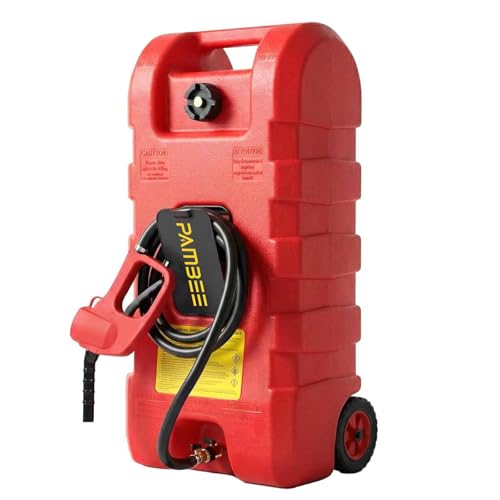
PAMBEE presents a 15-gallon gas can with a 10-foot hose and a dual-mode operation that supports gravity and siphon refueling. It’s designed for portability and easy transport on varied terrains, making it suitable for boating or trailer-based refueling. Better for: mid-size fueling tasks with flexible transfer options. Limitation: siphon flow rate depends on user pumping speed.
Buying Guide
Key purchase considerations help compare options across capacities, transfer methods, durability, and intended use. Below are practical questions and answers to guide selection.
How much fuel capacity do you really need?
Capacity ranges from 14 to 30 gallons in these options. Choose higher capacity if you refuel multiple vehicles or run larger equipment in remote areas; smaller capacities are easier to move and store for quick, light-duty tasks.
What transfer method fits your workflow?
Gravity flow is simple and reliable when the container is elevated. Manual pumps and siphons offer controlled dispensing but require manual effort. If you run frequent refuels, a two-way pump or rotary pump speeds up the process.
Is portability important for your space?
Look for models with rugged wheels (6 inches or larger), a strong handle, and lightweight materials. Heavier, high-capacity units may require more effort to move but reduce refueling stops during extended projects.
What safety features matter?
Anti-static grounding, vapor-tight seals, and child-resistant caps reduce risk. Dual shut-off valves and secure closures help prevent spills in busy environments such as workshops or boats.
Which features improve durability and longevity?
Materials like high-density polyethylene (HDPE) or corrosion-resistant steel extend life in outdoor or marine settings. A reinforced design supports heavy use, while UV resistance helps in sun-exposed locations.
Usage scenarios to consider
- Small farms or lawn care fleets needing occasional refueling on varied terrain.
- Boat ramps and marinas requiring mobile fuel storage with reliable siphon or pump.
- Home garages needing compact, durable tanks with easy storage.
FAQ
- What is the typical flow rate for siphons on these tanks?
- Are these tanks suitable for diesel or gasoline?
- Do these caddies require special maintenance?
- Which model is best for a multi-vehicle fleet?
- Can these be disassembled for storage?
Flow rates vary by model and method, with siphon speed generally dependent on user input and gravity height. Expect moderate flow on gravity-assisted setups and faster transfer with a pump.
Most listed models are designed for gasoline or diesel use, with cautions on fuel type compatibility specified by manufacturer. Always verify compatibility before use.
Regularly check hoses for wear, seals for leaks, and valves for proper operation. Store in a ventilated area away from ignition sources.
Models with higher capacity (like the 30-gallon GarveeTech) and two-way pumps are better for fleets with frequent refuelling across different vehicles and equipment.
Most units are designed for practical transport and storage, with wheels and handles that aid repositioning. Check each product’s assembly notes for specifics.