
Looking for reliable led garden light sets that are easy to install and energy efficient? This guide highlights five top options that suit different landscaping needs, from durable brass spotlights to colorful RGB paths and solar-powered accents. Best for homeowners wanting durable low-voltage systems, best for DIY landscapers, and best for solar-powered setups alike.
The following quick-reference table helps compare key points at a glance.
| Product | Type | Best For | Notes |
|---|---|---|---|
| SUNVIE Solid Brass Low Voltage Landscape Spotlights | 8-Pack, 12V | Classic, durable yard lighting | Solid brass, weatherproof; requires transformer |
| hykolity Low Voltage Landscape Kits | 12V-15V, 8-Pack | Value-focused pathways | Die-cast aluminum; multiple wattages |
| Low Voltage Landscape Lighting RGB | 12V-24V, 10W RGB | Color-changing mood lighting | In-ground with remote ready options |
| SUNVIE All-in-ONE Landscape Lighting Kit | 6-Pack plus transformer | Walkways and yards with transformer setup | 2-pack spotlights; includes wiring connectors |
| GIGALUMI Solar Lights Outdoor | 12 Pack Solar | Solar-powered decor | No wiring; solar charging during the day |
SUNVIE Solid Brass Low Voltage Spotlight Set

Best for traditionalist landscapes that emphasize durability and classic bronze tones. The 8-pack uses low-voltage 12V lighting with solid brass construction, making it an excellent choice for long-term outdoor lighting that needs weather resistance and a timeless look.
Key considerations: best for wired systems with a transformer; not a solar option; maintenance is straightforward because of brass housing that patinas gracefully with time.
hykolity Landscape Kit

Best for budget-conscious installers who want reliable aluminum fixtures and straightforward wiring. The 8-pack offers 12V-15V compatibility and multiple output options, improving pathway visibility without overextending the budget.
Limitations: wired systems require a transformer and simple electrical planning; corrosion resistance is good but not brass-level; consider this for shaded or covered pathways to minimize exposure.
RGB Low Voltage Landscape Lights

Best for owners who want color-changing capabilities to set moods for events or themed setups. This 10W RGB set supports 12V-24V operation and provides flexible color options to highlight borders, patios, or water features. The RGB option helps differentiate spaces by atmosphere rather than just brightness.
Limitations: RGB systems may require additional controllers or remotes; check compatibility with existing transformers; color temperature consistency can vary with power fluctuations.
SUNVIE All-in-One Lighting Kit
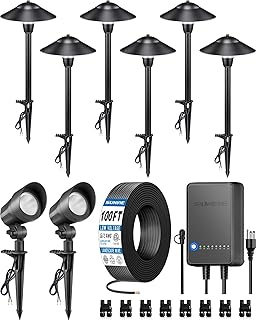
Best for walkways and yard spaces that need a ready-to-install package. The kit includes a 60W transformer, 100 feet of 16/2 wire, and connectors, making it convenient for homeowners who want a complete, integrated system with a transformer-centric design.
Limitations: assembly requires basic electrical wiring; ensure ground clearance and burial depth align with local codes; may require additional long-run considerations for large properties.
GIGALUMI Solar Lights Outdoor 12 Pack

Best for zero-wiring yards and sunny locations. These solar garden lights run on built-in batteries charged by sun exposure and provide at least 8 hours of lighting, making them ideal for decorative borders, flower beds, and seasonal displays. The design is lightweight and weather-resistant, suitable for many garden styles.
Limitation: performance depends on sun exposure and weather; on extended cloudy periods, illumination may be reduced; may require rechargeable battery replacement over time.
Buying Guide
What should I consider when choosing led garden light sets?
- Power type: Choose wired low-voltage sets (12V-15V or 12V-24V) for consistent brightness and longer run lengths, or solar-powered sets for easy installation with no wiring.
- Durability and material: Brass and die-cast aluminum offer better weather resistance. Brass develops a patina over time, while aluminum resists corrosion and is often lighter.
- Brightness and color: For pathways, aim for steady white light in the 2700–3000K range. For mood lighting, RGB options provide color versatility but may require controllers.
- Ease of installation: All-in-one kits with transformers simplify setup, while individual fixtures offer flexibility but require more planning.
- Coverage and layout: Plan for even distribution across borders, walkways, and focal points to avoid hot spots or dark patches.
- Maintenance: Brass housings resist weathering but may need occasional cleaning; solar lights require battery and panel care and occasional battery replacement.
What are common installation tips?
- Probe the soil with a garden fork before burying to minimize root damage.
- Use a dedicated outdoor-rated transformer for wired sets and separate circuits if possible.
- Waterproof seals and gasket checks help prevent moisture ingress in outdoor fixtures.
- Test the system after installation and adjust fixture angles for optimal lighting of focal points.
FAQ
- Q: Which type lasts longer, wired or solar lights? A: Wired lights generally offer more consistent brightness and longer run times; solar lights depend on sun exposure and battery life.
- Q: Can RGB lights be used for walkway safety? A: Yes, but ensure color settings do not impair night vision or cause glare for pedestrians.
- Q: Are brass fixtures suitable for coastal areas? A: Brass is durable but may patina differently; consider protective finishes if coastal salt exposure is high.
- Q: Do all kits include a transformer? A: Some do, especially All-in-One kits; others require separate transformers for wired installations.
- Q: How deep should landscape lights be buried? A: Typically 4–12 inches, depending on fixture design and local codes; follow manufacturer guidelines.
- Q: Can I mix wired and solar lights in the same landscape plan? A: Yes, but plan power sources separately to avoid voltage issues and ensure consistent brightness.