
If you’re seeking reliable wood deck non-slip coatings, you want options that provide grip, are durable in sun and moisture, and are easy to apply. This guide highlights five top coatings designed for wood decks, stairs, porches, and other outdoor areas. Each option is suited for different needs—whether you want a transparent look, a quick spray, or a heavy-duty, long-lasting membrane. Below, you’ll find concise comparisons and practical buying tips to help you choose.
| Product | Best For | Key Benefit | Notes |
|---|---|---|---|
| Wood Guard Anti Slip Acrylic Coating | Wood with visible grain | Semi-transparent, textured grip | Low-VOC and fast-drying |
| Rust-Oleum Stops Rust Anti-Slip Spray | Metal, concrete, wood surfaces | Spray-on convenience | Good for small to medium areas |
| Rust-Oleum Clear Anti-Slip Floor Spray | Barefoot-friendly joints | Clear, fast-drying | Best for preserving appearance |
| Liquid Rubber Polyurethane Deck Coating | Large outdoor surfaces | Heavy-duty waterproof membrane | Color options; textured finish |
| Dura Grip Anti-Slip Paint | Various substrates including wood | Durable, versatile for decks | Ideal for high-traffic areas |
Wood Guard Anti Slip Acrylic Coating

Best for: Homeowners with wood decks seeking a golden, semi-transparent texture that enhances grip while preserving wood’s natural look. This coating is designed for wet-surface traction and is suited for decks, stairs, patios, and porches.
Why selected: It offers immediate high-traction performance and is suitable for light to moderate foot traffic. The low-VOC, 100% acrylic formula dries quickly and provides an even matte finish, making it practical for exterior wood projects.
Limitations: Coverage is typically around 75-85 square feet per quart, so larger decks may require multiple containers. May require a clean, dry surface for best adhesion.
Rust-Oleum Stops Rust Anti-Slip Spray

Best for: Small to medium outdoor surfaces where you need a quick spray-on solution on wood, metal, concrete, or ceramic areas such as stairs or ramps.
Why selected: The oil-based formula adds safety traction on diverse substrates and dries to touch in about 30 minutes, covering up to approximately 15 square feet. This makes it a fast option for spot-treating slippery spots.
Limitations: Spray consistency matters for even texture; may require more coats for long-lasting wear on high-traffic areas.
Rust-Oleum Clear Anti-Slip Floor Spray

Best for: Surfaces where you want added grip without altering appearance, such as concrete steps or walkways that should remain visually consistent with their surroundings.
Why selected: This clear, fast-drying coating delivers barefoot-friendly traction and protects surfaces from peeling, fading, and weather. It’s particularly suitable when subtlety matters as the finish remains transparent.
Limitations: May require multiple thin coats for high-traffic areas; outcome can vary slightly based on substrate and application thickness.
Liquid Rubber Polyurethane Deck Coating
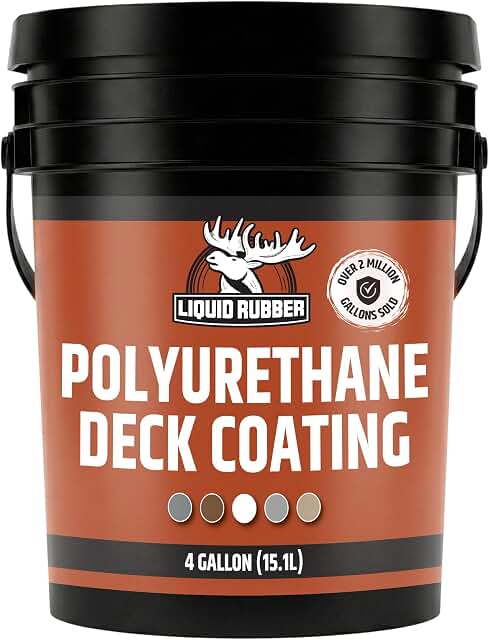
Best for: Large outdoor decks, docks, patios, or stairs where long-lasting waterproof protection and strong grip are priorities.
Why selected: It forms a hard, flexible polyurethane membrane that resists peeling, cracking, moisture, and UV exposure. It’s designed for wood, concrete, and properly prepared metal surfaces, offering years of protection with a textured option for extra grip.
Limitations: Final color and texture can vary based on substrate, application thickness, and lighting; it requires proper surface preparation for best results.
Dura Grip Anti-Slip Paint

Best for: Versatile use across concrete, wood, tile, and metal surfaces, including ramps, decks, and garages—great for high-traffic areas needing durable traction.
Why selected: A UV-resistant, durable coating designed to provide a barefoot-friendly, textured finish, suitable for varied substrates like steel, fiberglass, and wood decks. Its multi-surface compatibility makes it convenient for mixed-material projects.
Limitations: As a paint-based coating, it may require surface priming or additional coats on very slick or porous substrates for optimal grip.
Buying Guide: Wood Deck Non-Slip Coatings
- Surface compatibility: Confirm whether the coating is suitable for wood, and whether it adheres well to weathered or stained surfaces.
- Color and texture: Decide between transparent or opaque finishes and choose textured versus smooth profiles based on desired appearance and grip.
- Application method: Consider spray, roll-on, or brush formats. Sprays are quick for small areas; rolls and brushes suit larger decks.
- Durability and weather resistance: Look for coatings designed to resist moisture, UV exposure, and temperature changes for outdoor longevity.
- Foot traffic: For high-traffic decks, prioritize heavy-duty, long-lasting formulations that resist wear and maintain grip.
- Drying and curing: Note drying times and re-entry windows to minimize disruption to outdoor use.
- Safety and VOCs: Low-VOC or water-based formulas are better for enclosed spaces and sensitive environments.
Frequently Asked Questions
- What is the best coating for new wooden decks?
– A polyurethane or acrylic coating that bonds well with new wood and provides a textured finish for slip resistance is often ideal, especially if you expect frequent moisture exposure. - Can non-slip coatings change the appearance of wood decks?
– Some coatings are semi-transparent or clear, preserving wood grain. Others may add color or a matte finish. - How long does a non-slip coating typically last on exterior wood?
– Longevity varies by product and climate but many options last multiple seasons with proper prep and maintenance. - Do I need a primer before applying non-slip coatings?
– Primers are sometimes recommended for porous or weathered surfaces to improve adhesion and evenness. - Is it safe to apply these coatings around barefoot areas?
– Look for barefoot-friendly formulas and verify drying and cure times to ensure safe walking surfaces. - Can I apply these coatings over existing coatings?
– Some products bond well to existing coatings; others require thorough stripping or light abrasion for proper adhesion.