
Answer: A balcony privacy wall should combine outdoor durability, UV protection, and effective shading while preserving airflow. The following five products are well-suited for American balconies, patios, and decks, with options for chain-link fences, rails, and freestanding use. Each item targets common buyer needs such as tall privacy, aesthetic appeal, and easy installation. This guide helps you choose based on best fit, material, and installation style.
Overview of top picks (summary table):
| Product | Best For | Material & Design | Key Benefit |
|---|---|---|---|
| LOVE STORY 3’x10′ HDPE Privacy Screen | Decks and railings needing 3′ height privacy | HDPE, breathable with UV protection | High UV protection with visible-through fabric |
| KASZOO Artificial Ivy Privacy Fence Screen | Greenery-look privacy with fuller coverage | Artificial ivy with reinforced backing | Natural look and strong weather resistance |
| TALLYVER Metal Privacy Screen – 72x44in | Stylish metal privacy for modern spaces | Laser-cut steel with tropical leaf pattern | Decorative, durable, weather-resistant |
| RAINFLOW 3′ x 10′ HDPE Fence Privacy Screen | Affordable, breathable privacy for porches | HDPE mesh with aluminum grommets | Good shade and airflow balance |
| VEVOR Wooden Privacy Screen – 36″ x 73″ | Classic wood privacy with freestanding stand | Wood panels with stainless hardware | Natural look and sturdy stability |
LOVE STORY 3’x10′ HDPE Privacy Screen

Best for: Balcony rails and 3-foot tall fences. This HDPE shade screen provides about 85-90% shading with 95% UV protection while allowing breeze and light to pass through. It’s ideal for decks, patios, and poolside railings where airflow matters alongside coverage.
Why selected: The material is 100% new HDPE with anti-oxidation treatment, offering durable weather resistance and safe, breathable coverage. Grommets along the sides ensure sturdy fastening, and the fabric maintains shape with typical outdoor use. Length tolerance is ±4 inches, so plan for potential minor adjustments during installation.
Best for this scenario: Choose this if you want a straightforward, low-profile privacy solution that respects airflow and UV protection on standard 3′ tall railings. A potential limitation is the fabric’s visibility through, which is a trade-off for more airflow rather than a completely opaque screen.
KASZOO Artificial Ivy Privacy Fence Screen

Best for: Creating a lush, green privacy wall without real plants. Ideal for balconies and patios where a natural look is desired while keeping a barrier from prying eyes.
Why selected: This product features a 2026 upgrade with larger ivy leaves for fuller coverage and a reinforced back panel for durability in varying weather. It blends aesthetics with practical privacy benefits, reducing visible gaps. A noted limitation is that it is a decorative screen, not a structural fence, so it should be used with proper mounting for wind load in exposed areas.
TALLYVER Outdoor Metal Privacy Screen
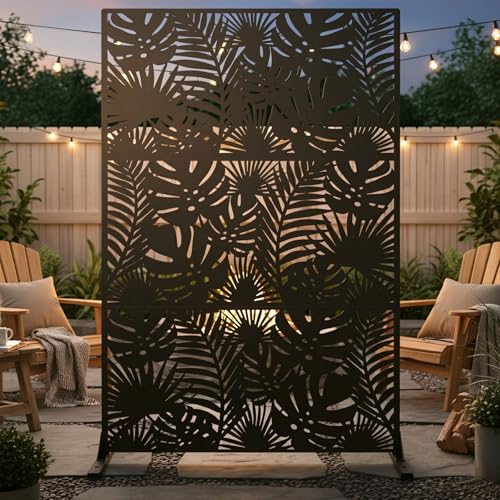
Best for: Modern outdoor rooms, patios, and balconies where durability and a striking design are priorities.
Why selected: The laser-cut tropical leaf pattern adds a contemporary aesthetic, while the heavy-duty steel framework provides long-term rust resistance and stability in varied weather. It’s best for users who want a decorative divider that doubles as a privacy wall. Limitation: Heavier construction requires thoughtful placement and anchoring, especially on softer surfaces.
RAINFLOW Fence Privacy Screen Outdoor

Best for: Budget-friendly privacy screens for balconies and decks where you still want good shade and airflow. The 3′ x 10′ size fits many railing setups while maintaining coverage.
Why selected: Made from durable HDPE mesh with reinforced aluminum grommets, this option emphasizes a balance of up to 75% shade with breathable design. It’s a practical choice when you need a cost-conscious solution without sacrificing essential privacy. Caution: Ensure secure attachment to avoid sagging in strong winds, as with all mesh screens of this type.
VEVOR Wooden Privacy Screen

Best for: Those preferring a natural wood aesthetic and a freestanding design for flexible placement on patios or decks.
Why selected: This wooden panel pairs privacy with a traditional look and comes with a sturdy stand for easy setup on ground or in concrete (hole adaptation may be needed). Limitations: Wood requires maintenance against weather and may warp over time if not properly treated or sheltered from direct rain in extreme climates.
Buying Guide: Key Considerations For Balcony Privacy Walls
- Material durability: HDPE screens resist moisture and UV exposure; metal screens offer strength and modern style; wooden panels provide a warm, natural look but require upkeep.
- Privacy level vs. airflow: Higher shading often reduces visibility; lighter fabrics preserve airflow. Consider your climate and comfort needs.
- Installation method: Freestanding panels offer flexibility but need stable bases; screen rolls and panels with grommets require secure railing attachment.
- Size and geometry: Ensure the wall height and width fit your balcony railing or space. Note length tolerances and mounting considerations for each product.
- Aesthetics and ambiance: Choose a design that matches your outdoor décor, whether modern, tropical, rustic, or natural.
- Wind resistance and weather: Heavier metal or reinforced panels handle wind better; lightweight screens may need additional support in open spaces.
Frequently Asked Questions
- What height should a balcony privacy screen be?
– Typical heights range from 3 feet to 6 feet, depending on local fencing rules and privacy goals. A taller option reduces visibility but may require sturdy mounting. - Do privacy screens block all sunlight?
– No, most screens provide shading with varying UV protection. Some allow airflow and light through gaps, which helps with cooling and air circulation. - Can privacy screens withstand windy conditions?
– Heavier metal or reinforced screens generally perform better in wind. Lightweight fabric screens should be securely anchored and checked regularly. - Are wooden privacy screens weather-resistant?
– Treated wood with hardware can resist weather longer, but ongoing maintenance helps prevent warping and rot in exposed climates. - Can a privacy screen be used with a railing?
– Yes. Look for grommeted fabrics or rail-mountable designs. Freestanding options work well when a railing mount isn’t feasible. - Do I need professional installation?
– Most balcony screens are designed for DIY installation with basic tools, but very tall or wind-prone setups may benefit from professional help.