
Finding the right GPS-enabled trolling motor can transform how you fish or cruise. This guide highlights five top Amazon picks for GPS bow-mount electric trolling motors, focusing on Spot-Lock capability, ease of deployment, and navigation features. Best for serious anglers who want precise positioning, hands-free control, and reliable anchoring in wind and current.
The following table compares key highlights to help you decide quickly.
| Product | Thrust | Shaft | Water Type | Notable Feature |
|---|---|---|---|---|
| Minn Kota Terrova Bow-Mount GPS | 55 Lb | 54″ | Freshwater | Spot-Lock with Jog, wireless remote |
| Minn Kota PowerDrive Bow-Mount GPS | 55 Lb | 54″ | Freshwater | Dual Spectrum CHIRP Sonar built-in |
| Minn Kota Riptide Terrova | 80 Lb | 60″ | Saltwater | Saltwater protection, Spot-Lock |
| AQUOS Haswing GPS Bow Mount | 55 Lb | 54″ | Freshwater | GPS Anchor Lock, app route management |
| AQUOS GPS Bow Mount | 55 Lb | 54″ | Freshwater | GPS Anchor Lock, app route management |
Minn Kota Terrova Bow-Mount GPS: Spot-Lock
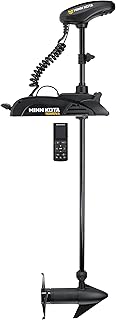
Best for anglers who want precise position hold and easy hands-free control. This Terrova model combines Spot-Lock accuracy with a wireless remote featuring an LCD screen for quick adjustments. The push-to-deploy lever simplifies launching, making it ideal for freshwater boats where frequent repositioning is common.
- Pros: Spot-Lock maintains position, remote control, easy deployment
- Cons: Higher price point; primarily designed for freshwater use
Best for: Anglers seeking strong GPS anchoring and variable-speed control in calm to moderate chop typical of freshwater lakes and rivers.
Limitation: The unit is optimized for freshwater environments; saltwater use requires careful consideration of corrosion resistance and maintenance.
Minn Kota PowerDrive Bow-Mount GPS

Best for versatility with built-in sonar and GPS anchor features. The PowerDrive offers Dual Spectrum CHIRP Sonar to visualize fish and structure, making it a strong all-around choice for anglers who value sonar clarity alongside precise spot-anchoring in freshwater.
- Pros: Integrated CHIRP sonar, reliable Spot-Lock, deploy-stow lever
- Cons: Sonar benefits depend on compatible boats and transducer positioning
Best for: Freshwater anglers who want integrated sonar to find structure and fish while leveraging GPS anchoring.
Limitation: Sonar performance is tied to transducer placement and boat setup; avoid if you require saltwater-specific protection features not listed here.
Minn Kota Riptide Terrova Bow-Mount GPS

Best for saltwater environments where corrosion resistance matters. The Riptide Terrova’s higher thrust (80 Lb) supports larger boats or tougher currents, while Spot-Lock and advanced modes help maintain position in salty surf and wind. Coastal anglers may benefit from enhanced protection, though it adds weight and cost.
- Pros: Stronger thrust for bigger boats, saltwater-ready design
- Cons: Heavier and more expensive than lower-thrust models
Best for: Saltwater fishing and larger boats that demand robust holding power in challenging conditions.
Caution: Higher thrust can impact battery life; plan energy use for extended days on the water.
AQUOS Haswing GPS Bow Mount

Best for app-based route management and precise GPS anchoring. The Haswing model includes a one-touch GPS Anchor Lock with a 4.9-foot precision radius and Wi-Fi/app connectivity for saving spots and routes. It suits technology-minded anglers who want to plan spots and share them with friends.
- Pros: GPS anchor lock, app-based route management, solid 55 Lb thrust
- Cons: Some users may prefer built-in sonar features for fish location
Best for: Freshwater or light tidal use where route planning and waypoint sharing via an app add value.
AQUOS GPS Bow Mount with Remote
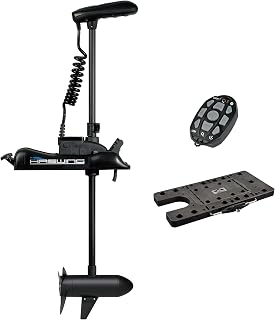
Best for anglers who value remote control alongside GPS anchoring. This model emphasizes GPS Anchor Lock, 4.9-foot precision, and app-based waypoint sharing. It pairs well with boats up to typical freshwater lengths and is suitable for users who prefer app routing and follow modes for easy navigation.
- Pros: Remote versatility, precise GPS hold, wallet-friendly compared with premium models
- Cons: App features may require regular connectivity and updates
Best for: Those who want convenient control from the helm or shore and enjoy planning routes via the companion app.
Buying Guide: GPS Trolling Motor Essentials
- Why GPS anchoring matters: Spot-Lock keeps your boat near your target position, reducing drift in wind and current.
- Thrust and shaft length: Larger boats or choppier water may require higher thrust (80 Lb) and longer shafts (60 inches). For smaller craft, 55 Lb with a 54-inch shaft is often sufficient.
- Sonar integration: Built-in CHIRP sonar adds fish-finding capability. If sonar is essential, consider models with integrated or compatible transducers.
- Remote and control: Wireless remotes enable hands-free navigation; ensure remote range fits your typical fishing area.
- Saltwater considerations: Models with corrosion protection and saltwater coatings extend motor life in brackish to saltwater use.
- App features: Route management and waypoint sharing can simplify long trips or multi-spot sessions. Confirm app compatibility with your smartphone.
- Deployment and stow: Easy deploy-stow levers reduce effort when entering or leaving water, especially in boat ramps or windy days.
FAQ
- What is Spot-Lock and why is it useful? Spot-Lock uses GPS to hold your boat in a precise position, enabling hands-free fishing and reducing drift in wind or current.
- Do I need CHIRP sonar on a trolling motor? Built-in CHIRP sonar helps you locate fish and structure; choose models that fit your boat’s sonar setup and preference for all-in-one systems.
- Can these motors be used in saltwater? Some models are designed with corrosion protection and saltwater-friendly finishes; verify the specific motor’s suitability for your environment.
- How do I deploy and stow the motor easily? Look for a Deploy-Assist lever or spring-loaded stow mechanism that minimizes effort and keeps hands safe during loading and unloading.
- Is app routing worth it? If you fish multiple spots or follow preset routes, app-based waypoint management can save time and improve consistency on long days.
- What size motor should I choose? Match thrust and shaft length to your boat size, weight, and typical water conditions; heavier boats or strong currents often require higher thrust and longer shafts.