
When repairing PVC inflatables, you want strong, waterproof, and flexible adhesives that work on vinyl, PVC, and related materials. This guide highlights five top options and explains who each product is best for, so you can choose the right patching solution for boats, pools, hot tubs, and gear. Ideal buyers include boat owners needing durable hull repairs, outdoor enthusiasts repairing tarps and inflatables, and DIYers seeking reliable, long-lasting bonds.
Summary of chosen products
| Product | Best For | Key Benefit | Note |
|---|---|---|---|
| Bellisinno Vinyl Cement | All-purpose PVC surfaces | Strong adhesion; underwater and outdoor use | Creams through UV resistance; broad material compatibility |
| RH Adhesives HH-66 Vinyl Cement 8 oz | Heavy-duty repairs | Industrial-strength, flexible bond | Wide temperature range; underwater applications |
| Seamax Commercial Grade 2 Part Marine Adhesive | Marine PVC boats and patches | Two-part system with controlled curing | Best for long-term, professional-style repairs |
| PVC Stitch Liquid Patch | Patch-and-go repairs | Liquid patch that hardens into a durable seal | 2-hour usability; compatible with multiple plastics |
| EPN Patch Kit | Patch kits for diverse inflatables | Includes patches; versatile underwater use | Round and square patches for variety |
Bellisinno Vinyl Cement For Inflatables

Best for: general purpose repairs on PVC inflatables, pool liners, and air mattresses. This cement provides a strong, waterproof bond and resists salt and chemicals after curing. It’s flexible and works underwater, making it suitable for boats and marine gear.
Why selected: It seals well across vinyl, PVC, ABS, EVA, and rubber surfaces, delivering durable repairs with UV-stable clarity to prevent yellowing. The product is designed to repair punctures, tears, and holes, offering broad material compatibility.
Limitation: As with most vinyl cements, full cure may take time in cooler conditions, so plan repairs ahead of use in cold weather.
RH HH-66 Vinyl Cement 8 oz

Best for: heavy-duty PVC and vinyl repairs on tarps, pool liners, inflatables, and outdoor fabrics. It provides a high-strength, flexible bond that endures cold and hot conditions, including underwater use.
Why selected: The adhesive is an industrial-strength vinyl cement that penetrates surfaces for lasting repairs. It remains flexible after curing, reducing future seam cracking and providing long-term serviceability.
Limitation: It is a larger format; for small fixes, consider a smaller kit to avoid waste.
Seamax Commercial Grade 2 Part Marine Adhesive

Best for: professional-style marine repairs on PVC inflatables where longer life and controlled bonding matter. A two-part system allows optimized curing and strong performance for boats and gear.
Why selected: Guidance on mixing and curing highlights a methodical approach to bonding, which helps ensure a durable repair that holds up to water exposure and pressure.
Limitation: Requires precise mixing and timing; improper ratios can affect bond quality.
PVC Stitch Liquid Patch Kit

Best for: quick, patch-only repairs where you want a seamless, water-resistant finish on various PVC surfaces, including hot tubs and inflatable boats.
Why selected: The liquid PVC forms a permanent patch as it cures, avoiding the need for separate patches. It is UV resistant and provides a relatively fast cure time compared to some cement-only options.
Limitation: Best for small to medium tears; larger rips may still benefit from a patch or additional reinforcement.
AquaPro Patch Kit For Inflatables
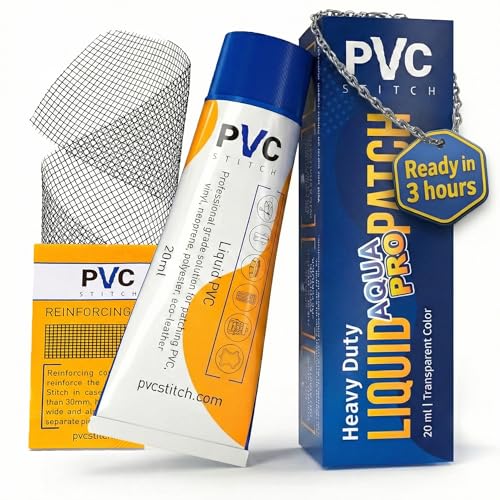
Best for: durable, heavy-duty repairs on PVC inflatables, hot tubs, and pool liners, especially in saltwater environments.
Why selected: Includes a robust patch system with UV resistance and water resistance, designed for outdoor and water gear. It’s suitable for several repair scenarios and surfaces, providing a longer damage resistance.
Limitation: Follow drying times carefully; outdoor conditions can affect cure rate.
Buying Guide: Key Purchase Considerations
What material does the adhesive work on?
Choose an adhesive that bonds PVC, vinyl, EVA, ABS, and rubber if you repair a variety of inflatables. Some products also repair fiberglass and foam.
Is the adhesive suitable for water exposure?
Look for waterproof formulas designed for underwater or aquatic use. A flexible, water-resistant bond reduces crack risk during use and temperature shifts.
What cure time and working time are practical?
Two-part systems may take longer to set but offer stronger bonds. Liquid patches cure faster for small repairs. Consider your typical repair timeline and weather conditions.
What are the temperature and UV considerations?
Adhesives with wide operating temperatures and UV-stable formulations prevent deterioration from sun exposure and temperature swings common in outdoor gear.
Are there safety and environmental notes?
Some products are available without toluene or other harsh solvents. Safer options can reduce fumes and environmental impact during application.
What is the repair scope?
For large tears or flexible seams, a two-part system or patch kit paired with a flexible cement provides the best longevity. For quick fixes, a liquid patch may be sufficient.
FAQ
- What is the best adhesive for PVC inflatable boats? A vinyl cement or two-part marine adhesive is typically best for durable, water-resistant repairs on PVC boats, offering strong bonds and long-term resilience.
- Can I use these adhesives underwater? Some products are designed for underwater use after curing; follow the manufacturer’s guidance for best results and safety.
- How long does curing take? Cure times vary from a few hours for liquid patches to 24 hours or more for cement systems, depending on temperature and humidity.
- Is a two-part adhesive safer to use? Two-part adhesives can offer stronger bonds but require careful mixing and timing. They are generally intended for professional-grade repairs.
- Can I fix PVC tarps and pool liners with the same adhesive? Yes, many vinyl cements are designed to bond tarps, pool liners, inflatables, and related PVC/vinyl fabrics.
- Are there eco-friendly options? Some formulations are toluene-free, offering safer alternatives while still delivering solid bonds.