
Finding the right mooring arms can make docking simpler and protect your boat from scratches, wakes, and shifting tides. This guide focuses on durable, corrosion-resistant options ideal for small to mid-size craft and family docks. The top picks are best for boaters who want quick installation, convenient storage, and reliable performance in saltwater, freshwater, or marinas. Below, you’ll see five carefully chosen products with clear strengths, best-use scenarios, and practical cautions to help you decide.
Product Comparison at a Glance
- Dock Edge + Wake Watcher Side Mooring Arms (Set of 2) — Best for lightweight to mid-size craft up to 18′ or 2,500 lb; easy plug-and-socket assembly; no gluing required.
- Dock Edge + Premium Mooring Whip Watercraft Docking System (Set of 2) — Best for quick setup with a focus on simplicity and speed; strong fiberglass construction; no gluing.
- 2-Pack 304 Stainless Steel Low-Profile Shore Mooring Arm — Best for corrosion resistance and longer-term coastal use; adjustable, rust-resistant hinge; good for small boats up to 22′.
- Dockmate Mooring Arms (Set of 2) — Best for tidal action docking; includes bungee lines to ride waves; arms pivot for storage and versatility.
- Dock Edge + Mooring Arm Dock Line/Rope (Set of 2) — Best for cost-conscious small craft; 4′ arms for safe clearance from the dock face; easy installation.
Dock Edge Wake Watcher Side Mooring Arms — 8′ Sets

Best for mid-size craft that require reliable distance from the dock and quick, tool-free assembly. This model comes as a set of two mooring arms with lines and hardware included. The 8′ length is designed for boats up to 18′ or 2,500 lb, and the product uses reinforced cross-wound fiberglass for durability. A unique plug-and-socket system means no glue and easy assembly or disassembly when not in use. Choose this if you want a compact, low-maintenance solution for general docking at calm to moderate waters.
Best-use note: Suitable for boats that frequently dock and depart, as the plug-and-socket design reduces setup time. Caution: This kit is not ideal for large or heavy vessels beyond the stated limit, and may require additional fenders or lines for deep-water mooring.
Dock Edge Premium Mooring Whip Watercraft Docking System (8′)

Best for users who want a robust, simple docking system with a focus on dependable performance. This 8′ system includes a pair of mooring whips designed for boats up to 18′ or 2,500 lb, constructed with reinforced cross-wound fiberglass. The plug-and-socket design enables quick assembly and disassembly without glue, making it ideal for seasonal boats or marinas with varying use. Waiver: Ensure the arms align with your dock pilings and water level for best results.
Compared to traditional fixed arms, this setup offers smoother give during tidal changes, helping prevent hull contact. Avoid this option if your boat regularly exceeds the stated weight and length limits or if your dock lacks compatible clearance for an 8′ arm length.
Dockmate Mooring Arms — 4 ft, Set of 2

Best for boaters who need a versatile solution that rides tidal action for easier docking. Dockmate arms pivot onto the dock when not in use and come as a 4 ft set of two, with bungee lines to accommodate tidal movement. The design emphasizes safety and storage convenience, reducing dock clutter and providing a straightforward setup. Best for busy marinas or personal docks where quick docking is valued. Caution: Shorter arms may not provide enough clearance for boats with high sterns or wide profiles during rough conditions.
Dock Edge Mooring Arm Dock Line Set — 4′
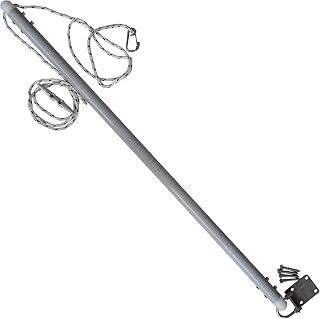
Best for small watercraft and personal watercraft (PWC) hookups. This set includes two 4′ mooring arms designed to maintain a safe distance from the dock face, helping to minimize damage from wind, wake, or waves. The arms apply vector-based forces to both the bow and stern, distributing stress to prevent hull damage. Choose this if you want a budget-friendly, straightforward option for reducing contact with the dock. Limitation: The shorter length may provide less clearance in high-wake conditions or with larger PWC models.
Buying Guide: Key Considerations For Choosing Boat Dock Mooring Arms
- Boat size and weight compatibility — Match arm length and weight capacity to your boat’s LOA (length overall) and weight to avoid overstress or excessive flex.
- Material and corrosion resistance — Stainless steel arms with powder coatings resist salt exposure better than basic metal, especially in coastal and saltwater marinas.
- Flexibility and movement — Some arms pivot or ride tidal action via bungee lines; these are best where water levels change often or where boats experience regular wake impact.
- Ease of installation and removal — Plug-and-socket systems or hinged pivots simplify seasonal storage and reduce maintenance time.
- Dock clearance and safety — Ensure the arm length and hinge clearance won’t pose tripping hazards or interfere with docking paths, fenders, or pilings.
- Hardware and maintenance — Look for rust-resistant hardware, simple maintenance routines, and the possibility to replace lines or arms individually.
Frequently Asked Questions
- What is the ideal arm length for a typical small watercraft?
Answer: 6 to 8 feet is common for boats under 20 feet, providing enough distance to avoid contact during minor wakes and wind while remaining easy to reach from the dock. - Are mooring arms suitable for saltwater use?
Answer: Yes, when they’re made of corrosion-resistant materials such as 304-grade stainless steel with protective coatings, and maintained regularly. - Do these arms require professional installation?
Answer: Most sets are designed for DIY installation using standard dock hardware; follow the manufacturer’s instructions for best results. - Can I use mooring arms with boats heavier than the listed capacity?
Answer: It’s not recommended; exceeding capacity can increase hull risk and cause premature wear or failure. - What maintenance is needed for long-term use?
Answer: Regularly inspect hinges, powder coatings, and lines for wear; rinse with fresh water after salt exposure and lubricate moving parts as needed. - Which option is best if I frequently adjust water levels?
Answer: Systems with a pivot hinge and adjustable tension, such as the stainless steel arms with flexible joints, are better for changing tides and waves.
Notes On Product Selection
The listed options cover a range of use cases—from light-duty, easy-install kits to more robust, corrosion-resistant arms designed for coastal conditions. When choosing, consider whether you prefer quick assembly (plug-and-socket designs), maximum clearance (longer arms), or flexibility to handle tidal action (pivoting joints and bungee setups). All five products come with basic hardware and are designed to reduce contact with the dock, helping protect hulls and paint while minimizing dock wear.