
Answer: These shipping-container canopy shelters are designed to extend outdoor space and provide weatherproof storage for construction sites, farms, and commercial use. The best picks balance durability, ease of assembly, and compatibility with container layouts. This guide highlights five top options, clarifying who each is best for and why it stands out.
Buyer summary table (at-a-glance):
- CHERY INDUSTRIAL 20×40 FT — Best overall for large outdoor work areas; galvanized frame for durability.
- CHERY INDUSTRIAL 20×20 FT — Best for compact container setups and lighter use.
- Mytee Products 20′ x 40′ Kit — Best value for a complete shelter kit with anchors.
- Mytee Products White 20′ Wide Endwall — Best weather resistance with wide back endwall.
- 40′ x 36′ Container Roof Kit — Best for expansive, two-container coverage and high clearance.
Chery Industrial 20×40 Ft Shipping Container Canopy Shelter

Best for: Large outdoor work areas and flexible storage needs on construction sites or farms. This 11oz PE canopy features galvanized tubes for stability and weather resistance, suitable for challenging outdoor environments. The shelter requires forklift or manual unloading—plan accordingly before ordering. It offers quick assembly with common tools, helping teams save setup time.
Why chosen: It combines a full 20×40 ft footprint with a robust frame, delivering a capacious covered area without walls. Ideal for contractors needing open-air protection for gear, materials, or temporary workshops. Caution: Ensure proper unloading capacity due to weight and dimensions.
Chery Industrial 20×20 Ft Shipping Container Canopy Shelter
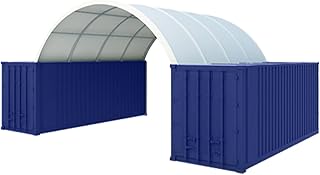
Best for: Smaller container setups or operations needing a contained canopy. The 20×20 ft shelter shares the same durable, galvanized frame and 11oz PE cover, making it a compact yet sturdy solution for lightweight outdoor storage and shade. Unloading considerations apply here as well.
Why chosen: It offers the same weatherproof and durable build as the larger model but fits tighter container arrangements. Choose this if space is limited or you need a portable, quick-install shelter for a smaller yard or jobsite. Caution: Check site dimensions to ensure a perfect fit with existing containers.
20′ x 40′ Shipping Container Shelter Kit

Best for: Complete shelter kits with anchor hardware. This kit includes a 21 oz PVC cover and a dedicated mounting system for concrete walls or ground. It’s well-suited for users who want an all-in-one solution with robust anchoring.
Why chosen: The included expansion bolt kit and clamps provide strong, reliable installation for permanent or semi-permanent outdoor storage. Caution: The absence of end walls may limit wind protection in exposed sites; plan for local climate considerations.
White 21 Oz PVC 20′ Wide Endwall Canopy

Best for: Weather defense and wind-resilient coverage in 20-foot wide setups. The 21 oz PVC cover with a wind rating up to 70 mph and snow rating of 47 lbs/sq ft provides solid protection for equipment and materials. The endwall design helps reduce wind uplift and dust intrusion.
Why chosen: It emphasizes wind and snow resistance with a broad width, making it a strong pick for open sites with varying weather. Caution: Ends are empty, so consider adding side walls if wind exposure is extreme.
40′ x 36′ Container Roof Kit

Best for: Expansive coverage when using two standard 40 ft containers. This heavy-duty roof kit features a 14-gauge steel frame and 26-gauge panels, delivering a wide-span shelter with generous clearance (13 ft). It’s suitable for equipment, vehicles, and outdoor storage in industrial settings.
Why chosen: The large, high-clearance design accommodates sizeable machinery and vehicles, making it ideal for large yards or storage facilities. Caution: The installation complexity and weight require proper planning and capable equipment for setup.
Buying Guide
What height and width do you need?
Measure container dimensions and desired clearance. Wider shelters provide more room for loading and maneuvering, while higher clearances support tall equipment and vehicles. Consider future site changes when choosing a model.
Is wind and snow protection important?
Look for wind ratings and snow load capacities on PVC covers and frame materials. Galvanized steel frames and heavy PVC can improve durability in exposed locations. If high winds are common, favor models with endwalls or reinforced anchoring systems.
What about anchoring and installation?
Kit options with included clamps, expansion bolts, and concrete-anchor kits simplify installation. If you cannot access heavy lifting equipment on-site, choose models advertised as easy to assemble and lighter-weight when disassembled for relocation.
What is your primary use?
Identify whether the shelter is for raw storage, temporary workshops, or long-term equipment housing. Larger footprints suit ongoing projects, while compact shelters fit tight yards or temporary setups. Consider whether you need walls or open sides for airflow and ventilation.
Durability and maintenance considerations
11oz or 21oz PVC covers offer different durability and weather resistance. Galvanized frames reduce corrosion risk. Plan for periodic inspections of frame joints and cover seams to ensure long-term performance.
Installation timing and logistics
Account for unloading requirements and site readiness. Some products require forklift access or manual labor for unloading. Confirm delivery and offloading arrangements before purchase to avoid delays.
FAQ
- What size canopy is best for a single standard shipping container? A 20×20 or 20×40 ft canopy can cover a single container footprint with space for access and storage, depending on the needed overhead clearance.
- Do these canopies require end walls? Some options include endwalls and back-end configurations; others are open-ended. Endwalls improve wind resistance but reduce airflow, so choose based on climate and usage.
- Are these canopies easy to assemble for non-professionals? Several models are described as easy to assemble with common tools, though larger units benefit from extra help or equipment during installation.
- Can I relocate a canopy shelter after installation? Many kits are designed for semi-permanent to temporary use and can be relocated with proper planning. Check weight, anchoring, and transport considerations.
- What maintenance is needed for PVC covers? Regular checks for wear, seam integrity, and any UV damage help extend life. Clean with mild soap and water; avoid harsh chemicals.
- Which canopy is best for extreme weather? Shelters with galvanized steel frames and heavier PVC (21 oz) are typically better at resisting wind and snow when properly anchored.