
Clay soils can be heavy and slow to drain, often compacting and hindering root growth. The right cover crops can loosen soil, suppress weeds, add organic matter, and improve moisture management. This guide highlights five Amazon-sourced options tailored for clay soil, with practical tips on when and how to plant them for best results.
| Product | Primary Benefit | Why It Works For Clay |
|---|---|---|
| Sow Right Seeds – Cover Crop Collection for Planting – 9 Packets | Soil health, erosion control, weed suppression | Multiple species improve structure and drainage over time |
| Sow Right Seeds – Cover Crop Collection for Planting – Annual Buckwheat, Hairy Vetch and Radish Daikon Driller Seed | Soil health, erosion control | Mixes a quick-growing cover crop trio for rapid soil benefits |
| Outsidepride Annual Daikon Radish Seeds | Deep-root penetration, soil aeration | Deep taproot fractures compacted clay layers |
| Horticultural Calcined Clay Soil Additive | Moisture retention, soil structure | Improves water retention and aeration in heavy soils |
| TOYPOPOR Leca Clay Pebbles | Drainage and aeration in growing media | Lightweight drainage aid for improved root health |
Sow Right Seeds 9 Packets Cover Crop Collection

The Sow Right Seeds 9 Packets collection bundles nine diverse cover crops designed to improve soil structure, suppress weeds, and prevent erosion—ideal for clay soils that need organic matter and better drainage. Varieties include annual buckwheat, crimson clover, Dutch white clover, hairy vetch, yellow mustard, winter oats, Austrian winter pea, diakon drill radish, and winter rye. This combo provides a broad spectrum of benefits, from rapid ground cover to deep root action, helping to break up dense clay and encourage healthier soil biology.
Sow Right Seeds – 3-Packet Cover Crop Collection
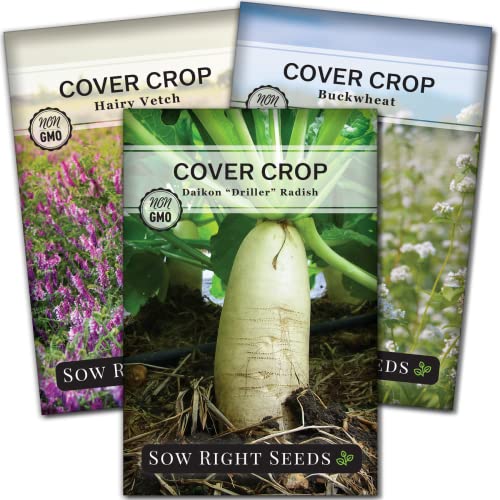
This trio-focused collection includes annual buckwheat, hairy vetch, and radish daikon drill seeds. It’s designed for homeowners wanting an easy, low-cost pathway to better soil health in clay beds. Each packet is sized for a typical 8′ x 4′ garden bed, enabling steady ground cover and nutrient recycling while reducing erosion risk during heavy rainfall.
Voulosimi Horticultural Calcined Clay Soil Additive (2 QT)

Calcined clay is a versatile soil amendment that helps clay soils retain moisture while improving drainage and aeration. This product is widely used across bonsai, succulent, and cactus plant mixes, but its properties are beneficial for larger garden beds too. By improving water retention without creating soggy conditions, calcined clay supports healthier root systems in clay soils and can complement a cover crop strategy by stabilizing soil moisture between plantings.
Mosser Lee Black Sand Soil Cover

Although not a traditional cover crop, decorative soil covers like Mosser Lee Black Sand help manage moisture and reduce weed emergence in planters or display areas where clay soil is present. It can help protect bare soil during the establishment phase of cover crops and improve the visual appeal of potted arrangements. Use as a temporary mulch or decorative base to reduce erosion while cover crops establish.
Outsidepride Daikon Radish Seeds

Daikon radish seeds are known for their deep rooting, which helps break up compacted soil layers and improves water infiltration. Planting a cover crop with radishes in clay soil creates channels that enhance drainage and root growth. This variety is suitable for winter cover crops and erosion control, forming a canopy that protects soil nutrients while promoting natural soil aeration as it decomposes.
Voulosimi Horticultural Calcined Clay (3 LB)
This slightly larger calcined clay option offers the same moisture retention and improved soil structure benefits as the 2-quart variant, with a higher volume for larger beds. For clay soils, incorporating calcined clay can improve drainage characteristics and create a more balanced soil environment for future cover crops. It pairs well with a fall or early-spring planting window for best results.
Buying Guide: Key Purchase Considerations For Clay Soil
- Soil structure and rooting depth: Choose cover crops with shallow and deep roots to gradually loosen compacted clay. A mix of fast-establishing species (buckwheat) and deep-rooted types (radish) works well.
- Season and climate: Align crop timing with your hardiness zone. Winter-hardy species tolerate cold soils and continue to improve soil biology in spring.
- Soil moisture management: Clay soils retain water; add amendments like calcined clay to balance moisture and support better aeration.
- Weed suppression: Select dense ground-covering varieties to outcompete weeds during off-season planting windows.
- Maintenance and harvesting: Plan for termination methods (mowing, tilling, or allowing decay) to feed soil organic matter for the next rotation.
- Compatibility with existing beds: Consider crop residues compatible with future crops and avoid introducing non-native species that may become invasive in your area.
- Provisions for mulch and topsoil: When starting, use mulch or soil amendments to protect bare soil until cover crops are established and decomposed.
- Combine a quick-establishing cover crop with a deeper-rooting option for best results on clay soils.
- Use calcined clay or similar soil amendments to improve structure and moisture retention while preventing crusting.
- Alternate fall and spring planting to maintain soil health year-round.