
Choosing the right fertilizer is essential for lime trees, whether you’re growing them in the ground or in containers. The best citrus fertilizers provide balanced nutrients, support flowering, and promote vibrant foliage while boosting fruit quality. This guide highlights five trusted options with clear nutrient profiles, application guidance, and suitability for different lime-growing setups. Use this to compare formulas, application rates, and organic versus synthetic approaches to meet your lime tree’s needs.
| Product | NPK Ratio | Format | Best For |
|---|---|---|---|
| Jobe’s Organics Granular Garden Fertilizer | 3-5-5 | 4 lb bag | Organic, fruit & citrus focus |
| Lime Tree Fertilizer for All Lime and Citrus Trees (TPS NUTRIENTS) | Unknown | 8 oz liquid | Liquid convenience, lime-specific |
| GARDENWISE Professional Citrus Fertilizer | 6-4-6 | 2 quarts | All citrus; micronutrient rich |
| Farmer’s Secret Citrus Tree Booster Fertilizer | High-concentration mix | 8 oz | Concentrated, easy dilution |
| Espoma Citrus-Tone | 5-2-6 | 4 lb | Organic, ready-to-use |
Jobe’s Organics Granular Fertilizer For Citrus

The Jobe’s Organics Granular Garden Fertilizer is a ready-to-use, OMRI-listed option designed for fruit and citrus plants. It features a 3-5-5 NPK ratio to support steady growth, fruit development, and vibrant foliage. The formula emphasizes organic ingredients and helps minimize runoff, making it a good choice for sustainable gardens. This 4-pound bag covers a typical home orchard or several container trees with regular applications scheduled around growth cycles.
Lime Tree Fertilizer for All Lime and Citrus Trees
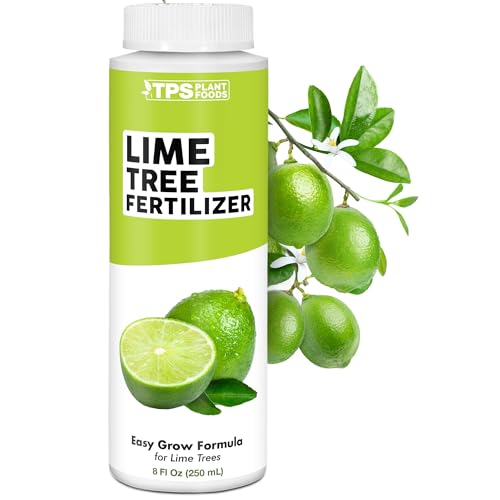
This 8-ounce liquid plant food targets lime trees specifically, offering a convenient liquid application that can be quickly absorbed by roots and foliage. While not listing a traditional NPK balance in the product snippet, it is marketed as a targeted lime tree fertilizer, suitable for rapid uptake and maintenance feeding during the active growing season or after pruning. Ideal for container trees or small groves where quick responsiveness is desirable.
GARDENWISE Citrus Fertilizer + Micronutrients

GardenWise offers a comprehensive citrus fertilizer with multiple micronutrients. The blend emphasizes growth with 6% nitrogen, 4% phosphorus, and 6% potassium, aimed at boosting fruit yield and quality. It also highlights a micronutrient mix including magnesium, zinc, copper, iron, and boron to support chlorophyll production, foliage vigor, and flower & fruit development. The formula is positioned as a single-buy option for many citrus varieties, reducing the need for multiple products.
Farmer’s Secret Citrus Tree Booster

Farmer’s Secret Citrus Tree Booster is a highly concentrated plant food designed for all citrus trees, including lemons, limes, and oranges. The product is described as a super concentrated formula, with dilute-when-needed instructions (one teaspoon per gallon of water, weekly). For young trees, a lighter dose is recommended; for mature trees, an increased rate is advised. This option provides a cost-effective way to tailor feeding frequency and strength to tree size and season.
Espoma Citrus-Tone Organic Fertilizer

Espoma Citrus-Tone provides a ready-to-use, organic 5-2-6 fertilizer blend enriched with calcium. It’s designed for all citrus trees, including lime and orange varieties, and promotes vigorous growth and abundant fruit. The product emphasizes a late winter to spring feed cycle, aligning with pre-bloom and post-bloom windows to support flower formation and subsequent fruit set without mixing or complex preparation.
Buying Guide: Key Purchase Considerations
- Organic vs. synthetic: Organic blends like Espoma Citrus-Tone and Jobe’s Organics emphasize natural ingredients and OMRI listings, appealing to organic gardeners. Synthetic or balanced synthetic options (like GardenWise) often provide precise nutrient ratios and faster results, which can be advantageous for containers or stressed trees.
- NPK balance and micronutrients: For lime trees, a balanced or slightly higher potassium level supports fruit quality. Micronutrients such as magnesium, zinc, iron, and boron bolster chlorophyll production, leaf color, and fruit development. Consider products with micronutrient blends if your soil is deficient or if leaves show interveinal chlorosis.
- Applicability and format: Liquid formulas offer rapid uptake and convenient dosing for mature trees or containers; granular or powder forms are durable and suitable for soil incorporation around drip lines. Choose a format that matches your care routine and tree size.
- Coverage and concentration: Concentrated formulas (like Farmer’s Secret) can be cost-efficient but require careful dilution to avoid over-fertilization. For beginners, ready-to-use blends reduce risk of misapplication.
- Organic certification and safety: If you grow organically or have edible fruit close to harvest, verify OMRI listing and ensure no sludges or synthetic byproducts are part of the mix.
- Container vs. ground planting: Container-grown limes often require more frequent feeding with balanced formulas and higher attention to drainage. Ground trees may benefit from slower-release organics or layered feeding that matches seasonal growth.
- Application timing: Align feeding with the tree’s growth cycle—late winter to early spring for new growth and flowering, with lighter maintenance applications during active fruiting. Avoid heavy feeding during extreme heat or drought stress.
How To Choose The Right Lime Tree Fertilizer
- Assess your tree stage: young trees favor steady growth with balanced nutrients; mature fruiting trees benefit from potassium-rich blends to enhance fruit quality.
- Check soil or potting mix: If your soil already contains sufficient organic matter, a moderate NPK blend coupled with micronutrients is typically enough; lime trees in pots often need more frequent feedings with a precise dosage.
- Consider ethics and sustainability: For environmentally mindful gardens, prioritize organic and OMRI-listed products that minimize runoff and environmental impact.
- Plan a feeding schedule: A typical citrus fertilizing routine includes a primary feeding in late winter or early spring, with supplemental applications through the growing season, tapering as fruit sets and ripens.
- Monitor results: Observe new growth color, leaf health, and fruit yield. If foliage shows yellowing between leaf veins, additional magnesium or iron-rich micronutrients may be needed.