
Choosing the right fertilizer helps palms stay green, strong, and pest-resistant whether you’re growing them indoors, in containers, or in landscapes. The following selections highlight common nutrient mixes, specialized formulas, and organic options designed for various palm types. This guide compares nutrient balance, application methods, and suitability for different life stages, so you can select a product that matches your palm’s needs and your gardening routine.
Summary of selected products:
- Miracle-Gro Shake ‘N Feed Palm Plant Food — 4.5 lbs
- Perfect Palm Dual Action Palm Tree Fertilizer — 7 lb
- Jobe’s Organics Granular Fertilizer — 4 lbs
- Gardenera Premium Liquid Palm Tree Fertilizer — 8 oz
- Farmer’s Secret Palm Tree Booster Fertilizer — 32 oz
Miracle-Gro Shake ‘N Feed Palm Plant Food
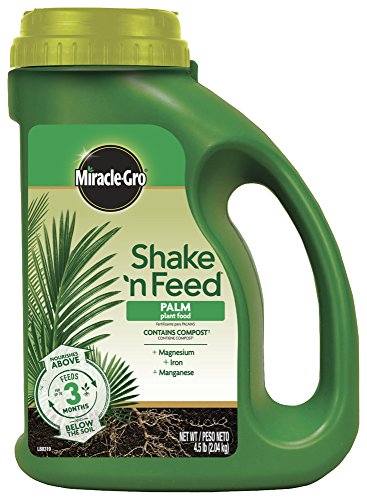
Miracle-Gro Shake ‘N Feed Palm Plant Food is formulated to feed palm plants for up to three months. It includes magnesium, iron, and manganese to promote lush growth and help prevent yellowing and curling of fronds. The product targets palms, cycads, and tropical plants, suitable for indoor or outdoor containers as well as in-ground gardens. Its easy-shake formulation minimizes measuring and mixing, which can be convenient for busy gardeners managing multiple palm specimens. The slow-release nutrients reduce the risk of fertilizer burn when used as directed, supporting steady, long-term growth in a variety of environments.
Usage considerations: Apply to palm trees and related tropicals as a general feeding, following label directions for containerized vs. garden plantings. If your palms show persistent yellowing or nutrient-deficient fronds, consider supplementing with micronutrients or adjusting light and irrigation to maximize uptake of the applied nutrients.
Perfect Palm Dual Action Palm Tree Fertilizer

Perfect Palm’s Dual Action Palm Tree Fertilizer is designed to optimize magnesium and iron uptake across different soil types. Marketed as a palm-specific formula, it emphasizes high nutrient availability and disease-resistance support. The product claims to be created by palm farmers and produced in the United States, with macro and micro nutrients—including boron and manganese—geared toward rapid improvement in palm foliage and resilience. The dual-action approach targets nutrient uptake through both magnesium and iron pathways, potentially benefiting palms under transplant stress or in new growth phases.
Application guidance: Follow the package’s application rate and schedule, especially when using in-ground landscapes or large container plantings. Monitor frond color and growth over several weeks to determine if subsequent applications are needed, ensuring soil moisture remains adequate for nutrient transport without overwatering.
Jobe’s Organics Granular Fertilizer

Jobe’s Organics Granular Fertilizer brings an OMRI-listed, 4-2-4 NPK blend designed for organic gardening. The formula is positioned to minimize runoff and odors, making it suitable for sensitive environments or homes where organic cultivation is preferred. Because the product uses organic ingredients, nutrient release may be slower and more dependent on microbial activity, which can align well with steady palm growth and healthier soil ecosystems. The absence of synthetic chemicals appeals to gardeners seeking environmentally friendly options for palm trees and associated tropical plants.
Considerations: Organic fertilizers often require more frequent applications to maintain consistent growth, especially in sandy soils or hot climates. For established palms with heavy canopies, soil health and microbial activity will influence nutrient availability, so pair with proper irrigation practices and regular soil testing if available.
Gardenera Premium Liquid Palm Tree Fertilizer

Gardenera’s Premium Liquid Palm Tree Fertilizer provides a 3-1-2 ratio in a liquid concentrate designed for indoor palm trees and other ornamental palms. The organic-oriented formula emphasizes pure nutrients without synthetic additives, aiming to preserve the palm’s natural appearance while supporting lush fronds and steady growth. Liquid concentrates allow quick uptake through foliage and roots, which can be beneficial for smaller indoor palms or for rapid response to nutrient deficiencies. This option suits gardeners who prefer a solvent-based, easily measured product with repeatable results.
Practical notes: Dilute according to label instructions and apply on a regular schedule to maintain steady nourishment. For spaces with limited natural light, ensure ancillary care like proper lighting and humidity to maximize the fertilizer’s effectiveness on indoor palms.
Farmer’s Secret Palm Tree Booster Fertilizer

Farmer’s Secret Palm Tree Booster Fertilizer comes as a highly concentrated 4-15-12 formula designed for all palm types at any life stage. The blend emphasizes macronutrients with trace amounts of iron and zinc, formulated to deliver strong growth and frond development. The product includes guidance to dilute one teaspoon per gallon of water and apply weekly near the drip line, adjusting for tree maturity and seasonal growth. It positions itself as an efficient option for larger landscapes or containerized palms, where frequent feeding may be necessary to sustain a vigorous canopy.
Usage notes: Always follow dilution and frequency recommendations to avoid over-fertilization. In consecutive application cycles, observe changes in leaf color and growth, and adjust according to palm health and environmental conditions such as rainfall and soil drainage.
Buying Guide: Palm Fertilizer Considerations
- Formulation balance: Palm fertilizers vary in NPK ratios (for example, 8-4-8 vs 3-1-2). Palms typically benefit from higher nitrogen during active growth and more balanced micronutrients for frond quality. Organic options may release nutrients slowly, which suits steady growth but may require more frequent applications.
- Delivery method: Granular fertilizers are common for outdoor landscapes and larger containers, while liquid formulas offer quicker uptake for indoor palms or rapid correction of deficiencies. Spikes provide long-term feeding with minimal maintenance but can cause uneven distribution if not placed correctly.
- Soil and environment: Palms in sandy or well-drained soils may need more frequent feeding with careful irrigation. In heavy clay soils, consider slow-release formulas to reduce leaching. For indoor palms, bottle concentration and light levels influence how often you fertilize and how much you apply.
- Life stage and palm type: Young transplants often need specialized formulas with micronutrients to support establishment, while mature palms may tolerate higher potassium and magnesium. Some palm species have particular nutrient requirements; tailor your choice to the species you grow.
- Safety and sustainability: Organic and OMRI-listed products support environmentally conscious gardening. Always adhere to label directions and take standard safety precautions when handling fertilizers, especially around pets and children.
- Application schedule: Consistent feeding schedules—such as three feedings per year for some formulas or weekly dilutions for liquids—help maintain a steady nutrient supply. Adjust based on growth rate, frond color, and soil moisture conditions.
- Maintenance practices: Combine fertilization with proper watering, ventilation for indoor palms, and occasional soil testing to verify nutrient availability. Regular mulch and pest monitoring support overall palm health alongside fertilization.
In sum, the best fertilizer for your palms depends on whether you prefer granular vs. liquid formats, organic vs. synthetic blends, and whether you’re treating indoor trees or landscape palms. The products above cover a range of nutrient blends and delivery methods, making it possible to tailor feeding to your palm’s growth phase and your garden setup.