
Choosing the right fertilizer to lower soil pH can help acid-loving plants like hydrangeas, blueberries, azaleas, and rhododendrons thrive. This guide highlights five reliable products from trusted brands, explains how they work, and compares their best-use scenarios. Each option is designed to gradually or quickly reduce soil alkalinity, improving nutrient availability and overall plant health.
Summary of Selected Products
| Product | Brand | Form | Benefit |
|---|---|---|---|
| True Organic Prilled Sulfur | True Organic | Prilled sulfur | Low pH, boosts flowering and growth |
| Earth Science Fast Acting Sulfur | Earth Science | Granular sulfur | Instant pH reduction, helps acid-loving plants |
| True Organic Soil Acidifier | True Organic | Soil acidifier mix | Turn hydrangeas blue, lowers soil pH |
| Greenway Biotech Organic Sulfur Powder | Greenway Biotech | Sulfur powder | pH correction, supports sulfur needs |
| FoxFarm Cultivation Nation pH Down | FoxFarm | Liquid pH down | Immediate pH adjustment for nutrient solutions |
True Organic Prilled Sulfur – Organic Fertilizer

True Organic Prilled Sulfur is a straightforward soil amendment designed to lower pH naturally. As a granular sulfur product, it contributes to a healthier growing environment for acid-loving plants by enabling better micronutrient uptake. It supports overall plant growth, enhancing flowering, vegetables, herbs, and foliage when used as part of a balanced feeding program. The product is suited for outdoor garden beds and established landscapes where soil pH is a limiting factor. Application typically involves light, even distribution followed by thorough watering to initiate microbial conversion of elemental sulfur to sulfate, which lowers the soil pH over time.
Key benefits include lowered soil pH to improve nutrient availability and enhanced flowering and fruiting. The product also acts as a long-term soil conditioner, helping maintain optimal acidity levels for sensitive plant varieties. Consider pairing with soil testing to determine the precise pH shift desired and avoid overly acidic conditions. Always follow label directions for timing and rate guidance to minimize stress on existing plants and avoid volatilization or runoff. This option is ideal for gardeners seeking a natural approach to acidify soil without synthetic buffers.
Earth Science Fast Acting Sulfur

Earth Science Fast Acting Sulfur is formulated to lower soil pH quickly, making it suitable for immediate needs in acid-loving plant gardens. By reducing pH, hydrangeas, azaleas, and blueberries can absorb more nutrients, promoting stronger growth and deeper color. This product aims to minimize nutrient lockout caused by high soil pH, thereby supporting more efficient fertilizer use and better overall plant vigor. It is a practical option when rapid pH adjustment is required, such as preparing beds for acid-loving ornamentals or fruiting shrubs. Users should apply according to soil test results and water after application to initiate microbial processes that convert sulfur into sulfate.
In addition to pH reduction, the formula can contribute to improved leaf color and bloom quality by enabling access to essential nutrients. It is best used in soils with limited sulfur availability or where long-term pH management is needed alongside ongoing plant nutrition. For best results, monitor soil pH after application and reapply as needed, avoiding excessive rates that could overly acidify the soil and stress plants.
True Organic Soil Acidifier

True Organic Soil Acidifier is designed to lower soil pH to support acid-loving plants. It’s particularly aimed at hydrangeas that benefit from more acidic conditions, helping them achieve blue blooms and stronger growth. This product provides a practical option for homeowners who want to influence hydrangea color or support a broader range of acidophilic plants such as azaleas, rhododendrons, blueberries, and camellias. The formulation supports long-term soil acidification, allowing plants to access essential nutrients more readily as the soil environment becomes more conducive to their needs.
When using a soil acidifier, it’s important to measure soil pH before and after application to gauge effectiveness and avoid overstating acidity. Consider combining with mulch as a protective layer to reduce wash-off and ensure a uniform distribution. Pair with irrigation practices that promote uniform moisture, enabling microorganisms to process the amendments efficiently. This product is a solid pick for gardeners focused on hydrangea color transformation and broader acid-loving plant health.
Greenway Biotech Organic Sulfur Powder

Greenway Biotech Organic Sulfur Powder is an elemental sulfur product designed to lower soil pH and address sulfur deficiencies in plants. With a high sulfur content, this powder is intended to supply essential sulfur for protein synthesis and overall plant growth. As elemental sulfur requires microbial action to convert to sulfate, effectiveness depends on soil biology and moisture. The product is positioned as a pure sulfur source that can help correct pH issues in alkaline soils, particularly for acid-loving crops and ornamentals. Users should apply with attention to soil temperature and microbial activity, as slower conversion can occur in cooler conditions.
Best results come from pre-watering and ensuring even distribution across garden beds or root zones. Because the product is elemental sulfur, it works more gradually than liquid pH adjusters, but it can yield longer-lasting pH reductions. This option may be preferred by gardeners who favor a natural mineral-based approach and want to maintain a steady acidifying influence in the soil over time.
FoxFarm Cultivation Nation pH Down
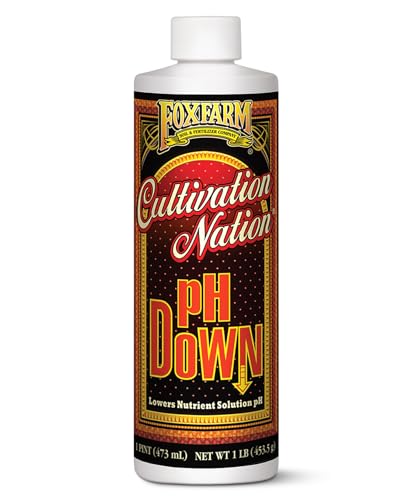
FoxFarm Cultivation Nation pH Down provides a liquid, citric acid-based solution for adjusting the pH of hydroponic and soil-based nutrient systems. With 40% citric acid, this product supports immediate pH adjustment, helping nutrient solutions remain within an optimal range (typically around pH 5.6 to 6.8) for plant uptake. It is particularly useful for rapid responses in controlled environments where pH drift can affect growth, nutrient availability, and microbial health. The liquid form allows for precise dosing and quick integration with irrigation schedules.
When using liquid pH down, gradual additions and constant pH monitoring are essential. Shake well, test, and add small increments until the desired pH is reached. This approach minimizes the risk of over-acidification and plant stress. It’s well-suited for gardeners managing nutrient solutions in hydroponic setups, greenhouse operations, or container gardens where quick adjustments are necessary to maintain stable growing conditions.
Buying Guide: Key Purchase Considerations
- Plant type and pH target: Acid-loving plants (hydrangeas, blueberries, azaleas) benefit most from soil amendments that lower pH. Consider the specific pH shift your plants require and choose a product with an appropriate action time (instant vs. gradual).
- Soil testing: Start with a soil test to determine current pH and nutrient availability. Tailor your choice and application rate to avoid over-acidification and to plan subsequent maintenance.
- Form and application method: Granular or powder sulfur products provide slower, long-lasting pH changes, while liquid pH Down solutions offer rapid adjustments. Choose based on how quickly you need results and your garden setup.
- Soil biology: Elemental sulfur relies on soil microorganisms to convert to sulfate. In cooler soils or waterlogged conditions, conversion can be slower. Liquid alternatives can be preferable in such scenarios.
- Long-term management: Regular monitoring and reapplication planning help maintain target pH. Combine with mulching, irrigation practices, and compatible plant selections for consistent results.
- Organic vs. synthetic factors: Organic options (sulfur-based soil amendments) support organic gardening goals and may have slower but steadier effects. Synthetic liquid pH reducers can be more precise but may not align with all growing practices.
- Safety and labeling: Follow label directions for rates, timing, and safety. Avoid applying near roots of highly sensitive plants and water after application as recommended.
- Cost and coverage: Compare product coverage and cost per unit to determine the best value for your garden size and frequency of use.
These considerations help ensure you select a product that aligns with your planting goals, soil conditions, and gardening practices. For best outcomes, pair soil amendments with proper irrigation, mulching, and plant selection to sustain healthier, more vibrant acid-loving plants.