
Answering the most common buyer question: which front wheel pannier rack fits your bike and carries your gear reliably? This guide highlights five solid options suited for commuters, tourers, and light bikepackers. Each rack supports daily errands, weekend trips, or longer adventures and is chosen for compatibility with a range of bikes, ease of installation, and practical load handling. The top picks below help you decide who benefits most from each design.
| Product | Best For | Key Benefit | Load Capacity |
|---|---|---|---|
| Kowaku Front Rack Carrier | Daily riders, casual cyclists | Easy install, spacious design | Up to 25 kg / 55 lbs |
| PINNAMAX Front Rack | Bikepackers, commuters | Lightweight with large bag compatibility | Depends on mounting |
| Tubus Tara Lowrider | Touring, long-distance riders | Established, durable lowrider | Depends on fork |
| Origin8 Rush Messenger Front Flat Rack | Urban riders, cargo shaping | Integrated guard and compatibility | Depends on mounting |
| ACRUNU Aluminum Front Rack | All-around riders, budget-conscious | High load with lightweight aluminum | Up to 15 kg / 33 lbs |
Kowaku Front Rack Carrier

The Kowaku front rack is designed for quick, tool-free installation on a wide range of bikes. Its spacious platform is ideal for riders who need extra space for groceries, a small bag, or bikepacking essentials on short trips. Best for casual riders who want an uncomplicated setup and reliable load distribution. The rack emphasizes a straightforward mounting process, making it suitable for beginners or riders who want to switch racks between bikes. A potential limitation is that maximum load may be tied to the fork design and mounting method, so verify compatibility with your bike before use.
Why it’s a fit: This rack emphasizes “easy install” and versatility, which appeals to riders who frequently bike-commute and run errands. The 25 kg/55 lbs capacity supports typical daily shopping loads or light overnight gear. The design accommodates both aluminum and steel frames, broadening compatibility. The product is best for riders who prioritize quick setup and straightforward carrying capacity over elaborate rack configurations.
PINNAMAX Front Rack

This front rack features a 3D bend design that favors smaller, bikepacking-friendly setups. It’s described as lightweight with two-piece legs that clamp to fit various fork geometries. Best for cyclists who want a “bag-ready” front rack capable of carrying a day bag, sleeping mat, or similar items while maintaining stable handling. A caution is that some forks may require careful alignment or clamping, and the product notes suggest it fits 26″-29″ or 700c wheels, so confirm wheel size and fork clearance before purchasing.
Who should choose this: Ideal for urban riders who occasionally transport a compact bag or a light load, or for those who want a stylish, low-profile rack that doesn’t overshadow the bike’s look. It’s a solid option if you ride mixed terrain and need a rack that won’t hinder maneuverability.
Tubus Tara Lowrider Pannier Rack

The Tubus Tara Lowrider has a long-standing reputation for durability and fork compatibility. It’s designed to position panniers low to the wheel for improved stability on a wide range of forks. Best for riders who want a proven lowrider system that distributes weight toward the hub for balanced handling on longer rides. A potential limitation is compatibility with forks and eyelets; some forks may require additional adapters or hardware, so verify fit with your frame before ordering.
Why it stands out: The Tara Lowrider is favored by tourers who rely on panniers and want predictable stability in variable weather and terrain. Its mounting system has evolved for broader fork compatibility, making it a reliable choice for seasoned riders who value proven engineering over cosmetic design.
Origin8 Rush Messenger Front Flat Rack
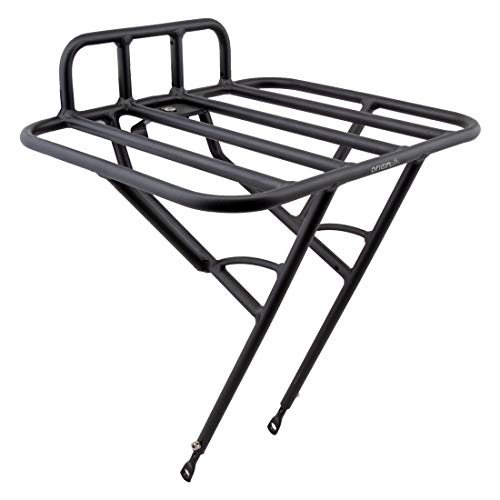
The Origin8 Rush Messenger front rack emphasizes practicality for urban and cargo-focused riding. It includes a front flat rack design with a protective rear guard to shield head tubes and cables from cargo. Best for riders who frequently carry wide or oddly shaped items and need a stable mounting point. It mounts to caliper holes and the front axle, offering versatility on compatible frames. A caution is that some bikes with unique fork configurations may require additional mounting considerations to ensure a secure fit.
Who should buy: Choose this if you ride through city streets with bulky groceries or odd-shaped loads and want a rack that accommodates wider items without interfering with steering or cables. The guard feature is helpful for riders who transport items that could rub against sensitive front-end components.
Bike Front Pannier Rack (Generic)

This generic front rack uses a trapezoid design and no-play mounting to provide a stable load-bearing structure adaptable to mountain and road bikes. Best for riders who want a budget-friendly option with everyday utility. It is built with weather-resistant steel, balancing durability with reasonable weight. The data suggests compatibility across a broad range of bikes, but the actual fit should be checked for eyelet presence and compatibility with certain fork designs. A caveat is that some frames may need additional hardware for secure mounting.
ACRUNU Aluminum Front Rack

The ACRUNU rack combines lightweight aluminum with a solid 15 kg (33 lbs) load capacity. It features a 3D bend design for a multi-scenario cycling use, and fully adjustable dual support legs to fit forks with or without eyelets. Best for riders seeking a robust, adjustable rack that stays light and versatile across 26″, 27.5″, 29″, and 700c wheels. A potential limitation is that the overall compatibility can depend on fork shape and the presence of eyelets, so verify mounting requirements before purchase.
Buying Guide: Key Considerations
- Bike compatibility: Confirm wheel size, fork type, and presence of eyelets or eyelet-adapter options before choosing a front rack.
- Load capacity: Match the rack’s maximum load with your typical cargo. Heavier loads may require stronger forks and appropriate mounting.
- Mounting method: Consider racks that clamp or bolt on without professional tools if you switch bikes often.
- Weight vs. stability: Lighter racks are easier to manage but may offer less rigidity for very large loads; heavier racks tend to be sturdier but add to bicycle weight.
- Intended use: Urban commuting, bikepacking, or touring each benefit from different rack designs, such as lowrider configurations for balanced handling or flat racks for simple pannier mounting.
Frequently Asked Questions
- What is a front pannier rack best used for? — Front pannier racks add carrying capacity for groceries, tools, or light camping gear, improving balance when paired with rear racks.
- Can I mount a front rack on any bike? — Most front racks fit most bikes, but compatibility depends on fork width, presence of eyelets, and tire clearance. Check fork dimensions and mounting options.
- Do front racks affect steering or handling? — A properly mounted rack should not significantly alter steering, but heavier or poorly balanced loads can affect handling, especially at low speeds.
- Which material is best for front racks? — Aluminum offers light weight and rigidity; steel provides durability and often lower cost. Aluminum is preferable for lighter builds, steel for rugged use.
- How do I maintain front rack performance? — Regularly check mounting hardware for tightness, inspect racks for cracks, and clean to prevent corrosion, especially in wet conditions.
- Is a lowrider rack better than a flat rack? — Lowrider racks typically improve weight distribution for panniers and stability on long rides, while flat racks are simpler and often easier to install.