
Choosing the right gravel and base materials for a fire pit can dramatically improve heat distribution, aesthetics, and safety. This guide highlights popular lava rock, lava pebble, and fire pit sand options that perform well in both gas and propane setups, indoors or outdoors. The selections emphasize durability, heat resistance, and ease of installation so you can create a reliable focal point in your outdoor living space.
Summary of selected products:
| Product | Brand | Key Use | Approx. Size |
|---|---|---|---|
| Stanbroil Lava Rock Granules | Stanbroil | Decorative fire bowls and pits; gas log sets | 1 1/5″ – 2″ |
| American Fireglass Medium Lava Rock | American Fireglass | Large fire pits, bowls, gas fireplaces | 1/2″ – 1″ |
| NUPICK Red Lava Rocks | NUPICK | Gas or propane systems; base layer | 1/2″ – 2″ |
| Stanbroil Tumbled Lava Rock Pebbles | Stanbroil | Polished lava pebble look; safe edges | 1″ – 2″ |
| Skyflame Silica Sand | Skyflame | Base layer under lava rock or glass; flame diffusion | 14–20 mesh |
Stanbroil Lava Rock Granules

Natural black lava rock with hints of red creates a dramatic base layer for gas fire features. Granules range from 1 1/5″ to 2″ in diameter, offering a textured, natural appearance that helps distribute heat and hide gas lines. The material is durable and long-lasting, resisting heat and weathering, which makes it a practical choice for both indoor and outdoor fireplaces and fire bowls.
Use considerations: Ideal as a primary fill in large pits or as a filler around burners to conceal piping. When paired with fire glass or decorative elements on top, it creates a striking, modern look. Though the rocks are robust, handle with care to avoid sharp edges during installation, and rinse prior to first use to remove dust or fine particulates.
American Fireglass Medium Lava Rock
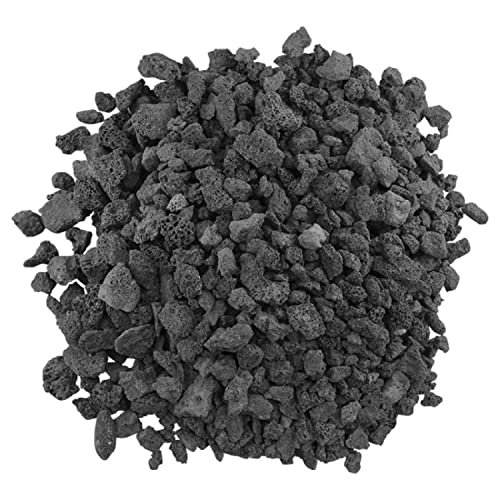
This lava rock is sized 1/2″ to 1″, offering versatility whether used alone or as a filler in deep fire features. It serves as an economical base layer that can be covered with fire glass to fully hide the rock. Designed to withstand high temperatures, the lava rock remains durable with low maintenance, compatible with both natural gas and propane setups for indoor or outdoor decor.
Practical tips: Use as a primary fill to cover gas piping in large pits, then top with glass or decorative stones for a polished appearance. The rock’s heat tolerance and natural aesthetic make it a reliable, cost-effective option, especially in areas with varying weather conditions.
NUPICK Red Lava Rocks

Authentic red lava rocks, sized 1/2″ to 2″, are designed for both indoor and outdoor use with natural gas or propane systems. These rocks withstand temperatures up to 2000°F (1093°C) without cracking, providing consistent heat distribution and minimal maintenance. The durable lava stones help conceal burners and gas pipes, while contributing vivid color accents to your fire feature.
Usage guidance: Place rocks evenly around burners for uniform flame distribution. For maximum visual impact, combine with a layer of fire glass or contrasting lava rock colors on top to create a dynamic, eye-catching focal point in your yard or patio.
FANTIAN 2 lbs Red Lava Rocks

This compact option focuses on ornamental red lava rocks sized around 1/4 inch, intended for decorative potting mixes, succulent arrangements, and small-scale fire features. It emphasizes natural color and drainage benefits, making it suitable as a supplementary material in layered setups where you want a pop of color without overpowering the primary base layer.
Notes: There may be dust from processing; rinse to remove residues before use. While smaller, these rocks can be integrated into broader fire pit arrangements with other larger lava stones to maintain a layered look and prevent clogging of vents or burners.
Skyflame Silica Sand

Coarse silica sand provides a solid base layer under fire glass, lava rock, or other decorative media. It enhances flame performance by evenly dispersing gas across the fire feature. The 14–20 mesh grade is heat resistant and designed to complement gas fireplaces and fire pits, offering a clean, uniform surface that helps protect underlying components and supports stable flame appearance.
Usage tips: Spread sand evenly across the base before adding decorative media. This helps prevent gas buildup and ensures an even flame, especially in larger pits or bowls. It also serves as a dust-free filler for certain indoor installations where aesthetics are important.
Stanbroil Tumbled Lava Rock Pebbles

These tumbled lava rock pebbles provide a uniform, polished look with 1″–2″ sizing. The tumble process removes sharp edges for safer handling and a refined appearance while preserving the heat-retaining properties of lava rock. They are designed for easy installation—pour directly from the bag into your fire pit or fireplace to establish a sturdy base layer or decorative surround.
Best-use scenarios: Create a clean, contemporary aesthetic in modern fire pits, or use as a secondary fill around burners to achieve a balanced, high-contrast look when paired with glass, beads, or contrasting rocks.
Mr. Fireglass Silica Sand

This silica sand is presented as a fireproof base layer compatible with gas fire pits and fireplaces. It serves well under lava rock or lava glass, promoting even gas diffusion and uniform flame. The material is marketed as eco-friendly for both indoor and outdoor installations, free of dyes and toxins, which helps maintain a clean environment around your fire feature.
Installation guidance: Use as a base to improve flame performance and concealment of piping. Combine with larger decorative stones on top to achieve a layered, professional look while maintaining ease of maintenance and cleaning.
Buying Guide: Key Considerations For Choosing Fire Pit Gravel And Base Media
- Heat tolerance and durability: Lava rock and silica-based media withstand high temperatures. Choose products rated for fire pit and gas burner use to avoid degradation or off-gassing.
- Size and texture: Larger sizes (1″–2″ pebbles) create a dramatic, polished look and help with heat distribution, while smaller granules (1/2″–1″) fill gaps and cover piping more effectively.
- Aesthetics and color: Lava rocks offer natural black with red hints, red lava rocks provide vivid color accents, and glass or colored beads add brightness. Consider surrounding decor and home exterior color schemes.
- Base layer vs. topper: Silica sand functions as a stable base to improve flame dispersion, while lava rock serves as a visible ornament around burners. A layered approach often yields the best balance of performance and appearance.
- Indoor vs. outdoor use: Verify compatibility with indoor fireplaces or outdoor fire pits, especially if ventilation and smoke considerations are involved. Some media are better suited to outdoor weather exposure.
- Maintenance and safety: Rinse new media to remove dust; avoid sharp-edged rocks where safety is a concern; regularly inspect gas lines and ensure clean, unobstructed airflow around burners.
- Compatibility with other media: If using fire glass or bead toppings, plan for layering to prevent scorching or visibility issues. Some rocks are ideal as base fillers that remain hidden beneath top decorative layers.
- Installation effort: Some products are “pour-and-go,” while others may require leveled spreading and careful placement to ensure even flame and coverage. Consider your DIY comfort level and needed preparation.
Selecting the best gravel and base media for a fire pit involves balancing heat resilience, appearance, and practical installation. Lava rock and lava pebble options provide natural textures and durable performance, while silica sand and base layers support flame diffusion and clean aesthetics. By combining these elements thoughtfully, you can achieve both a visually appealing and safe fire feature for your outdoor living space.