
Answering the question “which landscape flood lights should I buy for a bright, reliable outdoor setup?” this guide highlights five top options that balance durability, ease of installation, and even illumination. Ideal buyers include homeowners seeking low-voltage energy efficiency, DIY landscapers needing adjustable light aimed at trees or pathways, and security-conscious users wanting durable, weatherproof fixtures. Below is a quick comparison table of the chosen products to help you decide at a glance.
| Product | Best For | Key Benefit | Voltage |
|---|---|---|---|
| REEGOLD Low Voltage Landscape Lights | Pathways and trees | Long lifespan, bright 700LM per set | 12V/24V |
| GKOLED 12W Flood Lights | Security lighting | Anti-glare design, durable housing | 9-15V |
| LUTEC 12V Landscape Lights | Garden accents | Warm 3000K glow, IP65 protection | 12V |
| Nuvo 62-1205 Outdoor Spotlight | Yard and walkways | 900 Lumen brightness, weather-ready | 120V |
| Malibu Low Voltage Spotlight | Patio and driveways | Swiveling head for directional lighting | Low voltage |
REEGOLD Low Voltage Landscape Lights — 6 Pack
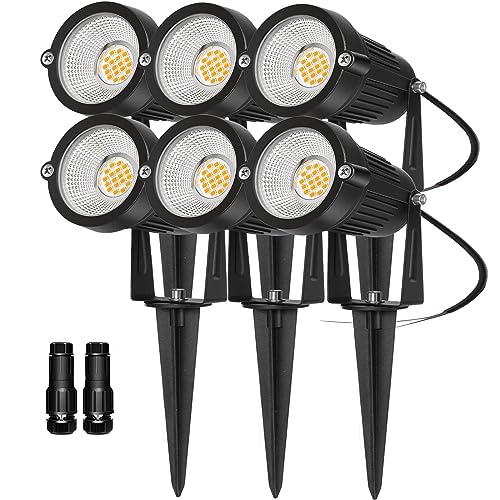
The REEGOLD set is a 12V/24V low-voltage option designed for versatility along paths, steps, and driveways. It features 18 high-performance SMD LED chips, delivering bright output (up to 700 lumens per light) with longer service life compared to single-COB designs. An aluminum shell enhances heat dissipation and durability, making it suitable for outdoor use and repeated cycling. This option is best for homeowners prioritizing longevity and broad-area illumination for walkways and tree accents.
Who it’s best for: for buyers seeking robust low-voltage lighting that can cover long paths and tree uplighting with a long service life. Why selected: high-efficiency LEDs and solid metal construction provide consistent brightness and durability.
Limitation to note: while weatherproof (IP65), extensive direct water exposure should still be avoided in extreme conditions to preserve components.
GKOLED 12W Flood Lights Outdoor

This flood light uses a die-cast aluminum housing with a frosted lens to reduce glare, promoting safer nighttime viewing while delivering strong 800 lumens output. It’s designed for flexibility with a 180-degree adjustable knuckle mount, making it easier to aim light toward entryways, fences, or architectural details. The IP65 rating supports use in wet locations, and the unit is built to handle outdoor temperature swings. Best for security-focused setups where glare-free light and precise aiming matter.
Who it’s best for: security-conscious homeowners needing glare control and adjustable aiming. Why selected: anti-glare design plus heavy-duty construction enhances both safety and durability.
Limitation to note: 30,000-hour life is strong, but occasional maintenance may be needed in harsher climates to keep the lens clear.
LUTEC 12V Low Voltage Landscape Lights

These 5W, 550-lumen fixtures offer a compact, energy-efficient option with a warm 3000K glow designed to accent flowers and shrubs. The aluminum housing and IP65 rating ensure durability against rain and hose sprays. A smooth lens and integrated LED module promise longevity and minimal maintenance. Best for adding subtle garden accents without overpowering plant textures or surrounding architecture.
Who it’s best for: homeowners seeking elegant garden spotlighting with reliable weatherproofing. Why selected: warm color temperature and glare-soft design make this ideal for landscape accents.
Limitation to note: lower wattage means less reach than larger floodlights; ideal for closer-in features rather than broad lighting needs.
Nuvo 62-1205 Outdoor Landscape Spotlight

The Nuvo fixture is a 120V die-cast aluminum landscape spotlight delivering about 900 lumens at 3000K. It’s built to withstand wet locations and tough weather, making it a solid option for yards, gardens, and walkways that require bright, reliable lighting without low-voltage transformers. This choice is best for mid-to-large outdoor spaces that already have or can accommodate 120V wiring.
Who it’s best for: users who prefer direct connection to standard household power for higher brightness. Why selected: high lumen output and robust construction support broad illumination needs.
Limitation to note: operates at 120V, which may require professional installation for some landscapes and could limit DIY flexibility.
Malibu Low Voltage Landscape Spotlight

This Malibu C light focuses on low-voltage operation with a swiveling head that allows directional lighting for features like gardens, patios, and driveways. The aluminum die-cast body is designed for outdoor durability, and the included connector and stake simplify installation. Best for homeowners who want adjustable, targeted lighting without high voltage.
Who it’s best for: those wanting flexible, adjustable lighting at low voltage with straightforward setup. Why selected: combination of swiveling head and sturdy build supports versatile yard lighting.
Limitation to note: as a low-voltage option, it may require a transformer and careful wiring planning for larger installations.
Buying Guide: Key Considerations For Landscape Flood Lights
- Voltage and wiring: Low-voltage (12V/24V) fixtures are easier for DIY installs and typically safer for outdoor use, while 120V lights deliver higher brightness but may require professional wiring.
- Brightness and beam spread: Measured in lumens; higher lumens light broader areas, while more focused beams highlight features like trees or entryways. Consider combining flood and accent lights for balance.
- Color temperature: Warm white (2700K-3000K) creates inviting scenes; cool white (4000K-5000K) enhances security by delivering crisper visibility. Choose based on mood and landscape materials.
- Durability and weather resistance: Look for IP65 or higher for protection against rain, spray and dirt. Aluminum housing typically lasts longer than plastic in outdoors.
- Adjustability: Knuckle mounts and swiveling heads let you aim light precisely, improving safety and minimizing light spill onto unwanted areas.
- Installation considerations: Check for proximity to power sources, clearance for wiring, and whether existing landscapes require trenching or a simple stake-in setup.
- Maintenance: Consider LED lifespans (often 30,000–50,000 hours), fixture cleanliness, and ease of bulb replacement if applicable.
Frequently Asked Questions
- What is the advantage of low-voltage landscape lighting?
- How should I place flood lights for a balanced yard look?
- Is IP65 waterproof enough for all outdoor conditions?
- Do I need a transformer for low-voltage lights?
- What color temperature should I choose for outdoor lighting?
- Can I mix different brands of flood lights?
Low-voltage systems are typically safer, easier to install for DIYers, and use less power than 120V systems while still delivering strong illumination for pathways and accents.
Place primary flood lights to illuminate entrances and larger features, with secondary accent lights on trees or shrubs to create depth. Avoid hotspots by ensuring even spacing and aiming away from the house to reduce glare.
IP65 protects against rain and water jets from any direction, making it suitable for most locales. For extreme weather, verify additional sealing and consider higher IP ratings if location exposure is severe.
Most low-voltage fixtures require a transformer to step down from standard household voltage. Check kit contents to see if a transformer is included or if one must be purchased separately.
Warm white (2700K–3000K) is generally best for homes and landscapes, creating a cozy look. Cooler temperatures (4000K–5000K) improve contrast and visibility for security-focused areas.
Yes, but ensure compatibility in voltage, wattage or lumens, and beam angles to avoid uneven lighting. Use a plan to maintain cohesive aesthetics across zones.