
This guide highlights top marine cleats and chocks that offer reliability, corrosion resistance, and ease of use for boaters. It helps buyers choose the right hardware for small craft, family boats, or serious sailing setups. The table below compares key options to match different needs and budgets.
| Product | Material | Best For | Notes |
|---|---|---|---|
| Skene Bow Chocks | Chrome-plated zinc alloy | Racking bows and quick mooring on smaller craft | Sold as pack of two; easy installation |
| Cam Cleat With Ring | 316 stainless steel | Sailors needing fast line entry and anti-tangle setup | Includes anti-tangle ring; high strength |
| Open Base Dock Cleat | 316 stainless steel | Durable dock installations and frequent mooring | Includes screws and nuts |
| Folding Cleats | 316 stainless steel | Deck spaces with storage or low-profile needs | Folds away to reduce trip risk |
| Heavy Duty Boat Cleats | 316 stainless steel | Angled bow chocks and robust mooring | Mirror-polished finish |
Perko Skene Bow Chocks

Best for small bows and simple mooring setups on recreational boats. The chrome-plated zinc alloy construction offers a classic look with adequate corrosion resistance for inland waters. Sold as a pair ensures symmetry on the bow.
Who it’s for: boaters seeking a straightforward bow chock solution that installs quickly and maintains a traditional aesthetic. Why selected: reliability in light to moderate mooring tasks and easy handling in crowded spaces.
Caution: Zinc alloy can show wear in harsh saltwater; inspect fit regularly and replace if chrome plating chips reveal base metal. Not ideal for heavy commercial use or offshore vessels.
Cam Cleat With Ring
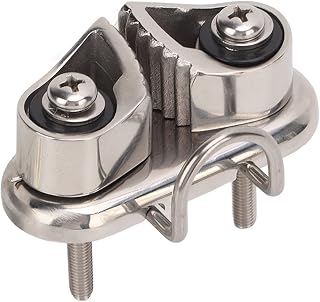
Best for sailors who want fast entry and reliable rope control. The cam cleat is made from marine-grade 316 stainless steel, delivering high strength and corrosion resistance in challenging marine environments. The integrated anti-tangle ring helps secure lines and reduce clutter.
Who it’s for: skippers who prioritize quick line engagement and ongoing ease of maintenance. Why selected: strong, user-friendly design with built-in stability for rope handling under load.
Caution: Slightly higher cost than basic cleats; ensure rope diameter is compatible with the cam entry for smooth operation.
Open Base Dock Cleat 316 Stainless

Best for sturdy dock installations where heavy-duty mooring is common. The 316 stainless steel construction offers strong resistance to saltwater and weathering. Includes installation screws, making it convenient for new installations.
Who it’s for: boaters seeking a robust cleat for frequent mooring and durable performance. Why selected: high corrosion resistance and a complete installation kit add value for long-term use.
Caution: Heavier than lightweight cleats; ensure mounting surface can support the load and weight.
Folding Cleats 316 Stainless

Best for boats with limited deck space or those who want a low-profile option. The folding design helps prevent tripping hazards when not in use, while still delivering solid mooring when deployed. All parts are 316 stainless steel for corrosion resistance.
Who it’s for: sailors needing a compact, space-conscious solution. Why selected: combines function with a safety-focused fold mechanism and durable materials.
Caution: Folding mechanisms can wear with heavy use; check hinge action periodically and lubricate if needed to maintain ease of deployment.
Heavy Duty Skene Bow Chocks

Best for yachts and larger vessels that demand reliable bow mooring hardware. The product features 316 stainless steel with a mirror finish, designed to endure demanding marine conditions while maintaining a polished look.
Who it’s for: owners of larger craft or those who value a robust, long-lasting bow chock. Why selected: rugged construction paired with a clean, finished appearance.
Caution: The heavier weight and larger size may require reinforced mounting and precise alignment for optimal performance.
Buying Guide
- Material matters: 316 stainless steel is a standard for durability in saltwater. Zinc alloy offers a balance of weight and cost for light use, but may require more frequent inspection in harsh environments.
- Deck space and profile: Folding cleats save deck space; open-base cleats provide maximum strength but less flexibility in tight areas.
- Rope and line compatibility: Check rope diameter and entry angle for cleats. Faster entry and anti-tangle features reduce line handling effort.
- Installation and maintenance: Look for products that include mounting hardware or clear installation instructions. Regular checks prevent corrosion and loosening over time.
- Intended use: Inland boating, coastal cruising, or offshore racing each reward different durability and design features.
- Safety considerations: Choose low-profile options where tripping risk is a concern, and ensure proper alignment to avoid rope chafing.
Frequently Asked Questions
- What is the best material for marine cleats? 316 stainless steel is widely regarded as the best balance of strength and corrosion resistance for saltwater use. Zinc alloy can be acceptable for light, inland boating but may require more maintenance.
- Are folding cleats safe for busy decks? Yes, they reduce trip hazards when folded, but ensure the deployed cleats are securely locked to handle loads.
- Do I need installation hardware included? Having screws and nuts included simplifies installation, especially on wooden or composite decks.
- How do I choose between a bow chock and a cleat? Bow chocks guide lines at the bow area and are ideal for specific mooring configurations, while cleats provide direct line traction and tying capability.
- Can these cleats handle heavy offshore mooring? Heavy-duty 316 stainless steel options are designed for stronger loads, but always verify load ratings and mounting integrity for offshore conditions.
- What maintenance is recommended? Rinse with fresh water after exposure to salt, dry completely, inspect for corrosion or chips, and lubricate hinges or moving parts as needed.