
Choosing the right greenhouse material hinges on light transmission, durability, and how well it moderates temperature. This guide reviews five popular options that balance cost and performance, helping you pick panels and films that optimize plant growth in American conditions. Below is a quick summary table of the selected products to compare key points at a glance.
| Product | Material Type | Light Transmission / UV & Temperature Reactions | Durability Highlights |
|---|---|---|---|
| DGSL 14 Pcs Polycarbonate Panels | Twin-wall polycarbonate | 90+% light transmission; warmth retained; -44°C to 120°C operating range | High impact strength; shatter resistant |
| VEVOR Greenhouse Plastic Sheeting (20 x 28 ft) | 6 mil polyethylene film | UV resistant; keeps warmth in cold; reduces dust | Tear-resistant; easy to unroll |
| Hotop Polycarbonate Panels (4′ x 2′) | Polycarbonate panels | Clear, bright; supports plant growth | Cuttable to fit shapes; durable under weather |
| Xstronq Greenhouse Plastic Sheeting | 6 mil polyethylene film | Even light transmission; UV resistant | Versatile for frames; durable with clips or weights |
| AGGAFA 6 Mil Clear Greenhouse Plastic | Polyethylene film (6 mil) | High light transmission; 4-year life with additives | UV coatings; anti-tearing additives |
When evaluating greenhouse materials, colorless or lightly tinted plastic tends to maximize photosynthesis, while multi-wall polycarbonate offers insulation that stabilizes temperatures. The choices below illustrate options from rigid panels to flexible films, each suitable for different greenhouse styles and budgets.
DGSL 14 Pcs Polycarbonate Panels

DGSL’s twin-wall polycarbonate roof panels offer substantial light transmission while maintaining warmth in winter and coolness in summer. Engineered for durability, these panels withstand high temperatures and feature strong impact resistance to resist weather and accidental impacts. The material is designed to reduce water seepage compared with traditional metal sheds, helping preserve a stable environment for plant growth across seasons.
VEVOR Greenhouse Plastic Sheeting

VEVOR’s 6 mil polyethylene film provides a clear, UV-resistant cover for hoop or lattice-style greenhouses. The film’s thickness offers tear resistance and long-lasting performance, helping maintain warm temperatures in cold months while minimizing dust accumulation. It unfolds easily and can be rolled for storage, making it practical for seasonal or temporary greenhouse setups.
Hotop Polycarbonate Panels

Hotop offers durable polycarbonate panels that can be cut to fit irregular greenhouse shapes. The clear design ensures bright interior lighting, supporting photosynthesis and steady growth. The panels resist weathering and maintain structural integrity, making them a solid option for permanent or semi-permanent greenhouse installations where light quality and warmth are priorities.
Xstronq Greenhouse Plastic Sheeting

Xstronq presents a versatile 6 mil polyethylene film designed for outdoor plant protection. The material delivers durable UV resistance and robust light transmission to support uniform growth. Its flexibility makes it easy to secure over frames with clips, stakes, or weights, suitable for DIY hoop houses and portable greenhouses that require quick setup and teardown.
AGGAFA 6 Mil Clear Greenhouse Plastic
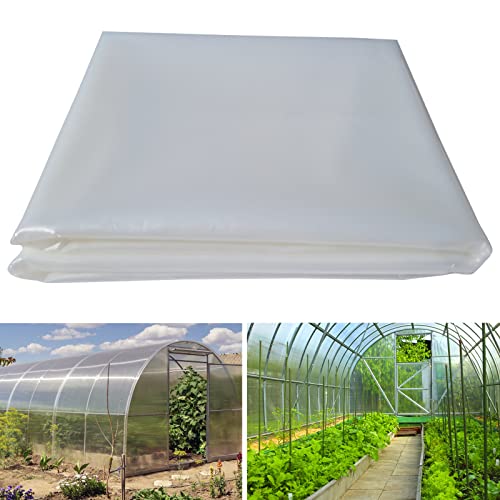
AGGAFA’s 6 mil clear greenhouse plastic uses a five-layer extrusion technology to deliver strong UV protection, anti-drip and anti-fog properties, and enhanced thermal performance. The film’s colorless clarity supports even light distribution, which can contribute to higher yields in cooler seasons. Its durability is designed to extend the life of a greenhouse, particularly in regions with variable weather.
Buying Guide: Greenhouse Material Considerations
- Light transmission: Polycarbonate panels typically offer high light diffusion with good thermal stability, while polyethylene films prioritize cost and coverage. For fruiting crops, consistent light is important; consider multi-wall polycarbonate for insulation.
- Durability and weather resistance: Panels resist impacts and environmental wear better than thin films, but films may be easier to replace if they become damaged. UV coatings extend film life but may slightly reduce light transmission over time.
- Insulation and temperature control: Twin-wall polycarbonate provides better insulation than single-layer films, helping maintain consistent growing conditions in fluctuating climates.
- Ease of installation and customization: Films are generally easier to deploy over irregular shapes, while panels require precise cutting and framing but offer sturdier, long-term structures.
- Maintenance and replacement costs: Films have lower upfront costs but require periodic replacement. Panels are more expensive but last longer, reducing long-term maintenance in some setups.
- Intended greenhouse style: Hooped or low-profile frames benefit from flexible films, whereas traditional or permanent greenhouses benefit from rigid panel systems for structural integrity and durability.
Ultimately, the best material depends on climate, budget, and your desired balance of light, insulation, and durability. For energy efficiency and year-round growth, a combination approach—polycarbonate panels for key roof sections and protective polyethylene film for walls or temporary sides—can offer strong performance at a manageable cost. Always verify UV protection, warranty terms, and installation requirements before purchase to ensure compatibility with your greenhouse design.