
Moisture meters provide a simple, chemical-free way to gauge soil moisture and prevent overwatering or under-watering. This guide highlights five reliable models that suit indoor pots, outdoor beds, and everything in between. Each option offers a quick read on soil depth, easy dial indicators, and battery-free operation, making them practical for home gardeners and professionals alike.
The following table offers a quick snapshot of the chosen products, including brand and core benefit. Use it as a reference to compare at a glance before diving into detailed sections.
| Product | Brand | Key Benefit | Amazon Link |
|---|---|---|---|
| XLUX Soil Moisture Meter, 2-Pack | XLUX | Longer probe for deeper pots; instant readings | Link |
| XLUX Soil Moisture Meter, Standard | XLUX | Large dial with clear zones | Link |
| Dr.meter Soil Moisture Meter | Dr.meter | Color-coded reading system for quick interpretation | Link |
| GROWIT Soil Moisture Meter for Plants | Craft911 | Hydrophobic soil detection to avoid overwatering | Link |
| Antonki 2 Pack Soil Moisture Meter | Antonki | Two-pack value with root-zone readings | Link |
XLUX Standard Soil Moisture Meter
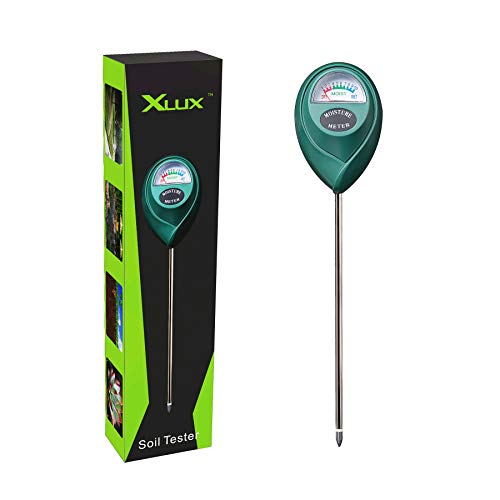
The XLUX Standard model provides accurate soil moisture detection, distinguishing between dry, moist, and wet soil well beneath the surface. Its large dial is segmented into ten scales with three clear zones, making readings straightforward even for beginners. Insert the probe into the soil and receive an immediate moisture reading, helping you decide precisely when to water. A note: avoid leaving the metal tip in soil for extended periods to prevent corrosion.
XLUX Long Probe Deep-Use Meter (2-Pack)

This two-pack variant features a longer, 5.5-inch probe designed for larger or deeper pots. The longer probe helps ensure you measure moisture near the root zone rather than just at the surface, which improves watering accuracy for deep-rooted plants. The meter uses a familiar dial with ten levels and three zones for quick interpretation, and readings are immediate once the probe is inserted. As with other meters, avoid prolonged soil contact to minimize corrosion of the metal tip.
Dr.meter Soil Moisture Meter
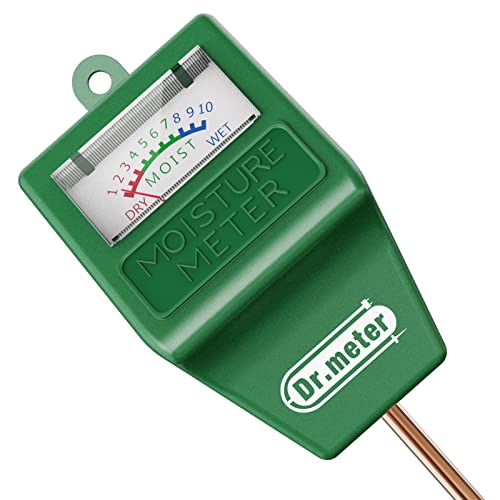
The Dr.meter model emphasizes a compact, battery-free operation with a simple interface. Its ten-scale, color-coded readings—from red through green to blue—provide an intuitive understanding of when to water, whether you’re tending a garden, lawn, or indoor houseplants. Its portable design makes it suitable for quick checks on multiple plots, and the lack of an external power source reduces maintenance concerns for busy gardeners.
GROWIT Soil Moisture Meter For Plants

GROWIT’s model focuses on identifying tricky soil conditions, specifically water-repelling soil where surface moisture does not reflect root moisture. Its practical reading helps curb overwatering and promotes healthier root development. The meter is easy to use with no batteries required, and it highlights when to re-wet soil or adjust watering habits based on root-zone readings. It’s a solid option for a home greenhouse or plant collection with varied potting media.
Antonki 2 Pack Soil Moisture Meter

The Antonki two-pack offers value plus practical guidance on moisture levels. It helps monitor swelling root zones and indicates whether pockets of soil are wetter or drier than others. The product description outlines a step-by-step use process—remove the probe protector, insert near the root, and read the moisture level. This model emphasizes user-friendly steps and encourages consistent watering practices across multiple plants to prevent both under- and over-watering.
Buying Guide: Key Purchase Considerations
- Soil depth and pot size: Look for meters with longer probes if you regularly care for large pots or deep-rooted plants; shorter probes work well for small pots and seedlings.
- Readability: Choose models with clear, multi-tone dials or color codes (red, green, blue) to quickly assess whether watering is necessary.
- Batteries vs. battery-free: Battery-free meters are lower maintenance and suitable for most indoor/outdoor setups; battery-powered options may offer additional features but require replacements.
- Material durability: Metal probes can corrode over time if left in soil; review care instructions to prolong life, such as removing meters after use and wiping the probe.
- Soil type compatibility: Some meters better detect moisture in dense or sandy soils. If you garden with a variety of media, a model with a durable probe and accurate dial is advantageous.
- Multi-pack value: If you manage several plants, a two-pack or kit helps monitor multiple pots without purchasing additional units.
- Maintenance and calibration: Some meters benefit from routine cleaning with a cloth (as directed) to maintain sensitivity and accuracy.
- Indoor vs. outdoor use: Ensure the device tolerates outdoor conditions if used on patios or in greenhouses, and check whether the device is designed for root-zone readings in larger pots.
Across these options, selecting a moisture meter involves balancing depth of measurement, ease of reading, and maintenance needs. For beginners, a model with a large dial and clear color zones is typically sufficient. For experienced gardeners with a mix of pot sizes, a longer probe or two-pack solution can reduce guesswork and save time over the long term.