
The top outdoor forced air propane heaters are evaluated here for American buyers seeking reliable heat in open or semi-covered spaces. This guide highlights five models that balance portability, heat output, and safety features. It is ideal for patios, garages, job sites, and campsites. Each section explains who should buy the product, why it’s a strong pick, and a practical limitation to consider. A concise buying guide and helpful FAQs follow the product details.
| Product | Best For | BTU | Approx. Coverage |
|---|---|---|---|
| Mr. Heater 125,000 BTU Quiet Burner (Model 1) | Large outdoor spaces | 125,000 | Up to 3,125 sq ft |
| Mr. Heater 125,000 BTU Forced Air (Model 2) | Versatile, portable heating | 125,000 | Large patios and garages |
| Mr. Heater 30,000–60,000 BTU (Model 3) | Medium areas, budget-conscious | 30,000–60,000 | Up to 1,500 sq ft |
| Flame King 60,000 BTU (Model 4) | Jobsites and outdoor spaces | 60,000 | Up to 1,500 sq ft |
| VEVOR 60,000 BTU (Model 5) | Large or variable spaces | 60,000 | Up to 1,400 sq ft |
Mr. Heater 125,000 BTU Quiet Burner Technology

The top pick for expansive outdoor areas where quiet operation matters. Best for large decks, workshops, or covered patios where noise levels should stay low. This model emphasizes Quiet Burner Technology, reducing noise by up to half compared with standard propane heaters. Best for users who prioritize a calm environment alongside high heat output. Limitation: very high BTU output means higher fuel use and need for robust ventilation in close spaces.
Mr Heater 125,000 BTU Forced Air Propane Heater

Designed for portability with strong heating capacity. Best for mobile workspaces, construction sites, or large garages needing sustained heat with a portable form. It includes a 10 ft. hose and regulator for adaptable setup. Best for users who need flexible placement and quick heat delivery. Limitation: bulkier than smaller units, requiring space for safe operation and storage.
Mr. Heater 30,000–60,000 BTU Forced Air Heater
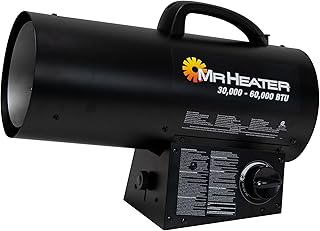
Ideal for medium-sized spaces where a balance of heat and efficiency is important. Suitable for patios or workshops up to 1,500 sq ft, with extended runtime up to 12 hours. Best for budget-conscious buyers or those who do not need full-tilt high BTU output. Limitation: heat range is lower than 125,000 BTU models, which may require closer placement to occupants for warmth.
Flame King 60,000 BTU Portable Propane Heater

Strong choice for job sites, garages, and patios where robust, reliable heat is needed. It features safety shutoffs, fire detection, and tilt protection for added security in outdoor environments. Best for users prioritizing built-in safety along with solid heat output. Limitation: may require more space and venting consideration in tight setups.
VEVOR 60,000 BTU Propane Heater

Best for versatile environments with high-altitude use. It delivers 60,000 BTU and features stepless temperature control, dual safety systems, and a durable carbon steel body. Suitable for large outdoor spaces or garages that demand consistent warmth. Limitation: higher altitude performance requires correct gas pressure setup for stable operation.
Buying Guide
What size space will you heat? For patios and large garages, models with 125,000 BTU provide rapid warmth but require adequate ventilation and space. For smaller to mid-sized areas, 30,000–60,000 BTU units offer energy efficiency and longer runtimes.
How important is noise and comfort? If noise is a concern, look for Quiet Burner Technology or similar features that reduce operational sound. This is especially relevant for occupied spaces like decks or workshops where conversations happen.
What safety features matter most? Seek built-in safety shutoffs, tilt switches, and flameout protection. These reduce risk in outdoor, semi-enclosed, or poorly ventilated areas where leaks or tip-overs could occur.
What installation and setup considerations apply? Check hose lengths, regulator compatibility, and whether the unit is designed for portable use or requires permanent mounting. Longer hoses provide flexible placement but may introduce small pressure losses that affect performance.
Are high-altitude or extreme conditions a factor? Some models offer improved high-altitude performance or robust build quality to withstand cold, wind, and rugged job-site environments. Consider these if you operate in mountainous or severe climates.
Key purchase considerations
- Heat output vs. space: Higher BTU is not always better if your space is small.
- Ventilation: Outdoor use requires adequate airflow; never use in enclosed spaces.
- Portability: Carry handles, weight, and base stability influence transport and setup.
- Fuel availability: Propane tank size and availability affect runtimes and cost.
- Safety features: Look for auto shutoff, tilt sensors, and flameout protection for outdoor use.
Frequently Asked Questions
- Q: Can I use these heaters indoors? A: These heaters are designed for outdoor or well-ventilated outdoor spaces; do not use in enclosed indoor areas without proper ventilation.
- Q: What maintenance is needed? A: Regularly inspect hoses, regulators, and ignition components; keep the area clear of debris; replace cartridges or tanks per manufacturer guidance.
- Q: How long do propane tanks last? A: Runtime depends on BTU output and tank size; higher BTU models consume fuel faster, particularly in extended use.
- Q: Are these heaters safe for covered patios? A: If the space has adequate airflow and follows product safety guidelines, outdoor-rated units can be used on covered patios with caution.
- Q: Which model is best for a budget-friendly option? A: Models with lower BTU ranges typically offer lower initial cost and longer runtime per tank in moderate spaces.
- Q: Do these heaters require electrical power? A: Some units include piezo ignition and do not require continuous power, while others may rely on a basic electrical connection for ignition components.