
Answer: Outdoor noise barriers are best for homeowners facing neighborly noise, construction-site disturbances near living spaces, or small commercial setups adjacent to homes. This guide highlights five practical products suited for residential-friendly noise reduction, with clear reasons why each might fit your situation. The top picks vary from temporary construction-site barriers to weather-resistant blankets for patios and air-conditioner units. The summary table helps you compare key points at a glance.
| Product | Best For | Key Benefit |
|---|---|---|
| LTCANOPY Outdoor Sound Barrier Blanket (1 Pack) | Construction sites near homes | Up to ~28dB reduction; easy installation |
| YeakThed Outdoor Sound Barrier Fence | Permanent or long-term outdoor use | Ultra-thick, weather-resistant, customizable splicing |
| Outdoor Sound Barrier Blanket (0.4mm, 2x6m) | Workshops, HVAC units, outdoor events | High-density noise reduction; durable grommets |
| Outdoor Sound Barrier Blanket (0.5mm, 1.8x3m) | Smaller outdoor spaces near homes | Effective noise control; versatile sizing |
| Outdoor Acoustic Noise Control Blanket (0.4mm, 2×3.6m) | Residential and light commercial use | Weather-resistant, versatile applications |
LTCANOPY Outdoor Sound Barrier Blanket

The LTCANOPY option is designed for construction-site use near residential areas. It combines PVC mesh, thick insulation felt, and sound-absorbing cotton to dampen noise up to about 28dB. It is described as waterproof, flame retardant, and environmentally friendly. Best for buyers seeking a quick, temporary fence-like barrier that can be hung with ropes or hooks and detached when no longer needed. Caution: the new version reportedly omits the logo; verify current packaging if logo presence is relevant to your site aesthetic. Suitable for contractors and homeowners coordinating short-term projects adjacent to living spaces.
YeakThed Outdoor Sound Barrier Fence
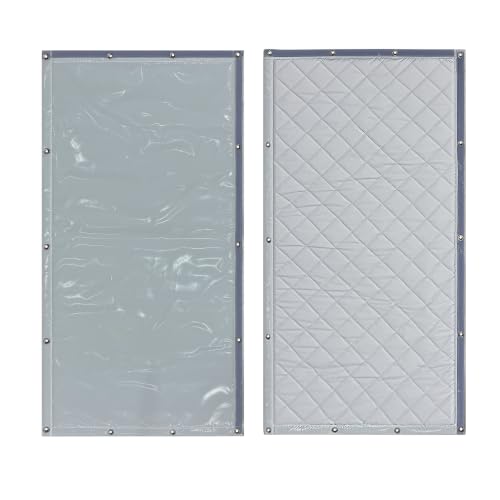
The YeakThed barrier emphasizes a 4-layer ultra-thick insulation structure and weatherproof durability. It is designed for long-term outdoor use with dual-sided gray fabric and reinforced stitching to resist wind and sun. It supports customizable splicing to form larger barriers, which helps when covering windows or elongated wall spaces. Best for homeowners needing a modular, reusable solution for seasonal noise control. Note that some users may require frequent reconfiguration for different setups.
Outdoor Sound Barrier Blanket (0.4mm, 2x6m)

This heavy-duty blanket uses a high-density acoustic material with weatherproof Oxford fabric and reinforced stitching. It comes with sturdy grommets for outdoor use and is suited for construction sites, factories, and air-conditioning units near homes. Best for buyers who need a robust, long-lasting barrier with straightforward installation. Limitation: sizes may be large for compact spaces, so plan layout before purchase.
Outdoor Sound Barrier Blanket (0.5mm, 1.8x3m)
Designed for smaller outdoor spaces, this barrier balances thickness and manageability. It employs the same weatherproof, tear-resistant construction with grommets for versatile mounting. Best for apartment balconies, small backyards, or patios adjacent to street noise or HVAC equipment. Choose this if you need a middle-ground option between portability and performance. Limitation: 1.8x3m size may still require multiple units for larger stretches.
Outdoor Acoustic Noise Control Blanket (2×3.6m, 0.4mm)

This blanket emphasizes effective noise reduction with a weather-resistant fabric and reinforced stitching. Its 2×3.6m footprint suits broader wall spans or longer fence lines around residential spaces. Best for homeowners seeking a balance between coverage and ease of handling. Caution: ensure proper fastening to prevent wind flapping in gusty conditions.
Buying Guide: Practical Purchase Considerations
What should you check before buying an outdoor noise barrier for a home setting?
- Noise reduction level: Look for explicit dB reduction claims and understand that real-world performance depends on distance, wind, and mounting.
- Material durability: Weather resistance, UV stability, and flame retardancy affect long-term outdoor use.
- Installation method: Edge grommets, Velcro, or ties influence ease of setup and reusability for seasonal needs.
- Size and modularity: Match barrier dimensions to your space; consider models that can be spliced or joined for larger coverage.
- Weight and portability: Lighter blankets are easier to deploy on balconies or patios; heavier options offer greater stability in wind.
- Maintenance: Cleaning requirements and replacement parts (like Velcro or straps) matter for durability and cost.
- Aesthetic impact: Some designs blend with exterior décor better than others; consider color and texture for visible areas.
How to choose between a blanket and a fence-style barrier?
Choose a blanket for quick, temporary setups around HVAC units or construction work near living spaces. A fence-style barrier works well for longer-term encasement or when you need extended coverage, such as around a patio or outdoor living area.
Where should you position barriers for maximum effect?
Place barriers between the noise source and your primary outdoor living spaces. Align face-to-face surfaces to absorb and reflect noise away from windows and seating areas. Secure barriers to prevent movement in windy conditions.
FAQ
What noise reduction can I realistically expect from these barriers?
Most products claim up to 28dB reductions in optimal conditions, but actual results vary with distance, wind, and setup quality.
Are these barriers suitable for residential patios?
Yes, several options are designed for outdoor use around patios and outdoor living spaces, with weatherproof construction.
Can I customize the size of these barriers?
Some models support splicing or custom sizing, allowing you to tailor coverage to irregular spaces.
Do these barriers require professional installation?
Most are designed for DIY installation with simple methods like Velcro, ropes, or grommets; however, ensure proper mounting for safety and effectiveness in your area.
Will these barriers affect the aesthetics of my property?
Material choices and colors vary; select a design that complements your exterior while delivering the desired noise reduction.
Can I use a barrier indoors near windows?
These products are primarily intended for outdoor use; for indoor applications, consider acoustic panels or window inserts designed for interior use.