
Looking to add privacy to a deck or balcony without sacrificing style? This guide highlights five strong options that balance durability, design, and value. Each pick is suited for different outdoor spaces and privacy needs, from freestanding panels to wood screens. Use this overview to compare materials, setup, and suitability for balconies, patios, and backyards.
| Product | ||
|---|---|---|
| TALLYVER Metal Privacy Screen Outdoor | Modern decks and balconies seeking durable metal panels | Decorative laser-cut leaf design with heavy-duty steel |
| GarveeLife Outdoor Metal Privacy Screen (3-Panel with Stand) | Medium to large outdoor spaces needing strong privacy | Three connected panels with freestanding stand |
| MTART Metal Privacy Screen 72″ H x 47.2″ | Backyards and patios needing a tall, durable divider | Thick steel with powder-coated finish for weather resistance |
| Enclo Privacy Screens (Wood, 6.1 ft) | Natural wood aesthetics for classic outdoor spaces | FSC-certified wood; easy surface mounting |
| JOSTYLE 8-Panel Outdoor Privacy Screen | Large areas requiring flexible, foldable privacy | Fade-resistant polypropylene yarn; freestanding and foldable |
TALLYVER Outdoor Metal Privacy Screen
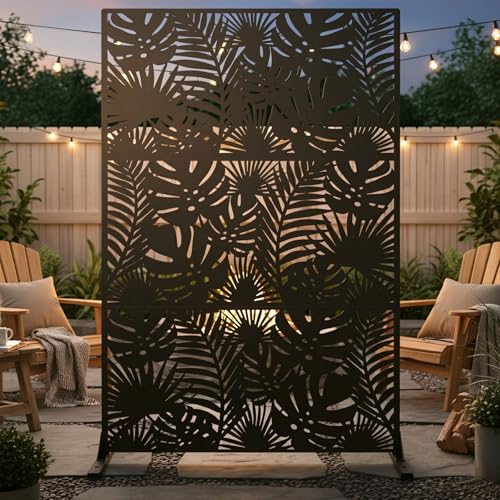
Best for modern decks and balconies, this 72×44 inch freestanding panel offers a contemporary divider that shields views while adding style. The decorative laser-cut tropical leaf design blends art with function, creating a relaxing outdoor retreat. The heavy-duty steel with a black powder-coated finish delivers rust resistance and durability for year-round use. Consider this option if you want a striking focal point combined with reliable privacy protection.
urban patios, small balconies, and backyards where a sleek metal accent is desired. Why selected: high durability, weather resistance, and a bold, modern aesthetic. Limitations: fixed size—may require anchoring or additional panels for larger areas.
Enclo Privacy Screens Wood Panel (6.1ft)

Best for traditional wood aesthetics, this 6.1-foot-tall screen uses FSC-certified real wood for a classic, natural look. It is a multipurpose option suitable for patios, decks, and indoor spaces. Assembly is straightforward with a power drill, and surface mounting is available for added stability. Choose this if you prefer grain patterns that vary naturally and want a warm, organic vibe.
Who it’s best for: homeowners seeking authentic wood texture and a versatile indoor/outdoor screen. Why selected: natural material, certified wood, and simple assembly. Limitation: heavier than metal panels and may require careful mounting on uneven ground.
GarveeLife 3-Panel Metal Privacy Screen with Stand

Best for creating a private outdoor room on patios, decks, or balconies, this three-panel metal design provides ample coverage with a sturdy freestanding stand. The galvanized steel construction offers rust resistance, and the baked-on powder finish adds durability against sun and rain. This option suits larger decks or pool areas where a tall, substantial screen is desired.
Who it’s best for: spaces needing substantial privacy with easy repositioning. Why selected: strong, weather-ready panels and a stable stand. Limitation: panel weight may require careful handling during assembly or relocation.
MTART Metal Privacy Screen 72″ H x 47.2″
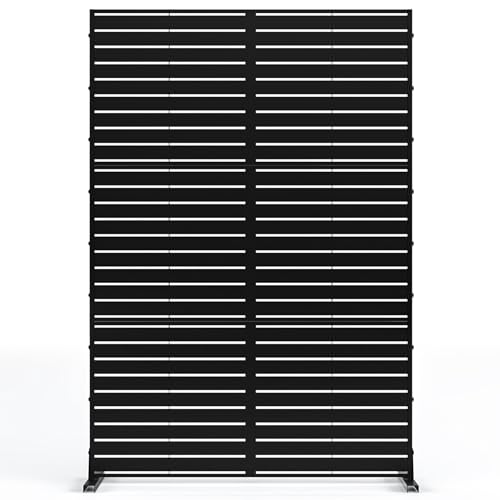
Best for long-term outdoor privacy in spaces prone to wind or sun exposure, MTART’s 72″ tall panel uses thickened steel with a powder-coated finish. It’s designed to withstand varied weather while offering a semi-private barrier that still allows airflow. The U-shaped rolled edge frame adds stability, making it a practical choice for decks, patios, or garden edges.
Who it’s best for: owners wanting tall, durable privacy with a modern look. Why selected: robust construction and weather resistance. Limitation: fixed height may require a complementary shorter panel for lower-privacy zones.
JOSTYLE 8-Panel Outdoor Privacy Screen

Best for flexible space planning on larger terraces, this 8-panel folding divider extends to 129 inches wide when open and stands 69 inches tall. Made from fade-resistant polypropylene yarn, it resists UV and moisture for enduring outdoor use. Its freestanding and foldable design makes rearranging a breeze for events or seasonal changes.
Who it’s best for: large decks and patios requiring modular privacy with easy storage. Why selected: highly adjustable layout and weather-friendly fabric. Limitation: fabric-based panels may show wear in very windy or extremely harsh climates over time.
Buying Guide: What to Consider When Choosing Outdoor Privacy Panels
- Material and durability: Metal screens last longer in harsh weather; wood offers natural warmth; fabric or polymer options save cost and weight.
- Height and coverage: Taller panels provide more privacy but require sturdier mounting or freestanding support.
- Mounting style: Freestanding panels are versatile but may need stakes; surface-mounted options stay fixed but require installation.
- Weather resistance: Powder-coated finishes and rust-resistant metals resist rain, sun, and humidity better over time.
- Design and aesthetics: Choose a pattern or color that complements your deck furniture and house exterior.
- Maintenance: Wood may need sealing; metal may require occasional cleaning; fabric may need cleaning or replacement over time.
Practical tips for choosing
- Measure the available space precisely and note any slopes or obstacles.
- Consider whether you want a decorative focal feature or a nearly invisible divider.
- Think about future use, such as hanging plants or lighting from the panels.
- Check for warranty or replacement panel options if you plan to expand later.
FAQ
- Q: Which material lasts longest outdoors? A: Powder-coated metal typically offers the best long-term weather resistance, followed by treated wood.
- Q: Can these screens be used indoors? A: Some screens are suitable for indoor use as room dividers, but their weatherproof features are optimized for outdoors.
- Q: Do freestanding panels require anchoring? A: Freestanding panels are designed to stand alone, but stability can improve with optional ground stakes or weights in windy areas.
- Q: Is assembly complicated? A: Most screens are designed for straightforward assembly; wood panels may take longer, while fabric or foldable options emphasize quick setup.
- Q: Can panels be relocated easily? A: Yes, freestanding panels and foldable screens offer the most flexibility for reconfiguration.
- Q: Do these panels block 100% of visibility? A: Privacy levels vary by design and material; decorative screens still allow some view through pattern gaps and slats.