
Answering the common question, these outdoor propane radiant heaters deliver focused warmth for patios, decks, campsites, and backyard gatherings. They are best suited for outdoor enthusiasts, homeowners hosting gatherings, and anyone needing fast, directional heat outdoors. This guide highlights five top options, explains who each is best for, and helps you compare features at a glance.
| Product | BTU Range | Best For |
|---|---|---|
| Mr. Heater Original 540-Degree Radiant Heater | 30,000–45,000 BTU | Open patios, mobility with a 20 lb tank |
| GasBRUH Tank Top Radiant Heater | 9,000–15,000 BTU | Compact spaces, casual use |
| Benass 30,000 BTU Double Tank Top Heater | 22,000–30,000 BTU | Mid-size outdoor areas |
| EAST OAK 50,000 BTU Patio Heater | 50,000 BTU | Large patios, wind-prone areas |
| CHP9000O 9,000 BTU Portable Heater | 9,000 BTU | Small spaces, portability |
Mr. Heater Original 540-Degree Radiant Propane Heater
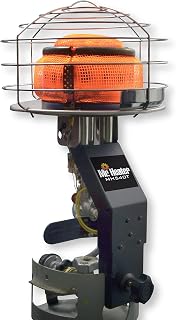
The Mr. Heater Original offers multi-directional radiant heat with an adjustable 360-degree burner. It mounts to a standard 20 lb propane tank for easy portability and provides three BTU settings: 45,000, 36,000, and 30,000. A tip-over safety shut-off enhances outdoor safety. This model is best for open patios and larger outdoor areas where you want broad heat coverage and mobility.
Who it’s best for: outdoor hosts who need versatile heat directions and a robust BTU range, plus portability for shifting seating areas. Why selected: the 360-degree burner and three heat settings provide flexible warmth for mixed outdoor layouts. Caution: ensure stable mounting and keep away from flammable materials when operating near structures.
GasBRUH Single Tank Top Propane Radiant Heater
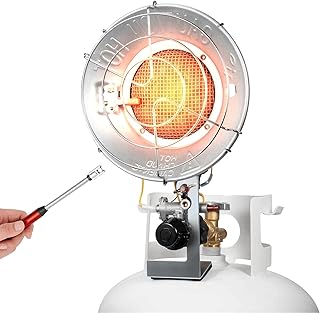
This GasBRUH model is a compact, tank-top radiant heater with three heating modes: 9,000 BTU (low), 12,000 BTU (medium), and 15,000 BTU (high). It includes a tip-over switch and a shut-off valve for safety. It’s well suited for smaller outdoor spaces like patios or tents and can run up to about 28 hours on a 20 lb cylinder on lower settings.
Who it’s best for: campers and homeowners seeking a portable, budget-friendly heater for limited outdoor areas. Why selected: lightweight design and multiple heat settings offer controllable warmth. Caution: outdoor use only and keep away from flammable materials; ensure proper gas leakage checks before use.
Benass 30,000 BTU Double Tank Top Heater

Benass offers a double-tank top propane heater with three heat settings: 22,000 BTU, 26,000 BTU, and 30,000 BTU. It features safety mesh guards, a tip-over switch, and a shut-off valve to automatically cut gas flow if knocked over. It warms up to 800 square feet and can run up to 20 hours on a typical cylinder.
Who it’s best for: users needing mid-sized coverage and a straightforward setup without installation. Why selected: balanced BTU options lead to flexible warmth for various outdoor layouts. Caution: ensure proper clearance around any combustible material and use on stable ground.
EAST OAK 50,000 BTU Patio Heater

The EAST OAK patio heater delivers a high 50,000 BTU output, making it suitable for large outdoor spaces and windy conditions. It includes a dual-layer stainless steel burner and wheels for mobility. This model is best for expansive decks and backyards where strong, consistent heat is needed across a wide area.
Who it’s best for: homeowners with large outdoor living areas needing substantial heat. Why selected: high BTU rating and rugged construction for outdoor resilience. Caution: higher heat output consumes fuel faster; ensure proper clearance and use on a stable, level surface.
CHP9000O 9,000 BTU Portable Heater

The CHP9000O offers a compact 9,000 BTU output suitable for small outdoor areas or tent setups. It uses a 1 lb propane tank connection and features straightforward heat adjustment for quick warmth. This is best for tight spaces where portability and minimal footprint are priority.
Who it’s best for: campers and tailgaters needing a portable, low-capacity heater. Why selected: portability and simplicity suit small areas. Caution: limited warmth for larger spaces; consider a higher BTU model for bigger outdoors.
Buying Guide: Outdoor Propane Radiant Heaters
How to choose the right outdoor propane radiant heater:
- Heat output (BTU): Higher BTU units heat larger areas but consume fuel faster. Match BTU to space size and wind exposure.
- Portability and mounting: Tank-top models are portable; floor or wall-mounted units stay put. Consider how you plan to use the heater.
- Safety features: Look for tip-over switches, shut-off valves, and mesh guards to reduce burn risks outdoors.
- Fuel availability: Most models use standard propane tanks. Ensure you have safe storage and handling for cylinders.
- Weather and wind considerations: Some heaters perform better in windy conditions; others may require shielding or windbreaks.
- Space and clearance: Maintain safe clearances from walls, furniture, and overhead structures as specified by the manufacturer.
Comparison snapshot helps buyers quickly assess options:
- Best for large open patios: Mr. Heater Original (high BTU and 360-degree heat direction).
- Best for compact spaces: GasBRUH Tank Top (lowest BTU, portable).
- Best value mid-size option: Benass Double Tank Top Heater (balanced BTU and run time).
- Best for expansive spaces and wind-prone areas: EAST OAK 50,000 BTU Patio Heater.
- Best portable small-space option: CHP9000O (9,000 BTU, compact).
FAQ
- Can I use these heaters in a covered porch? – Use only if ventilation is sufficient and manufacturer guidelines permit enclosed or semi-enclosed spaces.
- Which heater is best for large outdoor gatherings? – The EAST OAK 50,000 BTU Patio Heater provides high heat output for bigger areas.
- Do these require installation? – Tank-top and portable models typically do not require permanent installation beyond connecting to a propane tank.
- Are there safety concerns with tipping? – Yes. Choose models with a tip-over switch and place on stable, level surfaces away from flammables.
- How long do propane cylinders last? – Fuel duration depends on BTU setting; higher BTU drains a cylinder faster.
- Is a windbreak necessary? – In windy outdoor environments, use a windbreak or shield to improve efficiency and safety.