
As an Amazon Associate I earn from qualifying purchases.
A large planter can make a modest porch look finished, but its purchase price is only the beginning of the budget. The planting container, growing medium, plants, delivery and any surface protection all contribute to the final cost. Before choosing the tallest pot in a photograph, decide whether you need a deep growing container or a decorative shell that holds a smaller nursery pot.
This guide compares three tall outdoor planter options, then works through the measurements and ownership choices that matter when money and space are limited. These are listing-based comparisons, not a report of hands-on testing. Their heights describe their outside appearance; they do not establish usable root depth, soil capacity or suitability for every shrub. Current prices and stock change, so compare the selected package when you are ready to order.
Three options, with different buying questions
- Maple99, thirty-inch two-pack: a tapered resin plastic-stone composite design with an insert tray and plugged drainage holes. Establish its internal planting dimensions before choosing a plant.
- Veradek Pure Series Taper, thirty-inch two-pack: the selected version is black polypropylene plastic with a removable shelf. Its listed outside footprint is 15.25 inches square.
- Heyzier, thirty-two-inch two-pack: a taller resin plastic-stone composite pair with an insert tray and removable drainage plugs. Check the exact width and usable planting space rather than estimating from height.
None is presented here as the cheapest product available. Their value depends on the delivered price and how well their configuration serves your project. A two-pack may help frame an entrance economically, but it also commits you to filling and maintaining two containers.
Looking closely at the planters
Maple99 thirty-inch tapered planters
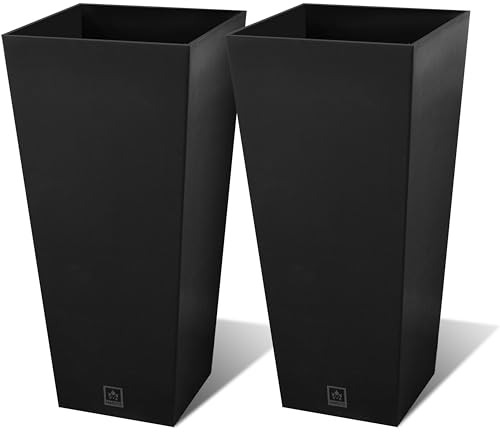
The Maple99 listing describes a black, thirty-inch pair made from resin plastic-stone composite. A removable soil insert tray gives you a choice between a shallower display arrangement and using more of the container, subject to the supplied instructions. Drainage holes have removable rubber plugs. The useful point is this flexibility, rather than a promise that the planter itself will prevent watering problems.
This design deserves consideration when you want a coordinated entrance display and expect to change seasonal plants. Before buying, ask whether your existing nursery pots fit the tray position, whether their drainage can discharge freely, and how the insert is supported. The listing does not establish every internal dimension needed to answer those questions. Avoid choosing a large-rooted plant solely because the outside shell stands thirty inches tall.
- Practical appeal: a matching pair, tapered appearance and a removable insert arrangement.
- Check first: internal opening, insert depth, base footprint and the drainage configuration supplied.
- Ownership tradeoff: an empty shell may be convenient to handle; a planted container requires a separate moving plan.
The seller describes weather and UV resistance. Treat those descriptions as material features, not an independently measured lifespan or a guarantee against tipping, freezing damage or fading in your particular location. Follow the current care instructions and place the pair where watering runoff and ordinary access can be managed.
View selected planter on Amazon
Veradek Pure Series Taper thirty-inch pair
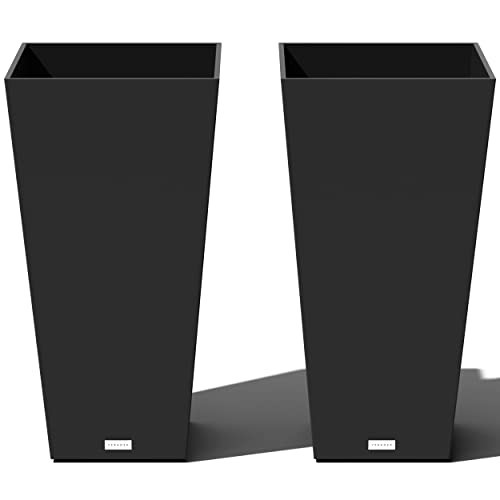
The linked Veradek selection is black, thirty inches high, in a two-pack. The listing specifies polypropylene plastic and outside dimensions of 15.25 inches by 15.25 inches by thirty inches. Those measurements are useful for drawing a porch layout, although a tapered shape means the outside top dimensions should not be treated as the base dimensions or interior root volume.
A removable shelf supports two different approaches: filling the planter as directed or placing an interchangeable plant insert above the shelf. This can suit someone who prefers to refresh a display without emptying the whole decorative container. Verify the shelf’s permitted use and whether your chosen insert can drain rather than assuming any bucket of the right width will work.
The listing describes an optional drainage hole. Inspect the delivered configuration and follow its directions for outdoor use. Do not assume the selected two-pack includes separate saucers: the listing presents other package choices that explicitly mention saucers. Package names and lifestyle pictures should be checked independently.
- Practical appeal: a documented outside footprint and a removable shelf for display flexibility.
- Check first: exact package contents, shelf support and instructions for the actual drainage opening.
- Ownership tradeoff: the tall, tapered look is a visual advantage, but you still need sufficient usable planting space for the selected plant.
Keep the selected size and pack count visible while comparing checkout totals. A smaller single pot or a version bundled with trays is a different purchase, even when the main product page shows the same brand and similar photographs.
View selected planter on Amazon
Heyzier thirty-two-inch planters, set of two

The selected Heyzier option selects black, thirty-two-inch planters in a two-pack. Its listing describes resin plastic-stone composite construction, a hand-polished finish, an insert tray and drainage holes with removable rubber plugs. The extra outside height may suit a broad entrance or a patio backdrop, but it does not tell you whether the planting opening is larger than the shorter choices.
Consider this pair if the thirty-two-inch silhouette is the feature you actually want. Measure the space with that height marked against the wall, then include the plant above it. A planter and foliage can occupy much more visual and physical space than the bare container shown beside a door. Confirm the width and base dimensions with the seller if they are not clearly supplied for the selected variant.
- Practical appeal: a taller coordinated pair with an insert tray and configurable drain plugs.
- Check first: exact outside width, usable root depth, tray arrangement and clear discharge route.
- Ownership tradeoff: the tallest shell is not automatically the best choice for a narrow porch or a long-term tree planting.
The listing offers a different height as another selection. Keep the thirty-two-inch package selected when checking its contents. The seller’s broad weather-resistance wording does not replace care instructions or establish that a planted container is suitable for every winter exposure.
View selected planter on Amazon
A budget buying guide that starts with the plant
Separate decorative height from growing space
Write down the plant you plan to use, its nursery-pot dimensions and whether it will remain in that pot. That gives you a useful starting point for the interior space you need. A decorative shell around a removable plant pot has different requirements from a container intended for direct planting and several seasons of growth.
Outside height can be misleading when a planter contains a raised insert. Compare the available planting depth above that insert with the needs of your plant. Also check the opening and the narrowest interior section. A nursery pot that passes through the top may still be too wide lower down, especially in a tapered container.
For longer-term planting, ask the nursery about the plant’s container requirements before committing to a narrow decorative shape. A dramatic photograph of a mature tree does not establish that the pictured container provides a suitable long-term root environment. Choose the growing arrangement first, then use the exterior finish to complete the look.
Measure a real route through the porch
Mark each proposed footprint with paper or removable tape. Open the door fully, carry a grocery bag through the space and check access to the handle, steps and adjacent seating. Include the foliage rather than measuring only the container. A pair that looks balanced in a straight-on photograph can still make the entrance awkward to use.
Positioning should allow access for watering, cleaning and moving the plant when needed. Avoid a layout that requires lifting a full pot every time the door or gate opens. Check the proposed location in ordinary use before ordering both planters, particularly where visitors, children or pets share the route.
Compare the complete project cost
Use a short project budget instead of ranking pots only by sticker price. Record the delivered price of the correct package, growing medium, plants and any manufacturer-compatible items needed for your arrangement. If you already own suitable nursery pots, confirm whether they can be reused before paying for unnecessary additional containers.
- Divide the delivered package price by the actual number of planters.
- Estimate the growing medium needed for your chosen planting configuration.
- Add plants and any required, separately sold accessories.
- Check whether delivery or return costs alter the apparent saving.
- Reserve time and space for inspection before planting.
An insert may reduce the amount of growing medium needed for a decorative display. That saving is useful only if the remaining growing space suits the plant and the insert is used as directed. Do not compromise the root environment merely to make a large shell inexpensive to fill.
Understand the water path before adding soil
University of Maryland Extension advises using containers with drainage and a suitable container-growing medium; adding a gravel layer at the bottom does not improve drainage and takes away root space. Its container gardening guidance is a useful reference when planning the growing arrangement.
For each planter, identify where water leaves the planted section and where it goes next. A drain in a nursery pot, a tray above a cavity and a drain in the decorative shell are separate parts of the arrangement. A removable plug offers a configuration choice; it does not make the whole system self-watering.
Follow the planter instructions for opening or unplugging drains. Test the permitted configuration before planting and ensure the base is not blocking the intended discharge. Where runoff may mark paving or affect a downstairs neighbor, plan how it will be managed. Surface protection should not create a hidden reservoir that leaves the planted pot standing in water.
Buy material features without buying sweeping promises
Plastic and composite planters can provide a stone-like appearance without being solid stone. Compare the declared material for the selected product and consider the finish you actually prefer. A listing’s words such as heavy-duty or all-weather do not give a standardized service life across all climates and planting conditions.
Check the maker’s cleaning and seasonal storage directions. Ask about any unclear limitation before purchase, especially if the planter will remain outdoors year-round. Scratches, water trapped in the assembly and how the pot is moved all matter during ownership; a decorative finish should be evaluated alongside that routine care.
Plan for weight after planting
Make the moving plan specific: where will the container go if the porch layout changes, and can it travel there through the available doorway? A tall shell may fit its final location yet be awkward to carry through a narrow gate. Measure that route before filling the pot. If removable nursery pots are part of the arrangement, consider how they will be lifted out for routine care without relying on delicate foliage or an unsupported decorative edge.
An empty planter and a filled planter are different handling problems. Decide where it will live before adding growing medium, and avoid assuming that an attractive rim is a lifting handle. If a move will be necessary, follow the maker’s handling guidance and get appropriate help rather than dragging an unsupported container across the surface.
On balconies and elevated decks, confirm the permitted loading and placement with the building owner or a qualified professional when required. Do not estimate structural suitability from the empty product weight. The finished arrangement includes water, growing medium, the plant and any other permitted contents.
Choose the pair for the setting
Matching planters can frame an entrance, but symmetry is a styling choice rather than a requirement. If one side is narrower, measure it independently. A pair may be better placed together on a broader patio than squeezed beside two sides of a small door.
Compare the shape with the surrounding furniture and architecture. The container’s finish, the plant above it and the background wall form one composition. You can make a restrained display with a simple silhouette and a suitable plant rather than buying the largest option available and trying to make the rest of the space fit around it.
From delivery to the first planted display
Keep the purchase easy to evaluate
Save the selected package details when ordering, including the height, color, number of planters and any listed accessories. That simple record helps distinguish a fulfillment problem from a misunderstanding about the variant. A photograph of the unopened parts can also make a missing-item question easier to explain to the seller.
Read the return policy before adding growing medium or modifying any component. A tall pair can be inconvenient to repack, so choose a delivery time when you can inspect it promptly. If a critical dimension is not documented, ask before purchase rather than depending on the possibility of a return after planting.
Think about the next season as well
Decide whether the display will stay planted, receive seasonal nursery pots or be stored empty. Each plan calls for a different amount of handling. An interchangeable display can make sense near an entrance where you like to change colors, while direct planting requires attention to the plant’s longer-term growing requirements.
Keep any unused supplied pieces and instructions together. A plug removed for the current outdoor configuration may be needed when the planter is used differently later. Review the drainage arrangement whenever the display changes, especially when moving a container from a sheltered location to one exposed to rainfall.
Inspect both shells, trays and plugs before using the package. Check for transit damage and confirm that the selected size and color arrived. Keep the packaging until those checks are complete and follow the seller’s return instructions if a component is damaged or missing.
Read the assembly and drainage directions with the actual parts in front of you. Check how the insert is supported and whether your planting arrangement requires it. Avoid improvising a support system from loose objects when the maker specifies a particular installation.
Place the empty containers in their intended locations and review the layout from several angles. Check the view from inside the doorway as well as from the street or garden. Then prepare the permitted planting configuration and growing medium for the actual plants, rather than following a generic photograph of a different container.
After planting, establish a care routine appropriate to those plants and the site. Keep drainage accessible for inspection and review any runoff problem early. If the arrangement needs adjustment, address it before the container becomes difficult to move or foliage crowds the entrance.
Questions that help avoid an expensive mismatch
Does extra-large mean a fixed capacity? No capacity is implied by that description here. Compare documented interior dimensions and usable planting volume; outside height alone cannot answer the question.
Are these self-watering planters? This guide does not classify them as self-watering. An insert shelf or removable drain plug is not enough to establish a managed reservoir system.
Can I keep the plant in its nursery pot? That can be a practical display arrangement if the interior fit, shelf support and drainage path suit the pot. Confirm all three before relying on it.
Which option makes the most sense on a budget? Start with the exact package that fits the site and intended plant. Maple99 offers a thirty-inch pair with an insert arrangement; Veradek provides a documented square outside footprint and shelf; Heyzier offers the taller thirty-two-inch silhouette. Compare complete project costs after those practical requirements are met.