
Clay soil can be challenging for perennials, often holding too much water or becoming compacted. The right soil amendments help improve drainage, aeration, and moisture retention, creating a healthier root environment. This guide highlights five practical amendments that work well with clay soils and supports perennial planting. Each option is designed to balance moisture and airflow, promote strong roots, and reduce the risk of root rot. Use these products to prepare your beds or container mixes for resilient, long-lasting perennials.
| Product | Brand | Notes |
|---|---|---|
| Horticultural Calcined Clay Soil Bonsai Cactus Soil Additive (2 QT) | Voulosimi | Calcined clay for improved drainage and moisture retention |
| Calcined Clay for Bonsai (1 Pint, 1/8″) | Awesome Industries | Premium soil amendment with high porosity |
| Sol Soils Calcined Clay – 2 Quarts | sol soils | High porosity for aeration and balanced moisture |
| FANTIAN LECA Clay Pebbles (5 lbs, 8-12 mm) | FANTIAN | Hydroponic-grade clay pebbles for drainage and aeration |
| TOYPOPOR Leca Clay Pebbles (1 Quart) | TOYPOPOR | Expanded clay for drainage, aeration, and versatile use |
Horticultural Calcined Clay Soil Additive – Two Quarts

This calcined clay additive is widely used in bonsai, succulents, cacti, and other specialty plant soil mixes. It enhances soil structure by improving drainage and promoting healthy root growth, while also helping the soil retain essential moisture. Ideal for gardeners who want a durable, versatile soil component, it serves as an effective grow medium for various horticultural applications. The material’s high porosity supports aeration and reduces compaction in clay soils, making it easier for roots to access oxygen and water as needed.
Key benefits
- Improved drainage and aeration in clay-rich mixes
- Moisture retention without waterlogging
- Suitable for bonsai, succulents, cactus, and other plants
Horticultural Calcined Clay For Bonsai (3 Lb)
This calcined clay product is designed for bonsai, succulents, cacti, and indoor plants. The fired clay provides balanced moisture retention and robust drainage, helping prevent root rot while offering steady moisture to roots. Its irregular, porous structure promotes air movement and root growth, and its slightly acidic pH can balance alkaline amendments in mixed soils. For clay-based garden beds or containers, this amendment improves soil consistency, allowing perennials to establish healthier root systems over time.
Key benefits
- High porosity supports root respiration
- Durable and long-lasting compared to some natural clays
- Compatible with a wide range of indoor and outdoor plants
Sol Soils Calcined Clay – 2 Quarts
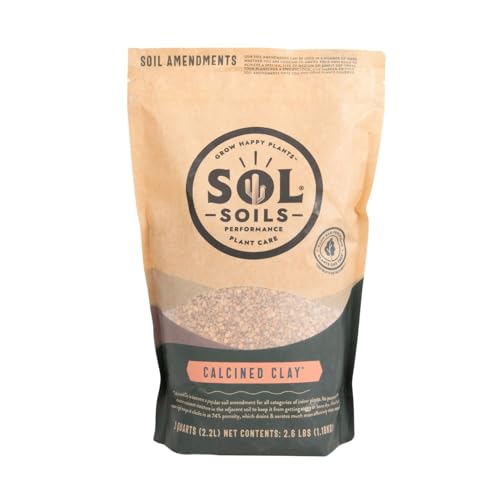
Sol Soils Calcined Clay is a peat-free soil amendment designed to improve drainage, aeration, and root health for indoor plants, succulents, bonsai, and more. It achieves approximately 74% porosity after firing, creating air pockets that prevent compaction and support robust root systems. The product helps maintain an optimal moisture balance, ensuring plants receive hydration without becoming waterlogged. It is especially popular for cacti, bonsai, and other drought-tolerant perennials that require well-aerated soils in clay-rich substrates.
Key benefits
- Superior drainage and aeration
- Moisture meter-like balance to prevent over- or under-watering
- Versatile for indoor plants and specialized mixes
FANTIAN LECA Clay Pebbles (5 lbs)

LECA clay pebbles are a lightweight expansion clay material used for drainage, aeration, and moisture management in hydroponic and soil-based systems. The 8-12 mm size offers versatility for potting mixes and top-dressing to improve root airflow. The porous structure reduces water evaporation and retains enough moisture for roots to uptake gradually. This product is beneficial for perennials grown in containers or mixed beds with clay soil when improved drainage is desired to prevent soggy roots.
Key benefits
- Lightweight, easy to handle
- Excellent drainage and aeration
- Stable support for plant roots in containers
TOYPOPOR Leca Clay Pebbles (1 Quart)

TOYPOPOR Leca clay pebbles are expanded clay pebbles crafted for drainage and aeration in potting mixes, hydroponics, and other gardening applications. The 1-quart size is convenient for adding to clay-based soils or container blends to improve root oxygenation and drainage. The pH-neutral material helps avoid pH shifts in sensitive perennial mixes. These pebbles are suitable for raised beds, planters, and decorative uses while reducing compaction and promoting healthier root systems.
Key benefits
- Excellent drainage and aeration for container gardens
- pH-neutral and reusable in many mixes
- Versatile for hydroponics and soil-based systems
Buying Guide: Perennial Tips For Clay Soil And Amendments
- Assess your soil texture: If your clay soil is heavy and sticky, aim for amendments that break up compacted layers, like calcined clay, LECA, or expanded clay pebbles. For lighter clay, mix in organic matter gradually to preserve structure.
- Choose balanced amendments: Use products that improve drainage without sacrificing moisture retention. Calcined clay and LECA provide air spaces and water-holding capacity in a balanced way.
- Consider plant needs: For perennials that require well-drained roots (delphiniums, asters, salvias, lavenders), emphasize drainage. For moisture-loving perennials (hostas in partial shade), combine amendments with mulch and organic compost to avoid drought stress.
- Container vs. bed: In containers, LECA or calcined clay can dramatically improve drainage, while in beds, incorporate amendments deeply to influence the root zone. Rejuvenate mixes every season or two as needed.
- Consistency and reapplication: Calcined clay and LECA stay stable over long periods, reducing the need for frequent replacement. In heavier clay soils, periodic top-dressing with lighter amendments can maintain structure.
- Environmental considerations: Choose peat-free options where possible. Calcined clay and LECA are inert, reusable options that align with sustainable gardening practices.
- Test and observe: After amending, monitor root development, drainage, and soil moisture. Adjust watering schedules to prevent either saturation or drought stress in perennials.