
Maintaining proper pH is crucial for nutrient uptake in hydroponics. The right pH range helps prevent nutrient lockout and supports robust plant growth. This guide highlights five reliable products to monitor and adjust pH, with objective considerations to help you choose what fits your system best. Each section features practical details, usage notes, and what to expect in day-to-day operation.
| Product | Brand | Primary Use |
|---|---|---|
| General Hydroponics pH Down Liquid Premium Buffering For pH Stability | General Hydroponics | Lowering pH when too high |
| General Hydroponics pH Control Kit | General Hydroponics | Complete pH testing and adjustment system |
| VIVOSUN Digital pH and TDS Meter Kits | VIVOSUN | Digital pH and TDS readings in one unit |
| pH Meter for Hydroponics PPM EC Meter (YINMIK) | YINMIK | Multi-parameter monitoring (pH, EC/PPM, temperature) |
| FOLLOWIN pH Up and Down Control Kit (9oz+9oz) | FOLLOWIN | Buffering solutions for pH stabilization |
General Hydroponics pH Down Liquid Premium Buffering For pH Stability

Maintaining a stable pH in hydroponic nutrient solutions is essential for optimal nutrient availability. General Hydroponics pH Down Liquid Premium uses a food-grade phosphoric acid formulation to reduce pH when measurements show alkalinity creeping upward. This product is designed for quick, predictable adjustments to bring the reservoir back into the ideal range for most hydroponic crops. The formula emphasizes pH stability, helping to minimize daily drift that can disrupt nutrient uptake. For best results, measure pH with a reliable tester, add small amounts gradually, and recheck after a short interval.
Practical use tips: start with conservative additions, especially in larger reservoirs, to avoid sudden swings. Use alongside a high-quality pH Up product to maintain a balanced system over time. Always store away from heat and direct sunlight to preserve the solution’s potency. For growers seeking consistent stability, integrating pH monitoring with routine checks is key to sustained plant health.
General Hydroponics pH Control Kit For A Balanced Nutrient Solution
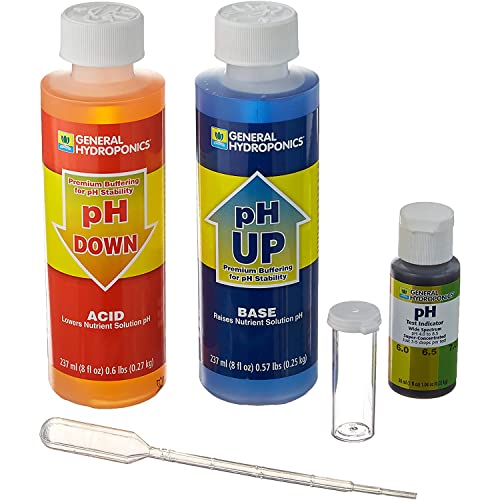
The General Hydroponics pH Control Kit consolidates essential tools for accurate pH management. This all-in-one set includes pH Up and pH Down liquids, a test indicator, test tube, eyedropper, and a pH level chart. The kit is designed to deliver reliable, fast results with an easy-to-read system that helps growers determine whether adjustments are needed and by how much. The included liquids cover the spectrum of pH adjustments, supporting both rises and falls in pH as your nutrient solution evolves during feeding cycles.
Operational notes: calibrate your testing approach with the indicator and chart to improve consistency. The kit is well-suited for home setups and small studios where simplicity and dependable results matter. For best outcomes, pair the kit with periodic reservoir mixing and gentle, incremental adjustments to maintain a stable nutrient environment across crops with diverse pH preferences.
VIVOSUN Digital pH and TDS Meter Kits

The VIVOSUN meter kit combines pH and TDS measurements with temperature in a compact, ready-to-use instrument. It is designed for hydroponic, pool, aquarium, and lab applications, offering a measurement range suitable for common nutrient solutions. Readings are described as quick and reliable, with a stated accuracy of ±2% for EC/TDS and a standard pH range of 0-14. The device emphasizes versatility, allowing rapid checks across reservoirs, reservoirs, and different grow systems. Note that it cannot test seawater, which is not typically a concern for most home hydroponics setups.
Practical considerations: ensure batteries are fresh for consistent performance, and calibrate the pH and EC sensors periodically using appropriate solutions. The compact form factor is convenient for moving between grow tents or tables, but consider a buoyant or protected storage method to prevent damage in busy grow environments. For growers managing multiple tanks, this meter can be a central monitoring tool to reduce guesswork.
pH Meter for Hydroponics PPM EC Meter (YINMIK)

The YINMIK 4-in-1 tester provides simultaneous monitoring of pH, EC/PPM, and temperature for hydroponic nutrient solutions. It is designed to be immersed for continuous monitoring, with a stainless steel electrode for durability and fast response. The device includes calibration solutions—pH 4.00-7.00 and 1413 μS/cm EC buffer—to enable quick, “out-of-the-box” setup. Features emphasize real-time value display and ease of use, supporting hydroponic systems that require constant monitoring for precise nutrient management.
Usage guidance: rely on the included calibration fluids to maintain accuracy, and perform periodic recalibration as temperatures shift in your grow space. The 4-in-1 capability can reduce equipment clutter and simplify routine checks, especially in larger setups with multiple reservoirs. This option suits growers who want a single device to cover several critical measurement parameters without purchasing separate meters.
FOLLOWIN pH Up and Down Control Kit
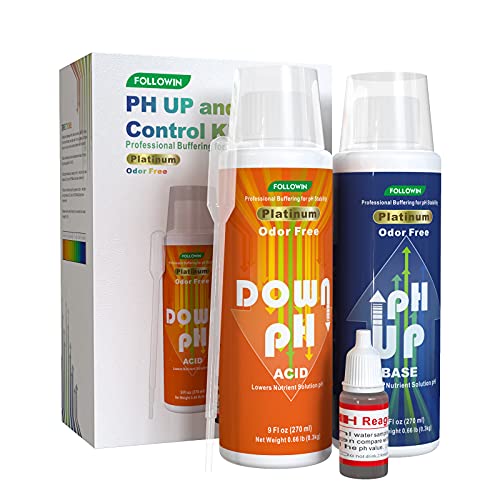
The FOLLOWIN pH Up and Down Control Kit provides updated buffering solutions (9 oz each) designed for hydroponics, soil gardening, and water-based systems. This kit emphasizes the stability of pH in nutrient solutions, aiding home growers in maintaining consistent plant health and growth. The product notes highlight its odorless and colorless formulation, broad compatibility with various media (hydroponics, coco coir, soil gardens), and its practical application across indoor and outdoor gardens. An important tip is the appearance of a brown/black precipitate after opening the pH down bottle; this condensate is harmless and does not affect performance.
Considerations for use: store in a cool, dry place and follow the included guidelines for dosing. Because buffering efficiency depends on the overall water chemistry, it is helpful to perform frequent test-and-adjust cycles rather than large, abrupt changes. This kit is a solid option for beginners seeking an all-in-one approach to pH stabilization and for experienced growers who value a straightforward, reliable set of buffers.
Buying Guide: Key Purchase Considerations
- System size and reservoir volume: Larger systems require more stable pH buffers and stronger metering solutions. Select products whose concentration and dosing guidance match your tank size.
- Measurement methods: Digital meters offer quick readings and multi-parameter data but require calibration and occasional replacement. Drops-based kits are simple and low-cost but slower and more manual. Consider mixed kits for flexibility.
- Calibration and maintenance: Calibration solutions, test indicators, and easy access to replacement parts influence long-term reliability. Prioritize brands with widely available calibration fluids and clear instructions.
- Media compatibility: Some products are optimized for coco coir, rockwool, or soil-based gardens. Ensure the pH buffers and meters align with your growing medium and nutrient regimen.
- Temperature considerations: Temperature affects pH readings; meters with ATC (automatic temperature compensation) can reduce measurement errors in fluctuating environments.
- Ease of use and durability: For busy grow spaces, choose devices that are rugged, water-resistant, and simple to operate with minimal maintenance.
- Cost of ownership: Consider the total cost of ownership, including replacement probes, calibration solutions, and refills, not just the initial purchase price.
- Data management: Some meters deliver data logs or connect to apps. If you need records for compliance or optimization, prioritize devices with data features or easy export options.
Across hydroponic setups, combining a pH control kit with a reliable pH meter offers balanced control. For growers managing multiple tanks or crops with varying nutrient needs, a multi-parameter meter can reduce equipment clutter and streamline monitoring. Conversely, beginners may prefer a straightforward buffering kit paired with a simple pH test indicator to learn how small pH adjustments influence nutrient availability. The best choice depends on system size, growth goals, and preferred workflow. Always follow manufacturer guidance and monitor plants for signs of nutrient-related stress as you adjust pH strategies.