
Winter poses challenges for ponds, from frozen surfaces to gas build-up under the ice. The following guide highlights five reliable pond de-icers, spanning thermostatically controlled heaters and deep-water bubblers. Each option helps maintain a small opening in the ice, supports gas exchange, and protects fish health during cold snaps. Read on to compare features, installation notes, and safety protections to choose the right fit for your pond size and climate.
| Product | Brand | Key Benefit |
|---|---|---|
| TetraPond De-Icer | TetraPond | Keeps an ice-free area; allows gas exchange; works to -20°F |
| Pondmaster De-Icer | Danner | Holds open water; protects fish; watertight electronics |
| Farm Innovators De-Icer | Farm Innovators | Thermostatically controlled; energy-efficient; cast aluminum |
| Kasco Deicer 3/4 HP | Kasco | Large diameter open water; high-performance motor |
| Laguna PowerHeat 315-Watt | Hagen | Thermostat-controlled; LED indicator; safe for liners |
TetraPond De-Icer Thermostatically Controlled
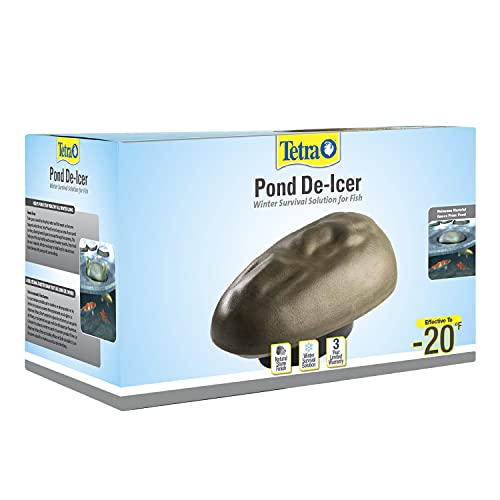
The TetraPond De-Icer is designed to maintain a minimal, ice-free area on the pond surface while facilitating the escape of toxic gases from decaying matter beneath the ice. Its thermostatic control helps ensure the unit activates only when temperatures require action, contributing to energy efficiency while protecting pond life. This model is listed for use in very low temperatures, with operation noted down to -20 degrees. Its compact design makes it suitable for small to mid-sized ponds and water gardens, where simple installation and reliable performance are essential.
Features include a dedicated ice-free zone, winter survival support for fish, and UL listing for electrical safety. The device is designed to be mounted or placed in the pond, allowing water around the heater to stay fluid and safe for fish during freezing conditions. As with other de-icers, results depend on pond depth, ambient temperature, and water movement, so users should consider pond size when selecting a heater wattage.
Pondmaster Pond De-Icer, Red

The Pondmaster Floating Winter De-Icer is designed for colder regions where extended icing can occur. It helps maintain a small opening in the frozen surface to release gases and provide oxygen to aquatic life, supporting fish health throughout winter. The unit features epoxy-sealed internal electronics for watertight protection and is designed to be safe for flexible liners or pre-formed ponds. With a focus on reliability, it provides continuous operation in challenging conditions while minimizing the risk of electrical issues near water.
Key considerations include placement to create an adequate ice-free zone, compatibility with pond liners, and the need for stable electricity access. The device’s floating design makes it relatively easy to deploy in a variety of pond shapes, though users should follow safety guidelines to prevent accidental contact with water and ensure cords remain protected in freezing weather.
Farm Innovators 1250 Watts Cast Aluminum De Icer

This Farm Innovators model floats on the pond surface to keep a hole in the ice, creating a safe, protected haven for aquatic life during winter. Built from patented cast aluminum, the heater is designed for efficiency and durability in harsh weather. The thermostat controls operation so the device turns on only when necessary, balancing winter protection with energy use. The unit is designed to withstand outdoor conditions and is suitable for ponds of various sizes when paired with appropriate wattage, cords, and safety considerations.
Installation considerations include ensuring a stable floating position, checking power cord length, and verifying that the pond depth allows for a maintained open area without disturbing liners or plants. The device’s performance benefits from proper placement away from strong currents that might disrupt the ice-free zone.
Kasco Deicer 3/4 HP Lake & Pond De-Icer

The Kasco 3/4 HP Deicer is engineered to prevent ice formation across a large surface area, capable of keeping an open water zone with effective coverage up to a significant diameter, depending on air temperature. It includes built-in thermal overload protection, a 25-foot power cord, and two 20-foot suspension ropes, enabling flexible deployment on docks or in ponds. This high-performance model is designed for year-round use, supporting fish health during winter and enhancing water quality by promoting gas exchange under the ice.
With ETL certification to CSA and UL standards, this de-icer emphasizes safety and reliability. Installation is straightforward: plug into a 120V outlet, and consider optional dock mounting if needed for larger ponds, docks, or lakes. Operators should assess pond dimensions, electrical accessibility, and the presence of vegetation or obstructions that could affect the device’s effectiveness or safety.
Laguna PowerHeat 315-Watt Floating Heater

The Laguna PowerHeat floating pond heater uses a thermostat to regulate operation, turning on to create an ice-free zone and turning off when heat is not required, thereby protecting the unit and pond life. The LED indicator provides a clear status signal, enabling quick checks from shore. It is designed to be safe for plastic and liner ponds, with a 22-foot cord that offers flexible placement options. This model provides a compact, energy-conscious option suitable for smaller to mid-sized ponds and water gardens.
Key considerations include pond size, water depth, and the importance of a visible indicator during winter monitoring. The unit’s thermostat helps prevent overheating, while the floating design supports ease of installation and adjustment in response to changing ice conditions. For users with plastic liners or sensitive pond environments, this heater offers a balance of safety and effectiveness in maintaining winter refuges for aquatic life.
Buying Guide: Key Purchase Considerations
When choosing a pond de-icer, consider pond size, depth, and local climate. Larger ponds typically require higher-wattage or multiple units to maintain open water effectively, while smaller ponds can be protected with compact, thermostatically controlled devices. The following factors help guide selection:
- Open-water diameter vs. temperature range: Higher horsepower units keep larger zones clear of ice; verify the expected open-water diameter under your typical winter lows.
- Thermostat vs. continuous heating: Thermostatically controlled de-icers save energy by operating only as needed, while non-thermostatic models run continuously.
- Power supply and cord length: Ensure an outdoor-rated outlet and a sufficient cord length to reach the pond without stretching the cord across walkways or slap hazards.
- Electrical safety: Look for UL or CSA certifications, GFCI protection, and IP-rated housings for water exposure and corrosion resistance.
- Pond type compatibility: Some units are rated for liners or plastic ponds; confirm compatibility to avoid damage or voiding warranties.
- Installation options: Floating heaters offer simplicity; dock-mounted or submerged models may suit larger or irregularly shaped ponds.
- Maintenance needs: Consider ease of removal, cleaning, and any required winter storage of the device when seasons change.
Comparison at a glance helps identify the best fit for your pond’s size and your climate: Thermostatically controlled floating heaters prioritize energy efficiency; high-horsepower deicers provide extensive coverage for large ponds; and devices with attention to safety features protect both users and aquatic life in freezing conditions. Always follow the manufacturer’s installation and safety guidelines to minimize risks and maximize winter survival for pond ecosystems.