
Choosing the right salt cell is key to maintaining clean, comfortable pool water while keeping chlorine costs in check. This guide highlights high-performing salt cells that support in-ground pools up to 40,000 gallons. Each option covers different brands, installation needs, and durability features, helping you compare performance and value at a glance.
The following table summarizes the selected products, including brand, compatibility notes, and typical pool capacity they’re designed to support. Use this as a quick reference while reading the detailed reviews.
| Product | Brand | Approx. Pool Capacity | Key Notes |
|---|---|---|---|
| Hayward W3T-CELL-15 TurboCell | Hayward | Up to 40,000 gallons | NSF-certified; lowers chlorine costs; smooth water |
| Swimpulse Salt Cell | Swimpulse | Up to 40,000 gallons | Universal compatibility; quick install |
| Deuovht T-15 Pool Salt Cell | Deuovht | Up to 40,000 gallons | Broad compatibility; corrosion-resistant build |
| EverCrystal Salt Cell for T-9 | EverCrystal | Up to 25,000 gallons | Clear shell shows internal plates; compatible with multiple Hayward models |
| CHLORWORKS CWPC Salt Cell | CHLORWORKS | Up to 40,000 gallons | Compatible with Pentair IntelliChlor setups; low maintenance |
Hayward W3T-CELL-15 TurboCell Review

The Hayward TurboCell W3T-CELL-15 is designed for in-ground pools up to 40,000 gallons. It delivers silky, naturally sanitized water that is gentler on eyes and skin, while helping to reduce chlorine costs by up to half. NSF certification supports reliable, standards-based performance. This cell is built for endurance in typical American backyard pools, with straightforward installation and long service life in varying water conditions. The compact design makes it suitable for standard plumbing configurations while offering consistent chlorine production over time.
Features like corrosion-resistant titanium plates and a strong electrolytic process help sustain chlorine generation even as environmental conditions change. The product’s reliability can translate into fewer maintenance cycles and a more stable sanitizer level for daily use. End-users often cite noticeable improvements in water feel and clarity after replacing older cells with TurboCell technology. While installation depth and plumbing layout vary, this cell aligns with Hayward’s common control systems for in-ground pools.
Swimpulse Salt Cell: Versatile 40k-Gallon Choice

Swimpulse offers a salt cell advertised to support pools up to 40,000 gallons with broad compatibility across brands. This replacement cell emphasizes easy installation—often doable in under 30 minutes—and a compact form factor that fits a wide range of plumbing setups. The manufacturer distinguishes itself by providing a one-year after-sales service window and a user manual to simplify setup and ongoing use. It is important to note that while Swimpulse markets itself as compatible with major brands, it is not affiliated with Hayward.
Water quality outcomes depend on proper sizing, control settings, and system maintenance. Swimpulse cells are designed to maintain steady chlorine production, contributing to clearer water with less odor. As with any universal-style cell, confirming compatibility with your specific chlorination system before purchase will help avoid installation or performance issues. The emphasis on quick installation makes this a practical option for pool owners seeking a faster upgrade path.
Deuovht T-15 Salt Cell: Durable Replacement

The Deuovht T-15 salt cell targets in-ground pools up to 40,000 gallons and emphasizes reliable chlorination alongside a corrosion-resistant build. The design prioritizes stable electrical conductivity to sustain efficient chlorine generation, which can help reduce long-term operating costs. A cleaning kit is included to extend service life, reinforcing a practical maintenance approach for regular pool care. In terms of compatibility, this model is positioned as an upgrade for Hayward T15 systems, with broad cross-compatibility claims across several popular Hayward series.
Users should consider installation specifics, as the product claims depend on correct integration with existing controllers and plumbing. The robust construction aims to balance performance with durability, making it a solid option for households replacing aging cells or upgrading to higher-output capabilities. Routine cleaning and following the included maintenance guidance will help ensure consistent chlorine production and water clarity over time.
EverCrystal T-9 Salt Cell: Visible Quality
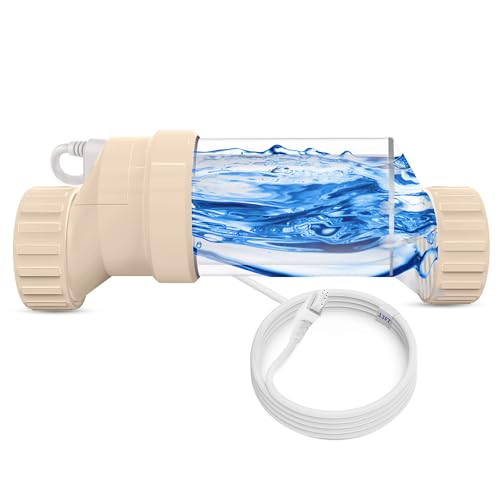
The EverCrystal T-9 salt cell emphasizes a crystal-clear housing that lets users visually inspect the titanium plates and operation. It targets in-ground pools up to 25,000 gallons and claims compatibility with Hayward’s salt cell families, including AquaRite, AquaLogic, SwimPure, and others. While this model offers a visual advantage, its capacity is lower than the 40,000-gallon options, making it best suited for mid-size in-ground pools or as part of a broader pool system upgrade. Installation is designed for straightforward mounting, with emphasis on stable performance and ease of replacement when needed.
Buyers should verify that their controller and system architecture align with EverCrystal’s claims, as some compatibility details revolve around specific Hayward configurations. The two-year warranty further supports buyers seeking a longer-term replacement option. For pool owners prioritizing visibility of hardware and easy future servicing, this model provides a compelling blend of transparency and performance within its capacity range.
CHLORWORKS CWPC Salt Cell For Pentair Systems

The CHLORWORKS CWPC salt cell is designed to fit Pentair IntelliChlor Power Center systems and provides a practical solution for a range of pool setups up to 40,000 gallons. It emphasizes low-maintenance operation and includes an upgraded flow switch with integrated temperature and salinity sensing to optimize chlorine production. While not affiliated with Pentair, the CWPC positions itself as a compatible alternative that can reduce replacement costs by enabling direct cell replacement rather than entire generator units. This model is well-suited for pool owners who already rely on Pentair-based control ecosystems and want a straightforward upgrade path.
Performance will hinge on correct matching with the rest of the control equipment and adherence to installation guidelines. Its emphasis on an improved flow switch helps improve efficiency and monitoring, contributing to reliable chlorine generation. If you’re upgrading from an older or less efficient cell within a Pentair layout, this option can offer meaningful long-term value through improved maintenance intervals and consistent sanitization.
Buying Guide: Key Purchase Considerations
- Pool size and compatibility: Confirm the cell’s supported gallon range and ensure it matches your in-ground pool’s capacity. Check if your controller brand (Hayward, Pentair, etc.) requires a specific cell model for best performance.
- Maintenance and cleaning: Look for corrosion-resistant materials, such as titanium plates, and whether a cleaning kit is included. Regular cleaning supports longer cell life and steadier chlorine output.
- Installation and wiring: Consider installation ease and whether the cell can fit your existing plumbing without major modifications. Quick-connects and compact form factors save time.
- Performance metrics: Compare output stability, expected chlorine generation, and how the cell responds to varying water chemistry. Cells with seals and robust flow monitoring tend to be more reliable.
- Warranty and after-sales support: A longer warranty and accessible customer service can reduce total ownership costs and downtime if issues arise.
- Cost vs. longevity: While initial costs matter, total cost of ownership—driven by efficiency, maintenance needs, and lifespan—often determines the best value.
- Brand ecosystem: If your pool uses a specific brand ecosystem (e.g., Hayward, Pentair), staying within that ecosystem can simplify compatibility and control integration.
Note: Always follow the manufacturer’s installation and maintenance instructions. Some claims about compatibility are provided for informational purposes and may depend on the control system in use.