
Looking for a portable deck privacy screen that is easy to move, set up, and provides reliable privacy and sun protection? This guide highlights five top picks that balance portability, durability, and practical use for different spaces. The best options suit deck corners, balconies, or poolside setups where quick reconfiguration matters. Here, you’ll find concise reasons who each product is best for, plus practical considerations to help you compare at a glance.
| Product | Best For |
|---|---|
| VEVOR Retractable Side Awning, 71″ x 118″ | Those wanting sun blocking with a sleek retractable design |
| RANTILA 3 Panel Privacy Screen | Freestanding, flexible room division |
| 8-Panel Outdoor Privacy Screen by JOSTYLE | Large, tall privacy coverage with foldable setup |
| Enclo Privacy Screens Wood Panel | Classic wood look with durable assembly |
| TALLYVER 72″ Outdoor Privacy Screen | Modern metal design with louvers for airflow |
VEVOR Retractable Side Awning

Best for buyers who want portable sun protection with a simple pull-to-retract mechanism. The 180 g/m² PU-coated polyester fabric offers 30+ sun protection and basic water resistance, making it suitable for blocking side sun on porches and decks. The powder-coated iron frame with a telescopic pole provides stability, while the aluminum roller tube ensures smooth retraction. Note: Retract during heavy rain or strong winds to preserve fabric and hardware. Best for patios, decks, and poolside areas where a semi-permanent screen is not required.
Who this is for: outdoor enthusiasts who value a compact, weather-aware privacy solution that you can roll away when not in use. This is a good pick for one-off shade needs or temporary deck shielding without full installation.
RANTILA 3 Panel Privacy Screen

Best for flexible room partitioning in homes or offices that need adjustable privacy. This three-panel, freestanding divider is lightweight and foldable for easy storage and rearrangement. Each panel contributes to a wide total coverage (up to 102″ W x 71″ H when arranged), with UV-protected, waterproof fabric and a sturdy steel frame. The design allows directional changes to suit changing seating areas. Limitation: fabric folds can require occasional realignment to maintain stability, especially in windy spaces.
Enclo Privacy Screens Wooden Panel

Best for buyers seeking a natural wood look with versatile installation options. This FSC-certified real wood screen provides a stylish, rustic privacy solution. It offers both ground placement and potential concrete mounting options with pre-drilled holes, supported by stainless steel bolts for durability. Easy assembly makes it a practical choice for patios, decks, and living spaces that benefit from a warm, traditional aesthetic. Limitation: wood requires occasional maintenance to prevent weathering if left exposed for long periods.
TALLYVER 72″ Outdoor Privacy Screen
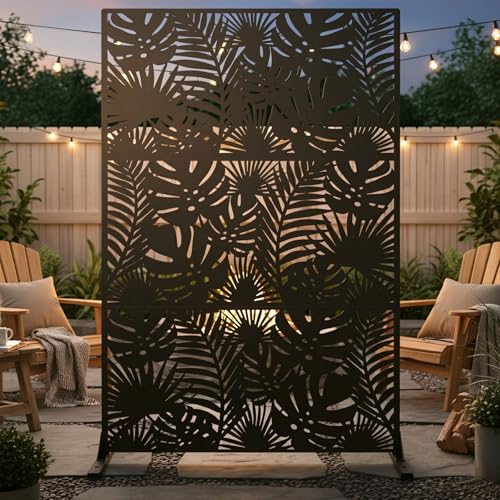
Best for modern outdoor spaces needing a sturdy, weatherproof metal privacy screen. This 72×44 inch freestanding panel features a laser-cut tropical leaf design with a heavy-duty steel frame and a black powder-coated finish for rust resistance. Its louvers balance privacy with airflow, making it suitable for patios, balconies, and decks. Caution: heavy panels may require firm anchoring on loose surfaces to prevent tipping in strong winds.
Buying Guide
What should I consider when choosing a portable deck privacy screen?
Material durability and weather resistance are essential. For quick setup, look for freestanding designs that don’t require tools or installation. If you need sun protection with the option to retract, a retractable system can be ideal. For long-term aesthetics, wood panels provide a classic look but require maintenance, while metal screens offer modern style and sturdiness with low upkeep.
How much privacy and coverage do you need?
Assess total width and height. Taller screens (around 69″–72″ tall) offer better privacy from neighbors at eye level, while wider panels improve coverage along long decks. Foldable or modular designs help adapt space for furniture and traffic patterns.
How portable should the solution be?
Portability hinges on weight, foldability, and whether you can move sections easily. Lightweight fabric screens are easy to reposition but may sag in wind. Freestanding panels with sturdy frames stay upright but can be heavier to reposition.
Maintenance and care considerations
Fabric and finishes should resist UV fading and moisture. PU-coated fabrics offer water resistance, while wood needs occasional sealing. Metal screens with powder coatings resist rust but may require periodic cleaning to maintain appearance.
Installation and space requirements
Freestanding units need floor or ground space and stable footing. Surface-mounted options work on patios but require drilling or anchors. Consider access for storage when not in use; foldable designs save space.
Summary of key features
- Sun protection and water resistance: Look for PU coating and UV-stable fabrics.
- Frame materials: Powder-coated metal for durability; wood for aesthetics; combination options exist.
- Portability: Retractable or foldable designs offer easy relocation.
- Installation: Freestanding versus surface-mounted affects setup time and surface compatibility.
- Maintenance: Wood needs care; metal screens are generally low-maintenance.
Frequently Asked Questions
- What is the best portable privacy screen for a small balcony?
Consider compact, freestanding designs with foldable panels to maximize space while providing privacy.
- Can I leave a wooden privacy screen outside year-round?
Wood screens can handle outdoor use but may benefit from protective finishes and periodic maintenance to prevent weathering.
- Are retractable screens weatherproof?
Retractable screens typically offer some water resistance but should be retracted during heavy rain or high winds to prevent damage.
- Do metal privacy screens block airflow?
Many metal panels are designed with gaps or louvers to allow airflow while maintaining privacy.
- What installation options exist if I don’t want permanent mounting?
Freestanding panels require no permanent mounting and can be rearranged as needed.
- Which option is best for a modern deck design?
Metal or laser-cut designs with clean lines often complement contemporary outdoor spaces while providing privacy.