
Answering your search for portable golf cart heaters, this guide highlights five dependable options that keep golf rounds comfortable in chilly conditions. These heaters are best for golfers who want warmth during early morning tee times, late-season rounds, or outdoor practices. Each pick is evaluated for heat output, ease of use, durability, and compatibility with common cart setups.
| Product | Brand | Approximate BTU | Best For |
|---|---|---|---|
| Mr. Heater Golf Cart 4,000 BTU Radiant Propane Heater | Mr. Heater | 4,000 | Lightweight carts, short rounds, budget-conscious users |
| 6800BTU Propane Golf Cart Heater, 2 in 1 Cup Holder | SANAUVULCAN | 6,800 | Cold mornings on bigger courses or longer practice sessions |
| KOMAN Golf Cart Heater, Outdoor Propane Heater | KOMAN | 4,100 | Users needing adjustable heat with cup-holder compatibility |
| WADEO Golf Cart Heater with Cup Holder & USB Igniter | WADEO | 6,200 | Windy days with quick ignition and USB-lighter convenience |
| GasBRUH Golf Cart Heater with Cup Holder, 6,200 BTU | GasBRUH | 6,200 | Rugged outdoor use, wide compatibility with cup holder bases |
Mr. Heater Golf Cart 4,000 BTU Radiant Propane Heater

The Mr. Heater Golf Cart model delivers 4,000 BTU per hour for up to about 5.5 hours on a standard 1 lb propane cylinder. It’s a compact, lightweight option designed for small to mid-size carts. Best for golfers who want a simple, no-fuss heat source that’s easy to carry and install in a cup-holder or small space on the cart. A potential limitation is shorter runtime if you play extended rounds on very cold days.
6800BTU Propane Golf Cart Heater with Cup Holder

This heater touts 6,800 BTU and includes a cup-holder compatible base, making it a robust option for longer rounds or cooler climates. It emphasizes portability for golf carts, with a design aimed at quick setup and reliable warmth. It is best for golfers who need higher heat output on the course or during early-season play. A potential caveat is its larger size, which may require more space on smaller carts.
KOMAN Golf Cart Heater, Outdoor Propane Heater

The KOMAN heater provides about 4,100 BTU and features automatic ignition plus adjustable heat output. It’s designed to fit golf carts and includes a cup-holder adapter that works with various holders on EZGO, Yamaha, and Club Car models. Best for golfers who want a reliable, controllable heat source with straightforward ignition. A limitation is the note that 1 lb propane tanks are not included, so buyers need to source tanks separately.
WADEO Golf Cart Heater with Cup Holder & USB Igniter
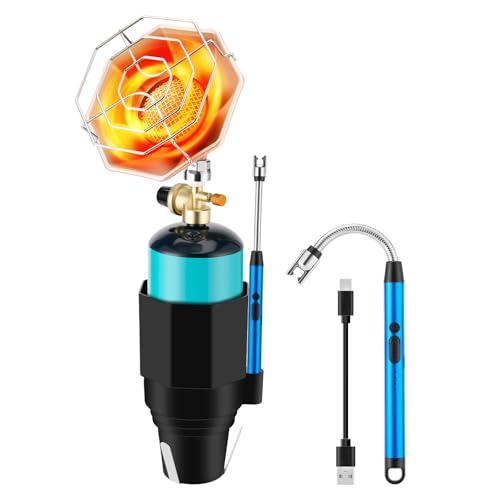
The WADEO heater generates up to 6,200 BTU and includes a USB-powered igniter for windier conditions. It features a durable die-cast aluminum heat shield and a brass connector for durability and a stable cup-holder setup. Best for golfers who want strong warmth with easy ignition in challenging weather. A possible limitation is the heavier build, which may affect portability on very small carts.
GasBRUH Golf Cart Heater with Cup Holder

The GasBRUH unit also delivers around 6,200 BTU and comes with a cup-holder-compatible base. It emphasizes safety with explicit guidance on proper gas handling and a robust build designed for EZGO, Club Car, and Yamaha carts. Best for golfers who require strong, adjustable heat and broad cart compatibility. A caution is the need to verify fuel delivery and tank compatibility before use in your cart setup.
Buying Guide: Choosing The Right Portable Golf Cart Heater
What heat output do you need? Consider BTU ratings in relation to your cart size, outdoor seating, and typical playing conditions. Higher BTU models (6200–6800 BTU) are better for longer cold rounds or windy climates, while 4,000 BTU units suit shorter rides and milder cold days.
How easy is ignition and operation? Models with automatic ignition and USB lighters offer quick starts in freezing weather, reducing the risk of cold-start frustration. If you prefer simple operation, prioritize push-button ignition and stable flame adjustment.
Is cup-holder compatibility important? Many golf carts rely on cup-holder bases to host heaters. Ensure the included adapter fits your cart model (EZGO, Club Car, Yamaha) or opt for universal holders.
What fuel considerations exist? Propane tanks are common, but check if the model requires 1 lb cylinders and whether those are included. Some products mention fuel not included, so plan accordingly for tanks and safe storage on the cart.
Is portability a factor? For frequent transport or camping use, lighter units with foldable or compact bases can simplify storage. Heavier units may offer more robust heat but can be less convenient to move between carts or storage spaces.
Safety and durability matters. Look for heat shields, corrosion-resistant components, and clear warnings for outdoor use. Ensure the heater is rated for exterior conditions and is designed to minimize leak risks when mounted on a cart.
FAQ: Quick Answers For Golf Cart Heaters
- What is a practical BTU for cold rounds? A BTU range of 4,000–6,200 is common; higher BTU is better for windy or very cold days.
- Do all heaters fit all golf carts? Not always. Cup-holder adapters vary; verify compatibility with EZGO, Club Car, and Yamaha models before purchase.
- Do propane heaters require electricity? Most rely on propane and some include USB ignition rather than electric power, making them versatile in remote settings.
- Is it safe to use a heater on a cart? Use only outdoors or well-ventilated areas, away from flammable materials, and follow all manufacturer safety instructions.
- Are 1 lb propane cylinders universal? They are common, but some models require specific tank sizes; confirm before buying and ensure tank availability near the cart.
- What maintenance is needed? Regularly check for gas leaks, inspect hoses and valves, and store cylinders properly when not in use.