
Growing a thriving fiddle leaf fig starts with the right potting soil. The best mixes balance drainage, aeration, and nutrients to support robust roots, glossy foliage, and steady growth. Below is a curated guide to five highly compatible soils designed for fiddle leaf figs and other indoor fig varieties. Each option emphasizes drainage, light texture, and organic components to help prevent common issues like root rot and brown leaf tips.
Summary Table of Chosen Products
| Product | Brand | Key Focus | Amazon Link |
|---|---|---|---|
| Fiddle Leaf Fig Soil | Perfect Plants | All-purpose mix with coconut coir; plant food included | See product |
| Premium Fiddle Leaf Fig Tree Soil | Soil Sunrise | Nutrient-rich, pH-balanced blend for indoor/outdoor figs | See product |
| 100% Organic Fiddle Leaf Fig Soil | Fiddle Leaf Fig Plant Food | Organic, biochar-enriched; strong drainage and roots | See product |
| Recycled Fiddle Leaf Fig Soil 5-in-1 | Duspro | 5-in-1 blend: coco coir, coconut fiber, perlite, pumice, pine bark | See product |
| Organic Fiddle Leaf Fig Potting Mix | Doter | Balanced pH; bark, perlite, and slow-release nutrients | See product |
The following sections highlight each product with structure, key features drawn from the provided details, and practical guidance on when to choose each mix for your fiddle leaf fig care plan.
Perfect Plants Fiddle Leaf Fig Soil (8QTS)

This all-purpose mix is designed specifically for fiddle leaf figs and other indoor houseplants. It combines coconut coir—an excellent water-retaining yet well-draining additive—with nutrients to support regular foliage flushing. The blend provides enhanced drainage to keep roots from staying too wet, which is a common issue with dense soils. The package notes include a fiddle leaf fig food to promote healthy, vibrant leaves with routine growth cycles approximately every six months.
Ideal when you want a straightforward, ready-to-use soil that balances moisture retention and drainage. It’s particularly suitable for indoor environments where irrigation frequency is moderate and you want a convenient bag that delivers both soil and starter nutrients in one go.
Premium Fiddle Leaf Fig Tree Soil (12 Quarts)

Designed as an expert formula for vibrant growth, this 12-quart mix is marketed for both indoor and outdoor uses. The soil claims to provide water and nutrient retention while maintaining excellent drainage and stabilized pH. Such a blend is well-suited for fig trees that require steady nutrient availability without the risk of chelated imbalances that can lead to leaf scorch or yellowing. It may be especially beneficial for larger fig specimens or repotting scenarios where a more substantial soil volume is needed.
Choose this option when you’re repotting a mature fiddle leaf fig or setting up a robust container garden environment where longer intervals between watering are desirable, paired with a nutrient-rich substrate to sustain growth.
100% Organic Fiddle Leaf Fig Soil
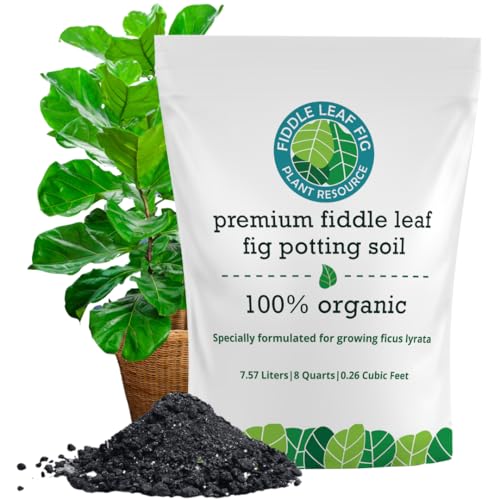
This soil emphasizes organic ingredients designed to support healthy root systems and lush foliage. The blend features biochar and bark components to improve nutrient retention and soil structure, helping reduce common fiddle leaf fig issues such as brown spots and leaf drop. It’s positioned as an ideal option for gardeners prioritizing organic components and a soil that encourages strong root development while minimizing chemical buildup.
Use this mix if you prefer an organic approach and want a soil that fosters natural microbial activity and durable root networks. It’s well-suited for ongoing seasonal growth in controlled indoor environments where you want to minimize synthetic inputs.
Duspro Recycle Fiddle Leaf Fig Soil 6 QRT
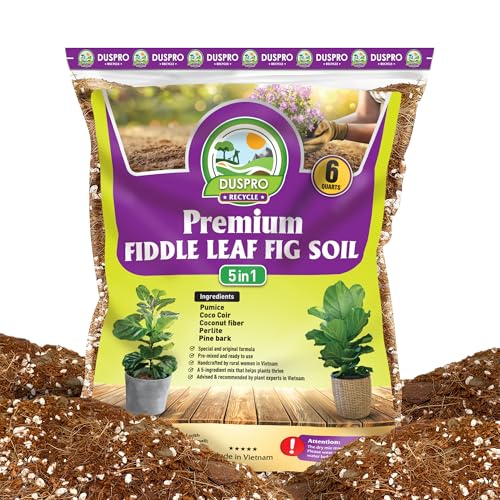
Duspro markets a 5-in-1 blend crafted for fiddle leaf fig care. The mix combines coco coir, coconut fiber, perlite, pumice, and pine bark to deliver a well-draining medium with good aeration and moisture control. Potential advantages include reduced risk of root rot due to superior drainage and an airy soil structure that supports robust root exploration. The ready-to-use nature saves time for busy plant owners who want consistent results with minimal preparation.
Best used when you want a pre-mixed, versatile soil that handles both smaller plants and larger pots while maintaining reliable drainage. Regular repotting with this mix can help keep roots oxygenated and prevent compacted soil over time.
Doter Organic Fiddle Leaf Fig Potting Mix

Doter’s mix emphasizes a balanced pH and nutrient-rich components, designed for fiddle leaf figs and related indoor trees. It includes bark, perlite, and a slow-release fertilizer to support growth, particularly for plants in containers that require steady nutrient availability without frequent feeding. The slightly acidic to neutral pH range is aligned with fig-specific nutrient uptake, helping to sustain vibrant foliage and strong stems.
Choose this option when you want a soil that provides ongoing nutrition through slow-release components, coupled with structural ingredients that promote drainage and air-filled root zones. It’s a solid choice for new plant acquisitions or repotting efforts where ongoing health is a priority beyond immediate growth spurts.
Buying Guide: Key Purchase Considerations For Fig Tree Soil
When selecting potting soil for fiddle leaf figs, consider the following aspects to tailor your choice to your plant’s needs and your care routine:
- Drainage and aeration: Fiddle leaf figs prefer soil that drains quickly enough to prevent root rot yet retains some moisture between waterings. Look for blends with perlite, pumice, or coconut coir that improve airflow and drainage.
- Organic vs. synthetic nutrients: Organic components (biochar, compost, bark) support long-term soil health but may release nutrients more slowly. If you prefer quick nutrient availability, blends with slow-release fertilizers or easy-to-dissolve nutrients can help, but monitor for salt buildup.
- pH and nutrient balance: Slightly acidic to neutral pH is often ideal for fiddle leaf figs. Pay attention to pH recommendations on the bag and adjust with amendments like dolomite lime if necessary.
- Texture and particle size: Coarse, airy soils reduce compaction and create space for roots to spread. Avoid dense, heavy mixes that retain excessive moisture and hinder root oxygenation.
- Container size and plant stage: Larger or mature figs benefit from a soil with more volume and robust drainage. Younger plants may thrive in lighter mixes that promote quick root expansion.
- Maintenance and repotting frequency: Some blends include starter nutrients or fertilizer pellets—factor in ongoing feeding needs and your repotting schedule when choosing.
Perspective considerations:
- Organic-forward options may appeal to gardeners prioritizing natural inputs and sustainability, though they can require more careful monitoring of moisture and nutrient levels.
- Pre-mixed, ready-to-use soils offer convenience and consistency for busy households or beginners, reducing preparation time and measurement errors.
- Specialized fig soils can be beneficial for mature plants in larger pots or in environments with uneven watering, where drainage performance is critical to prevent root problems.
Practical tips for using fiddle leaf fig soils:
- Watering: Allow the top inch to dry before watering again to balance moisture without saturating roots.
- Drainage: Ensure pots have drainage holes and use a well-draining mix to keep roots oxygenated.
- Repoting cadence: Re-pot every 1-2 years or when roots fill the container; choose a pot only slightly larger than the current one to avoid waterlogged soil.
- Fertilization: If the soil lacks starter nutrients, supplement with a balanced fertilizer during the growing season, following label directions to prevent nutrient burn.
In sum, the right potting soil for fiddle leaf figs balances drainage, texture, and nutrients to support healthy roots and lush foliage. The selections above provide a range of organic and premium blends designed to fit various care approaches, from convenient ready-to-use formulas to richer, slow-release nutrient systems. Choose the option that aligns with your plant’s age, pot size, and your preferred maintenance routine to help your fiddle leaf fig thrive.