
When heavy rain or melting snow threatens your yard, a reliable sump pump can prevent flooding and protect your property. This guide highlights five top Amazon picks that are well suited for backyard flooding, drainage around pools, ponds, basements, and window wells. Each product is assessed for power, portability, range, and ease of use to help you choose what fits your needs—whether you’re a homeowner, pool owner, or DIY enthusiast.
Buyer types at a glance:
– Homeowners with frequent lawn or basement pooling: look for high discharge rates and robust construction.
– Pool or hot tub owners: prioritize debris filtration, low-suction depth, and portability.
– DIY enthusiasts needing portable drainage: favor lighter pumps with longer cords and simple installation.
| Product | Discharge (GPH) | Power | Key Benefit | Best For |
|---|---|---|---|---|
| Aquastrong Sump Pump 1 HP | 4500 | 1 HP | Debris-filtered, 30 ft lift, 10 ft cord | Basements, window wells |
| Limodot Submersible 25 ft Hose Kit | 4000 | 1 1/2 HP | Long reach, versatile adapters | Pools, gardens |
| Acquaer 1/3 HP Automatic | 2160 | 0.33 HP | Automatic on/off with sensor | Pool covers, basements |
| FOTING 1HP Sump Pump | 4600 | 1 HP | 10 ft cord, durable thermoplastic | Pools, basements, ponds |
| Wayne CDU790 1/3 HP | 4600 | 0.33 HP | Integrated float switch, cast iron | Basements, heavy drainage |
Aquastrong Sump Pump 1 HP 4500 GPH

The Aquastrong pump offers strong drainage with a 1 HP motor capable of moving up to 4500 GPH, ideal for fast water removal from basements or window wells. It features a bottom suction design that filters debris and can handle solids up to 1/5 inch. The included 1-1/4” discharge and adapters support flexible installation, and the 10 ft power cord adds reach for remote pumping. Best for: homeowners facing rapid flooding in basements or small pools where debris presence is moderate. Limitation: lifting capacity tops at 30 ft, which may not suit very deep pits.
Limodot Submersible Water Pump With 25ft Hose Kit

The Limodot pump delivers up to 4000 GPH with a 31 ft lift, and its long 25 ft cord makes it versatile for larger yards. It’s lightweight (about 10.8 lbs) with a low-suction depth of 1/5 inch, facilitating quick drainage from pools or ponds. Best for: users needing long reach and easy transport around a backyard or shed. Limitation: motor power is 1 1/2 HP, which can be louder and draw more energy than smaller models.
Acquaer 1/3 HP Automatic Submersible

Acquaer provides automatic operation with a smart sensor: it starts when water is detected and stops at low levels, reducing energy use. It moves up to 2160 GPH and has a bottom suction design that filters debris while removing water down to 1/4 inch. Best for: pool covers, hot tubs, and light basement flooding where automation reduces manual monitoring. Limitation: lower flow compared to larger 1 HP models.
FOTING Sump Pump 1HP 4600 GPH
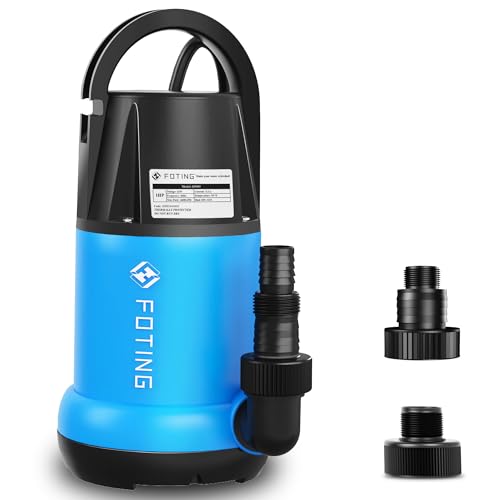
The FOTING model offers 4600 GPH at 5 ft, lifting up to 31 ft. It includes a 10 ft power cord and a removable bottom for easy cleaning, with a thermoplastic housing for corrosion resistance. Best for: users needing robust drainage for pools or basements with frequent debris and a longer reach. Limitation: heavier build than ultra-portable options, which may affect transport between sites.
Wayne CDU790-1/3 HP Submersible

The Wayne CDU790 is a robust option for indoor use with up to 4600 GPH. Its cast-iron volute and corrosion-resistant housing ensure durability in tough sump pump tasks. Best for: basements and indoor flood control where durability and steady operation are priorities. Caution: designed primarily for indoor use; exposure to prolonged outdoor weather may reduce longevity.
Buying Guide
- Drainage needs: For fast water removal in basements or window wells, choose higher GPH models (3500–7000 GPH) with adequate lift to reach your drainage point.
- Power and portability: Heavier-duty pumps offer more power but require handling. If you need mobility around a yard, favor pumps with long cords and lightweight designs.
- Debris handling: Debris filtration is essential if solids or sediments are present. Look for bottom suction and filter bases.
- Automatic vs manual: Automatic pumps save monitoring time; manual pumps require activation. Consider your flood frequency and tolerance for oversight.
- Installation flexibility: Discharge adapters and hose compatibility (NPT and barb fittings) simplify connections to existing drainage systems.
- Durability: Cast iron or stainless steel housings and corrosion-resistant plastics extend pump life in harsh outdoor conditions.
Frequently Asked Questions
- What size sump pump do I need for backyard flooding? – Choose based on your typical water volume and the lowest drainage point; higher GPH and lift are beneficial for larger floods.
- Can these pumps handle debris and leaves? – Many have bottom suction designed to filter debris down to 1/5 inch; verify solids tolerance in the product specs.
- Is an automatic pump better than a manual one? – Automatic pumps start when water is detected, reducing monitoring needs; manual pumps require continuous operation control.
- What is lift height and why does it matter? – Lift height is the max vertical distance the pump can push water; ensure it matches the distance to your discharge site.
- Do I need a long power cord for backyard use? – A longer cord increases placement flexibility and safety by reducing the need for extension cords.
- Are stainless steel or cast-iron pumps more durable for outdoor use? – Yes, they resist corrosion and wear better in outdoor environments but may be heavier and more expensive.