
Answering the question, these rain gutter water barrels offer practical, low-maintenance ways to collect and store roof runoff for irrigation and outdoor use. They’re best for homeowners seeking water savings, easy installation, and scalable storage. The top picks below are suited for small gardens, larger lawns, and backyard landscapes alike. Read on to compare capacity, durability, and setup features to choose the right fit for your property.
Summary table of chosen products:
| Product | Capacity | Best For | Key Feature |
|---|---|---|---|
| RTS Home Accents 50-Gallon ECO Rain Barrel (Black) | 50 gallons | Gardeners needing durable, recycled-plastic storage | 100% recycled plastic, UV-resistant |
| RTS Home Accents 50-Gallon Walnut Rain Barrel | 50 gallons | Backyard spaces with flat-back installation | Flat-back design, durable UV-resistant material |
| FCMP Outdoor Flat-Back Rain Barrel (Black) | 50 gallons | Installers needing side spigots and debris protection | Side spigots, aluminum mesh screen |
| EJWOX 45 Gallon Rain Barrel | 45 gallons | Gardens and lawn care with debris filtration | Mesh screen, BPA-free construction |
| FCMP Outdoor 45 Gallon Debris Screen Barrel | 45 gallons | Downspout integration, easy water access | Debris screen, included hose |
RTS Home Accents 50-Gallon ECO Rain Barrel

The RTS Home Accents ECO Rain Barrel combines a 50‑gallon capacity with 100% recycled plastic. It’s UV-resistant to withstand outdoor exposure, making it a solid choice for long-term use in sunny yards. The built-in overflow valve helps manage excess water and supports linking multiple barrels for expanded storage. Best for homeowners who want an eco-friendly option that blends with garden setups and patio spaces. Caution: real-world overflow management may require additional barrels when rainfall is heavy.
RTS Home Accents 50-Gallon Walnut Rain Barrel
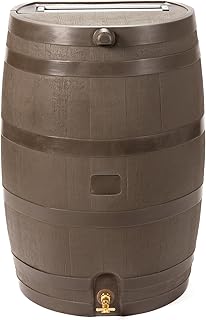
This Walnut-colored flat-back rain barrel also holds 50 gallons and is built from UV-resistant polyethylene. The flat-back design aids installation flush against walls, saving space in narrow outdoor areas. It includes an overflow valve to route excess water and supports expansion by connecting additional barrels. Best for small to mid-size properties where a visually unobtrusive barrel matters. Limitation: color may influence heat absorption in direct sun, potentially affecting water temperature slightly.
FCMP Outdoor Rain Barrel, Flat-Back, 50 Gallons

The FCMP Flat-Back Rain Barrel emphasizes easy installation with a wide back, plus side spigots to connect multiple barrels for expanded capacity. It includes an aluminum mesh screen to keep debris out, preserving cleaner water for gardening. Best for homeowners who want straightforward expansion and simple maintenance. Caution: some users may prefer a larger screen or interior filter for heavy debris seasons.
EJWOX 45 Gallon Rain Barrel

This 45-gallon model focuses on practical garden watering with a BPA-free, mesh-filtered design. It captures rainwater directly from gutters and includes a spigot and hose connection for easy watering. Best for budget-conscious buyers who still want reliable water collection for seasonal plant care. Limitation: 45 gallons is slightly smaller than other options, requiring more frequent harvesting for large landscape needs.
FCMP Outdoor 45 Gallon Debris Screen Barrel

This 45-gallon model offers a complete water collection system with a debris screen, a 3.5‑ft garden hose, and a thumb shut-off valve for controlled use. It’s designed for dependable outdoor watering and straightforward setup against an exterior wall. Best for users who want a ready-to-use kit with basic accessories. Caution: ensure your downspout alignment matches the barrel’s inlet for optimal flow.
Buying Guide: How To Choose The Right Rain Barrel
What capacity do you need? Match barrel size to your typical rainfall and irrigation needs. Small gardens may do well with 45–50 gallons, while larger lawns can benefit from multiple barrels or higher-capacity options. Consider expansion potential and whether overflow valves allow chaining barrels for more storage.
Where will you place it? Flat-back designs save space and fit neatly against walls. If you have a tight yard, measure available width and height to ensure a snug fit. Aesthetics may also influence choice if the barrel sits in a visible area.
Material and durability matter. Most options use UV-resistant polyethylene. If you live in a sunny climate, UV stability helps extend life. Recycled content adds an eco-friendly edge but also assess color, as darker finishes can absorb more heat.
Water quality and use. Debris screening keeps leaves and twigs out, improving water quality for plant irrigation. Spigots and hose connections simplify transfer to watering cans or irrigation systems. Check whether the kit includes mesh screens, shut-off valves, and hoses, or if those are sold separately.
Maintenance and installation. Look for simple installation with compatible downspout connections. Flat-back barrels are easier to mount along walls, while tall, rounded designs might require more space and stability considerations. Consider whether you want basic or feature-rich models with expansion options.
FAQ
- Do travel-friendly rain barrels exist for small spaces? Yes. Flat-back designs are compact and install flush against walls, saving space for narrow patios or alleys.
- Can I connect multiple barrels for more storage? Yes. Many models include overflow valves and connection options to link several barrels for increased capacity.
- What maintenance is required? Regularly check debris screens, clean the inlet, and inspect spigots to prevent leaks and ensure smooth water flow.
- Is a rain barrel safe for drinking water? Rain barrels are intended for outdoor watering and irrigation. Do not use stored water for drinking unless you have a certified filtration and purification system.
- Which barrel is best for a first-time buyer? A 45–50 gallon model with a debris screen and a simple hose connection is typically easiest to setup and manage for beginners.
- How does overflow impact yard drainage? Overflow valves help prevent water from backing up into the downspout and can be used to route excess water away from foundations or to a secondary barrel.