
Answering the common buying question, these RV winter covers protect travel trailers from rain, snow, wind, and UV exposure. They’re ideal for RV owners seeking long-term protection and easier maintenance during off-season storage. The top picks below cover a range of trailer lengths, from compact Toy Haulers to large campers, and emphasize tear resistance, windproofing, and easy installation. Whether you prioritize rugged durability, built-in ventilation, or complete accessory kits, this guide helps you choose the right cover for your climate and storage setup.
Summary at a glance:
| Product | Estimated Size Range | Key Benefit | Best For |
|---|---|---|---|
| MOFEEZ Travel Trailer RV Cover | 24’–27′ | Ultra thick 7-layer fabric with windproof straps | Mid-size trailers needing heavy-duty protection |
| CAMMOO 27–30ft Cover | 27’–30′ | 9-layer durability with full kit | All-weather protection with complete accessories |
| Xenjum 30–33ft Cover | 30’–33′ | 8-layer fabric with venting and protection | Larger travel trailers requiring strong wind resistance |
| Fonzier 15–18ft Cover | 15’–18′ | 7-layer with extra zippers and vents | Smaller trailers needing flexible fit |
| RVMasking 28–31ft Cover | 28’–31′ | 7-layer fabric with enhanced wind protection | Mid-to-large Toy Haulers and campers |
MOFEEZ Travel Trailer RV Cover (24′-27′)

Best for: Mid-size travel trailers in moderate climates. Why selected: This MOFEEZ cover uses a seven-layer panel fabric with a waterproof membrane to resist rain, snow, and UV exposure. The kit includes multiple straps and four tire covers for full enclosure, plus gutter covers and a jack/tower protection setup. The design emphasizes wind resistance with extra-long straps to secure against gusts. Caution: Confirm the exact trailer length before purchasing to ensure proper fit within 24’–27′ range.
CAMMOO 27–30ft RV Cover

Best for: Larger trailers needing robust all-weather protection. Why selected: The 9-layer construction adds tear resistance and heavy-duty wind protection, with a reinforced roof and integrated breathable layers. The complete kit includes tire covers, gutter covers, ladder cover, repair patches, and installation aids. Caution: Installation may require two people for optimal tensioning due to multiple straps and vent elements.
Xenjum Heavy Duty RV Cover (30′-33′)
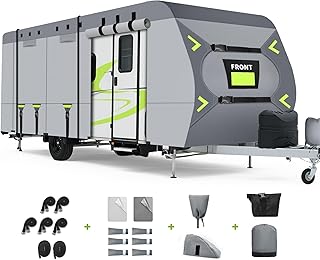
Best for: Large motorhomes and campers facing variable weather. Why selected: An eight-layer fabric with added water resistance and tear protection. It features five bottom straps and windproof elements, plus six gutter covers to prevent damage to edges. Ventilation and reinforced seams improve long-term durability. Caution: The extra layers increase weight, so handling may be harder for one person during setup.
Fonzier RV Cover 15-18ft

Best for: Shorter travel trailers needing strong wind protection. Why selected: This 7-layer design emphasizes UV resistance and windproofing with four straps and buckles, plus two long all-around straps for a tight fit. The cover includes six ventilation points and five zippers for easier access. Caution: Fit can be sensitive to trailer width; double-check measurements to avoid overhang at corners.
RVMasking Travel Trailer Cover 28′-31′

Best for: Toy Haulers and mid-to-large campers requiring reinforced wind protection. Why selected: The 7-layer fabric plus anti-UV and water-repellent outer coating provides reliable rain and sun defense, with additional windproof straps and a comprehensive kit, including tongue jack and propane tank covers. Caution: Ensure compatibility with any auxiliary storage components at the sides to avoid interference with access panels.
Buying Guide: How to Choose the Right RV Winter Cover
What size and fit should I look for?
Measure the trailer length, width, and height and compare with the cover’s stated range. If you’re between sizes, choose the larger option to allow room for straps and gutters. An overfit can lead to wind dress and damage; underfit can expose corners and vents.
Which fabric layers matter most?
Look for multi-layer construction with a waterproof membrane, UV inhibitors, and tear-resistant nonwoven layers. A thicker layer count usually translates to better durability, especially in windy or snowy climates.
How important are windproof straps and ventilation?
Windproof straps secure the cover and prevent billowing. Ventilation reduces interior moisture and heat buildup, which helps prevent mold and fabric deterioration. A balanced combination is ideal for most climates.
What accessories should a complete kit include?
Common useful items are tire covers, gutter covers, ladder covers, storage bags, and patch kits. A jack or tongue cover can protect exposed components, while installation assists (toss bags or extra straps) simplify setup.
Is installation easier with zippers and access panels?
Yes. Multiple zippers or roll-up doors allow access to the RV interior without fully removing the cover. This is valuable for quick checks or intermittent use during storage.
Are there any caveats to consider?
Some models are heavier and stiffer due to extra layers, making handling tougher for a single person. Always follow the manufacturer’s installation guidelines and ensure that awnings, vents, or side accessories won’t be pressed or damaged by the cover.
What climate factors should influence my choice?
Rain and snow demand strong waterproofing and sealed seams. Windy regions benefit from extra-long straps and reinforced hems. UV-heavy environments favor higher UV resistance to slow fabric aging. Snow-prone areas may require a roof reinforcement and secure anchoring.
How do I maintain the cover for longevity?
Rinse off debris, avoid using abrasive cleaners, dry thoroughly before storage, and store in a breathable bag when not in use. Periodically inspect straps, seams, and grommets for signs of wear and replace any damaged components promptly.
Quick reference checklist
- Trailer length matches or fits within the cover size
- Seven to nine-layer fabric with waterproof membrane
- Windproof straps and bottom tensioning
- Ventilation points for moisture control
- Complete accessory kit included
FAQ
- What is the typical lifespan of an RV winter cover?
Durability varies by climate and usage, but high-quality seven- to nine-layer models with reinforced stitching can last several seasons with proper maintenance.
- Should I buy a cover for 1 inch more than my trailer’s length?
Yes, choosing a slightly larger size allows better strap placement and prevents edge exposure, especially for wider or oddly shaped trailers.
- Can I use a cover during the winter in snow-prone areas?
Yes, provided the cover has strong waterproofing, windproof straps, and adequate ventilation to reduce moisture buildup under the cover.
- Do all covers include tire and accessory protection?
Many do, but verify a listing for tire covers, gutter covers, and jack/tongue protection to ensure full coverage of critical components.
- Is professional installation necessary?
Most covers are installable by homeowners, but large or heavy models may benefit from two people or assistance for best tensioning and fit.