
Choosing the right selective weed killer helps protect your desirable grasses and ornamentals while eliminating invasive weeds. This guide reviews five top options designed to target broadleaf weeds or select grassy invaders without harming your lawn or flowers. Each product below includes practical usage notes, application timing, and what makes it a strong choice for American yards, flower beds, and landscape borders. Use this overview to compare active ingredients, coverage, and compatibility with common turf and garden setups.
| Product | Brand | Active Focus | Best For |
|---|---|---|---|
| Hi-Yield 21416 2,4-D Selective Weed Killer | Hi-Yield | 2,4-D broadleaf weed control | Lawns and garden beds with broadleaf weeds |
| Atticus Torocity Herbicide (8oz) | Atticus | Mesotrione blend for turf | Newly seeding and established turf with tough broadleaf and grassy weeds |
| Southern Ag Amine 2,4-D WEED KILLER 32oz | Southern Ag | 2,4-D amine formulation for broadleaf weeds | Turf, pastures, and ditch banks with broadleaf invaders |
| Roundup For Lawns Ready-to-Use (1.33 gal) | Roundup | Broadleaf and some grassy weeds in Northern grasses | Lawns and landscaped areas needing restraint on weed spread |
| Hi-Yield 33692 Super Concentrate Killzall Weed & Grass Killer | Hi-Yield | Broad spectrum (non-selective) weed control | Large areas and tough weed outbreaks (not lawn-friendly) |
Note: The following sections provide detailed product insights. Always read the label for local-use rules, dilution rates, and safety precautions before applying any weed killer.
Hi-Yield 21416 2,4-D Selective Weed Killer
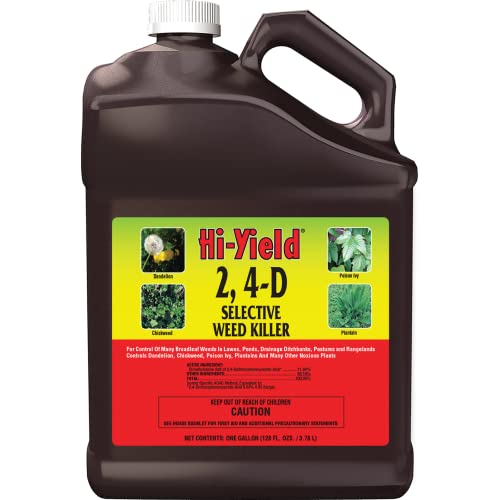
Hi-Yield 21416 uses a selective 2,4-D formulation to control broadleaf weeds while leaving many grasses intact. It is commonly chosen for lawns, flower beds, and landscape borders where dandelions, arrowhead, buckhorn, asters, and similar species threaten the aesthetic. The label lists a broad range of susceptible weeds and suggests timing aligned with actively growing plants. When used as directed, this product can be an economical option for homeowners seeking targeted weed control without replanting or reestablishing turf repeatedly.
Application considerations include weather windows (avoid extreme heat and drought conditions), tank-mix opportunities with compatible spreaders for improved coverage, and careful spot treatment to protect desirable plants. As with most selective herbicides, test on a small area first to observe any phytotoxic effects on sensitive varieties. Users report reliable results on common lawns and garden edges when applied at the recommended rate and followed by thorough watering if indicated on the label.
Atticus Torocity Herbicide (8oz)
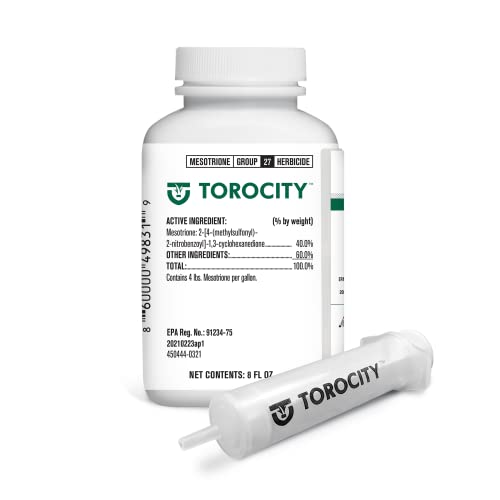
Torocity from Atticus combines mesotrione with flexible timing for pre- and post-emergent use. This approach broadens the application window, helping you control weeds before they emerge and remove existing invaders. The product is designed for lawns and turf with a focus on broadleaf and grassy weed control, supporting established turf and newly seeded areas. Because mesotrione acts differently than traditional 2,4-D formulations, Torocity can be effective against species that resist other herbicides.
Key considerations include proper timing for seedling lawns, compatibility with irrigation schedules, and potential effects on ornamentals near treated zones. The label emphasizes a steadier schedule that accommodates irregular weed flushes and weather variability. For best results, apply when weeds are actively growing and avoid applying in temperatures that exceed the product’s guidelines. This flexibility makes Torocity a versatile option for lawn care programs that combine preventive and corrective weed strategies.
Southern Ag Amine 2,4-D WEED KILLER, 32oz
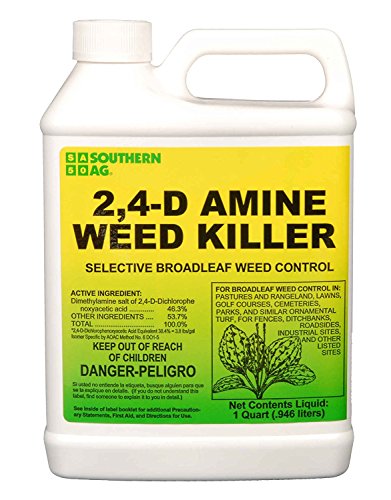
Southern Ag Amine 2,4-D Weed Killer focuses on broadleaf weed control using a trusted 2,4-D amine formulation. This option is favored for turf, pastures, rangeland, and roadside applications where a broadleaf weed assault is needed without harming compatible grasses. It is commonly used in larger outdoor spaces because of its economical use rate and broad weed coverage. Operators should adhere to label instructions for dilution, spray volumes, and spray timing to minimize risk to pollinators and nearby ornamentals.
When comparing to other selective products, consider the weed spectrum, the height and vigor of your lawn, and the surrounding plantings. This product is typically compatible with standard irrigation practices after application, but avoid runoff into gardens or water features. Regular monitoring after treatment helps assess whether a second application is necessary to address stubborn populations.
Roundup For Lawns Ready-to-Use with Extend Wand

Roundup For Lawns Ready-to-Use is engineered for northern grasses and provides fast-acting weed control directly at the point of contact. It targets a broad spectrum of weeds, including crabgrass, dandelion, clover, and yellow nutsedge, and claims up to several months of weed suppression when used as directed. The Extend Wand helps reach tight corners and under bushes, improving application efficiency. This option is often chosen for homeowners who want a simple spray-and-forget approach in lawn areas where precision is less critical and weed pressure is consistent.
Considerations include ensuring compatibility with your grass type, avoiding spray drift to ornamental beds, and applying under appropriate weather conditions to maximize root kill and minimize re-emergence. While it provides robust control in lawns, it is less selective than 2,4-D-based products, so careful targeting around desirable plants is essential.
Cornerstone Plus Non Selective Herbicide (2.5 Gallon)
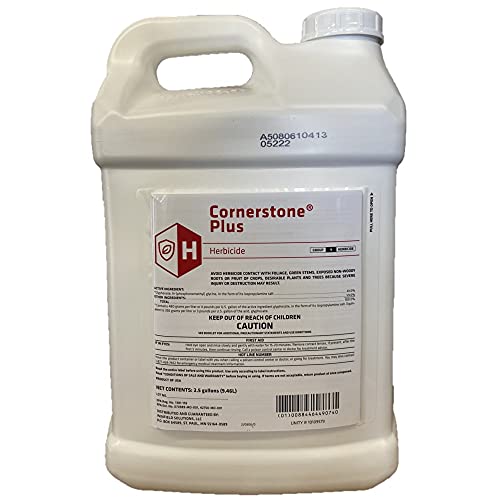
Cornerstone Plus Non-Selective Herbicide provides broad-spectrum weed control across a wide range of annual and perennial species with a single treatment. While not selective, it can be effective for sterilizing weed patches in areas where turf or ornamentals are not present or where a complete renovation is planned. The product is designed for garden beds, lawns, and landscaping where a one-time, thorough reduction of weed pressure is desired. Because of its non-selective nature, users should cover or relocate desirable plants and read the label for safety recommendations and replanting guidance.
Practical usage requires careful mapping of treated areas, appropriate protective equipment, and weather-conscious application to prevent drift. For homeowners seeking a definitive weed purge before replanting, Cornerstone Plus offers a straightforward option, albeit with higher risk to nearby vegetation if not applied with diligence.
Buying Guide: Key Purchase Considerations for Selective Weed Killers
- Weed spectrum and selectivity: If your goal is to protect grass while removing broadleaf weeds, prioritize products labeled as selective for turf. For stubborn or diverse weed populations, consider products that combine pre- and post-emergent action or have multiple active ingredients.
- Active ingredient compatibility: Common selective actives include 2,4-D and mesotrione. Understanding how these work helps you predict effectiveness on weeds like dandelion, clover, or oxalis, and how they interact with different grass species.
- Target area and usage context: Lawn-centric products should be safe for established turf and newly seeded plots when used as directed. For beds and borders, ensure the product won’t harm ornamentals or flowering plants nearby.
- Application timing and weather: Apply during weed-active periods and avoid extreme temperatures, drought, or wet conditions that reduce efficacy. Some products have window flexibility for pre- and post-emergent control—these can help when weeds appear at different stages.
- Tank-mix and compatibility: Some selective products can be used with spreader stickers or other compatible products to enhance coverage and adherence. Always verify compatibility on the label before mixing.
- Replanting and recovery: Look for labels that specify how soon you can replant or reseed after treatment. Some products allow replanting within the same weekend, while others require longer intervals.
- Safety and environmental impact: Consider pollinator safety, runoff potential, and proximity to water sources. Choose formulations with clear safety guidance and avoid applications near streams, ponds, or edible crops unless specified.
- Cost and coverage: Compare the recommended application rate, bag or bottle size, and the expected coverage per treatment. For large lawns or landscapes, higher-volume concentrates may be more economical in the long run.
Each of these products serves different lawn care strategies—from selective, repeatable weed control to broad-spectrum reductions for renovation. By matching weed pressure, grass type, and surrounding plantings with the product’s selectivity and timing, homeowners can achieve cleaner lawns and healthier beds without unnecessary collateral damage.