
Choosing a solar powered electric fence charger combines portability, reliability, and energy efficiency for farms, homesteads, gardens, and remote properties. This guide reviews five leading models, highlighting their range, durability, and ease of installation. Each option uses renewable solar energy to keep livestock in and predators out, with features designed for varying fence lengths and climates.
Summary at a glance: the following table outlines key specs and what each charger is best for, helping you compare range, durability, and mounting options at a glance.
| Product | Best For | Estimated Range | Power Source | |
|---|---|---|---|---|
| Zareba ESP5M-Z | Small to medium pastures, livestock containment | Up to 5 miles (no weeds) | Solar | Built-in mounting bracket for posts |
| ANDMON MINI400 | Longer runs in sunny conditions | Up to 20 miles | Solar | Day/Night mode, 0.3J output |
| VEVOR Solar Fence Charger | Durable, all-weather protection | Up to 8 kV output | Solar | IP65, 10W solar panel |
| ANDMON S600 | Large pastures and garden protection | Up to 35 miles | Solar / DC | 0.53J output, versatile mounting |
| Gallagher S6 | Backyard and homestead fencing | Smaller to medium setups | Solar with lithium battery | Grounding rod mount, compact design |
Zareba ESP5M-Z Solar Powered Fence Energizer

The Zareba ESP5M-Z energizes up to 5 miles of fencing in ideal conditions and up to 2.5 miles in light weeds. It supports versatile installation with a built-in mounting bracket suitable for T-posts, Y-posts, and round-wood posts. The unit is built and tested in the USA, with a one-year limited warranty including lightning damage, making it a dependable option for small to medium properties.
Andmon MINI400 20 Miles Solar Fence Charger

The Andmon MINI400 delivers up to 20 miles of energized fencing with a compact 18.5V solar panel and a 0.3 joule output. It includes a 12V/4.5Ah sealed lead-acid battery that can operate for up to 14 days without sun. The device supports day/night operation and is designed for reliability in extreme temperatures (-20°C to 80°C), making it suitable for larger spaces and variable climates.
VEVOR Solar Fence Charger, 0.3J 8 kV
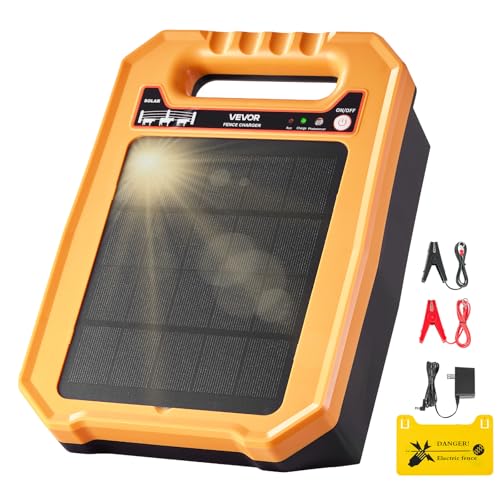
The VEVOR solar fence energizer produces up to 8 kV and 0.3J of shock energy, with a 1-second pulse during the day and 1.5 seconds at night. Its IP65 waterproof design supports reliable operation in diverse weather, and a 10W monocrystalline solar panel improves daily charging efficiency. It’s well suited for gardens, livestock, poultry, and security around the home or farm.
ANDMON S600 Solar Electric Fence Charger

The S600 provides up to 35 miles of fencing with 0.53 joules of output. It supports solar power and DC charging, aided by a built-in 12V/7.2Ah battery that can run for up to 14 days without sunlight. Installation is versatile across Y-posts, T-posts, and wooden posts, enabling mounting flexibility for larger properties and multiple fencing zones.
Gallagher S6 Solar Electric Fence Charger
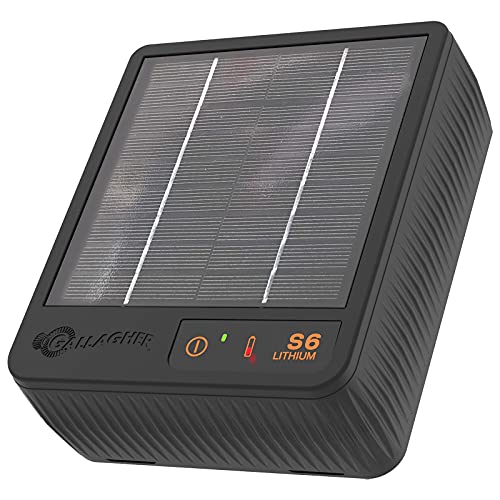
The Gallagher S6 is a compact solar-powered energizer with a lithium battery and grounding rod mounting. It’s designed for gardens, chicken coops, and small pens, offering reliable containment without the bulk of larger ranch units. Its grounding rod connection emphasizes straightforward installation and dependable performance in smaller setups where space is at a premium.
Buying Guide: Key Purchase Considerations
- Fence length and terrain: Lifetime performance depends on the actual effective range in your environment. Many chargers specify miles under ideal conditions and reduced range in weed-dense areas.
- Solar panel and battery: Look for high-efficiency solar panels (preferably mono-Si) and a battery type (sealed lead-acid or lithium) that matches your climate and maintenance preferences. Battery life determines how long the system runs without sun.
- Durability and weather resistance: IP ratings (such as IP65) indicate weatherproofing. UV resistance and temperature tolerance extend device longevity in extreme conditions.
- Mounting and installation: Consider whether the charger supports T-posts, Y-posts, wooden posts, or alternative mounting methods. Ensure grounding options align with your fence design.
- Output energy and pulse timing: A higher joule rating delivers stronger immediate shocks, while pulse timing (day vs. night) impacts energy efficiency and animal response. Choose based on the level of protection you need.
- Maintenance and warranty: US-based testing, warranties, and customer support can simplify long-term ownership, especially in areas prone to lightning or severe weather.
- Eco-friendliness and running costs: Solar-powered systems reduce electricity usage. Review panel size and battery capacity to estimate annual cost savings and environmental impact.
- Future-proofing: If you anticipate longer fencing or evolving needs, prioritize units with higher range, flexible mounting, and DC charging options for expanded operations.