
If you’re outfitting an RV for off-grid adventures, a portable suitcase solar panel kit is a reliable way to boost battery banks and run essential devices. These foldable panels are designed for ease of use, fast setup, and compact storage between trips. The top picks below are ideal for different RV lifestyles—from weekend campers to full-time travelers—each with clear advantages and practical limits.
Summary table of selected products:
- Renogy 200W 12V Portable Solar Panels Suitcase with 20A Charge Controller — Best for high daily output and beginners seeking all-in-one simplicity.
- Renogy 100W Portable Solar Panel — Best for compact spaces and lighter RV setups.
- Renogy 400W Portable Solar Panel — Best for heavy-duty RV power needs and reliability in harsh conditions.
- Renogy 300W Portable Solar Panel — Best for balanced power and portability with advanced efficiency.
- Renogy 200W Portable Solar Panel with USB Outputs — Best for charging a mix of USB devices alongside 12V systems.
Renogy 200W Foldable Suitcase with Controller

Best for: RV owners who want high daily energy and plug-and-play setup. This 200W kit includes a waterproof 20A PWM charge controller and alligator clip cables, enabling immediate use without sourcing extra components. The N-Type cells deliver up to 25% efficiency, and the adjustable kickstand helps optimize sun exposure for up to about 1000Wh per day with five hours of sun.
Why selected: It provides strong daily output while remaining easy to carry and set up. The integrated controller reduces complexity for beginners and helps protect battery life with four-stage charging.
Caution: Heavier than smaller panels (about 28.5 pounds); ensure your preferred storage space accommodates the folded case.
Renogy 100W Portable Solar Panel

Best for: RVs with smaller roofs or limited interior space where a lighter, more compact solution is preferred. The 100W kit uses a 20A PWM controller and folds into a suitcase form factor for easy transport and quick deployment at campsites.
Why selected: It balances portability and power, making it a great starter setup for those who don’t require maximum output but still want reliable off-grid capability.
Limitation: Lower daily energy yield compared to higher-wattage options; best when paired with modest energy needs or larger battery banks.
Renogy 400W Portable Solar Panel

Best for: RVs that require robust power for extended off-grid stays or higher-energy appliances. This 400W panel is designed for durability with ETFE coating and IP65/IP67-rated components, and it folds into a compact form with a sturdy kickstand for quick setup.
Why selected: Its higher output supports frequent blackouts or larger power stations, making it suitable for heavier energy需求. The panel’s durability and rapid deployment suit adventurous trips.
Limitation: Heavier and larger than smaller models; ensure adequate storage and safe handling during travel.
Renogy 300W Portable Solar Panel

Best for: RV travelers who want a strong power-to-weight ratio with mid-to-high output. The 300W panel uses N-Type cells with 25% efficiency, folds compactly and offers IP67 waterproofing and durable construction for varied climates.
Why selected: It delivers significant energy while remaining relatively portable, making it a flexible option for mid-sized RV rigs or campers who frequent diverse terrains.
Caution: Although lighter than some 400W models, it’s still a sizeable panel; plan alongside battery storage to maximize daily production.
Renogy 200W USB-C/USB-A Portable Panel
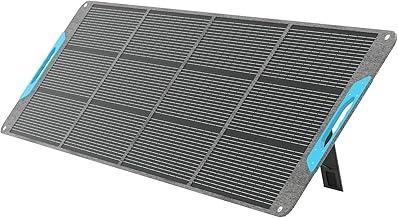
Best for: RVers who want to charge multiple devices directly from the panel in addition to feeding a 12V system. This 200W foldable panel includes USB-A and USB-C outputs, expanding off-grid charging options beyond traditional 12V batteries.
Why selected: The USB outputs add versatility for charging phones, tablets, and small electronics on-the-go, especially when a separate power station isn’t immediately available.
Limitation: USB power is supplementary; for heavy-duty appliances, rely on the power station or battery bank as the main source.
Buying Guide: Choosing the Right Suitcase Solar Panel for Your RV
How much power do you need?
Estimate daily energy use and select a panel that can produce at least 1.2–1.5 times that amount under typical sun. Larger RVs and frequent boondocking often benefit from 300–400W options, while small rigs or weekend trips can work with 100–200W kits.
Portability vs. output
Consider weight, folding size, and storage space. Higher-wattage panels deliver more power but are heavier and bulkier. If space is at a premium, a 100–200W kit with a robust fold-and-go design can be ideal.
Durability and weather resistance
Look for panels with ETFE or tempered glass, IP ratings, and sturdy kickstands. For RV use in varying climates, durability reduces maintenance and ensures reliable performance during trips.
System compatibility
Check compatibility with your battery bank (12V systems, LiFePO4, or lead-acid) and whether a built-in controller is included. Plug-and-play kits simplify setup for beginners.
Mounting and storage considerations
Foldable suitcase designs are easier to store and deploy. Ensure your RV has space for a folded panel and a clear path for unfolding and tilting toward the sun.
Direct charging vs. storage charging)
Panels with USB outputs offer direct device charging when a power station isn’t in use. Rely on a dedicated battery or power station for long-term storage and heavy usage.
FAQ
- What is a typical daily output for portable RV solar panels? Most 100–300W kits can deliver several hundred watt-hours per day under good sun, though actual output varies with weather and angle.
- Do I need a separate charge controller? Some kits include an integrated PWM controller; if not, you’ll need a compatible controller to protect batteries and optimize charging.
- Will solar panels work in cloudy conditions? Yes, but output will be reduced. Higher efficiency cells help maintain more power in low light.
- Are USB outputs common on RV solar panels? Some panels include USB ports for direct charging of devices, which adds convenience for on-the-go charging.
- Can I use portable panels with any RV battery type? Most 12V battery systems are compatible, but confirm compatibility with LiFePO4, Gel, AGM, or Flooded options in your kit documentation.
- Do these panels require tools to set up? Most modern foldable panels are tool-free or require only minor assembly for kickstands and connection to a power station.