
Finding the right sun canopy for the beach means prioritizing shade, wind resistance, and easy setup. The top five options below are selected for American beachgoers who want reliable UV protection, solid stability, and portability. Best for family trips, group outings, or solo beach days, these canopies cover a range of sizes and budgets. Read on to compare features, suited use cases, and practical considerations.
| Product | Size | Best For |
|---|---|---|
| Rhino Valley Beach Tent, 10×10 ft | 10×10 ft, 6.5 ft high | Families or groups needing spacious shade and wind stability |
| Gorich Beach Tent Sun Shelter (UPF 50+) | 86.6″L x 59″W x 48″H | Portability with ample shade for 3-4 people |
| MoKo Beach Cabana, 8’×8′ | 8’×8′ footprint | Compact family trips and moderate wind areas |
| besuhot Beach Tent Sun Shelter 10x10FT | 10×10 ft | Versatile shade with higher stabilizer bar for more space |
| Shibumi Shade (2.0 Version) | Lightweight, portable | Group outings up to 8 people or solo travelers seeking wind-powered shade |
Rhino Valley Beach Tent, 10×10 ft

The Rhino Valley tent is a 10×10 ft shade canopy designed for all-day beach use with UPF 50+ protection and stability features. It includes eight sandbags, four aluminum poles, and windproof ropes to improve performance in breezy conditions. The size accommodates several chairs and a family setup, making it a strong option for larger groups or families. Best for families or groups that value built-in ballast and robust poles for windier beaches. A limitation is the heavier, bulkier setup compared to smaller pop-up models.
Gorich Beach Tent Sun Shelter (UPF 50+)

The Gorich sun shelter offers 86.6 inches by 59 inches by 48 inches of space and UPF 50+ protection. It emphasizes a lightweight design with an 8.0 mm fiberglass frame for stability and a compact carry bag for easy transportation. This model is best for families and small groups who want substantial shade without a heavy carry. It’s less ideal for extremely windy conditions unless anchored well, due to its lighter frame.
MoKo Beach Cabana, 8’×8′

MoKo’s 8’×8′ beach canopy provides an expansive shade area with removable side walls for airflow. With UPF 50+ protection, a reinforced alloy steel frame, and heavy-duty anchoring options, it aims to balance wind resistance with portability. It suits families or groups that value strong construction and removable side shading for adjustable airflow. A potential limitation is its 8’×8′ footprint, which may feel tight for larger groups on crowded beaches.
besuhot Beach Tent Sun Shelter 10x10FT
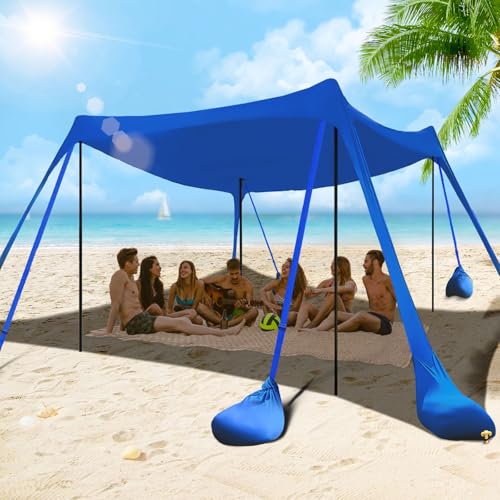
The besuhot canopy features a higher stabilizer bar at 7.7 feet, which creates more headroom and a larger interior activity space. It uses UPF 50+ Lycra fabric and pre-strung poles with a fixed-pin lock mechanism for quick setup and wind resistance. This model is best for beachgoers who want generous height and faster assembly, though it may require careful anchoring for very windy days. Note that some assembly steps remain more involved than pop-up designs.
Shibumi Shade (2.0 Version)

The Shibumi Shade 2.0 is a lightweight, wind-driven shade solution designed for groups up to eight. Weighing about four pounds, it emphasizes easy transport and quick setup—often appealing to solo travelers or small groups who need an efficient shade option without bulk. Best for minimalists or anyone prioritizing portability. The wind-powered design may be less effective in very calm conditions and requires some space to deploy properly.
Buying Guide: Key Purchase Considerations
- Shade area and capacity: Choose a canopy that fits the number of people and gear you typically bring to the beach. Larger tents offer more room but can be heavier to carry.
- Wind resistance: Look for models with stabilizing features such as sandbags, sturdy poles, wind ropes, and pre-strung assemblies to improve stability in breezy conditions.
- UV protection: Prioritize UPF 50+ fabrics to minimize skin exposure to the sun’s rays. Consider whether side walls are included for extra shade and privacy.
- Setup effort: Evaluate whether you prefer a quick pop-up design or a more involved but potentially more secure setup. Pre-attached poles and one-second assembly mechanisms can save time.
- Portability: If you plan to hike or backpack with the canopy, weight and packed size matter. Lightweight models may sacrifice some stability in strong winds.
- Ventilation: Side walls or mesh panels improve airflow and reduce heat buildup inside the canopy, producing a cooler experience on hot days.
- Storage and accessories: Side pockets, gear pouches, stakes, and included ground pegs add practical value for real-use scenarios.
FAQ
- What should I look for in a beach sun canopy for windy days?
Prioritize models with windproof designs, multiple stakes or sandbags, sturdy poles, and guy lines. A larger footprint can also improve stability by catching more wind load across the canopy.
- Is UPF 50+ fabric necessary for beach canopies?
Yes. UPF 50+ fabric provides strong UV protection, helping reduce skin exposure during long beach days.
- Are side walls worth it?
Side walls add shade and privacy and help block early-morning or late-afternoon sun angles. They also improve wind protection in some configurations.
- Which canopy is best for a family of four?
Canopies around 8’×8′ to 10’×10′ with added side walls and multiple anchoring options usually offer ample shade and space for a family of four.
- Can I use these canopies on rocky or grassy terrain?
Yes, but select products with stable ground stakes and anchors compatible with the terrain. Some models include heavy-duty ground pegs or sandbags for sand and rocky surfaces alike.
- How important is portability for a beach canopy?
Portability matters if you travel by foot or hiking routes. Lightweight, compact folding units are easier to carry, though they may trade off some stability.