
Choosing the right swimming pool heater depends on pool size, climate, and how you plan to use the water. This guide highlights five top options and compares their strengths, so you can pick a heater that delivers reliable warmth, energy efficiency, and long-term value for American backyards.
Summary of chosen products:
| Product | Brand | Type | Capacity / Range | Key Benefit |
|---|---|---|---|---|
| W3H250FDN Universal H-Series | Hayward | Natural Gas Pool & Spa Heater | 250,000 BTU | Premium heating with corrosion-resistant heat exchanger |
| Aquastrong Inverter Heat Pump | AQUASTRONG | Electric Heat Pump | 75,000 BTU; up to 21,000 gallons | Inverter efficiency and smart control |
| MICOE 35,000 BTU Inverter Heater | MICOE | Electric Heat Pump | 35,000 BTU | Smart control with app scheduling |
| Varpoolfaye 16,000 BTU Heat Pump | Varpoolfaye | Electric Heat Pump | 16,000 BTU | WiFi control and flexible heating/cooling |
| Doniks 72,000 BTU Pool Heater | Doniks | Electric Heat Pump | 72,000 BTU | Inverter technology with smart app control |
Hayward Universal H-Series 250,000 BTU Natural Gas Heater

The Hayward W3H250FDN Universal H-Series natural gas pool and spa heater delivers strong heating performance for in-ground pools and spas. Its cupro-nickel heat exchanger provides corrosion resistance in challenging water chemistries, helping extend equipment life. The model features an efficient hydraulic design that lowers circulation pump run time, yielding meaningful energy savings. This heater is suitable for steady, high-heat demands in larger residential or light commercial installations and pairs well with standard gas supply setups. Typical deployment favors durable materials and reliable on-demand heating for pools that see frequent use.
AQUASTRONG Inverter Pool Heat Pump

This inverter pool heater provides year-round comfort with heating and cooling modes. It supports up to 75,000 BTU and is capable of handling pools up to about 21,000 gallons. The built-in app and control panel enable remote temperature management, scheduling, and energy monitoring. Its DC inverter technology increases efficiency, offering notable energy savings compared with traditional electric heaters. The system is well-suited for larger residential pools in temperate to cool climates where extended seasons are desired without the need for gas combustion.
MICOE 35,000 BTU Inverter Pool Heater
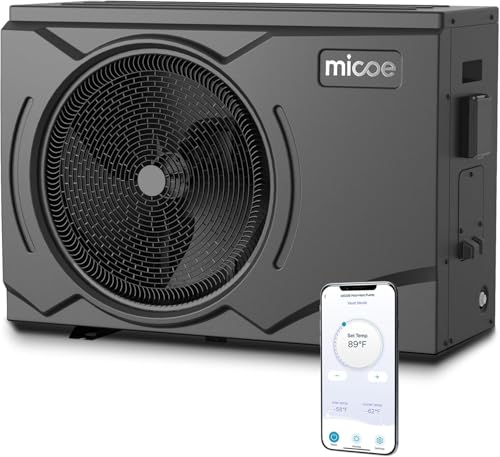
The MICOE 35,000 BTU inverter pool heater is sized for small to mid-size pools, handling 12,000 gallons efficiently. A titanium heat exchanger provides corrosion resistance in saltwater environments, helping extend component life. The unit supports extended seasons with heating up to 104°F and cooling down to 82°F, and includes app-based and control panel scheduling. Its auto-defrost feature helps maintain performance in cooler conditions, making it a practical pick for budget-conscious homeowners with 8–24-foot pools.
Varpoolfaye 16,000 BTU Heat Pump

The Varpoolfaye 16,000 BTU heat pump targets smaller above-ground pools (up to about 5,000 gallons). It offers WiFi control and a heating range from 59–104°F with cooling from 46–82°F, enabling multi-season use for compact setups. The unit emphasizes energy efficiency with a COP around 4.3, relying on ambient air to transfer heat to the water. This makes it a versatile option for smaller yards or pools where space and budget are considerations.
Doniks 72,000 BTU Pool Heater
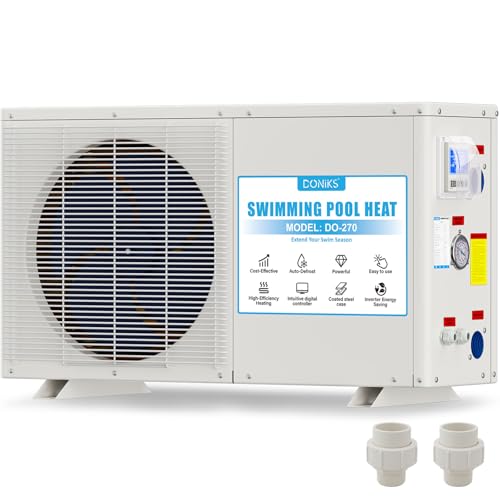
This 72,000 BTU pool heater suits mid-to-large in-ground and above-ground setups, offering a powerful, inverter-based heating system. It integrates smart control via an app, enabling temperature scheduling and energy monitoring from a mobile device. The inverter design maintains efficiency across a range of temperatures, reducing operating costs while maintaining comfortable water temps for pools of various sizes.
Buying Guide
- Pool size and type: Gas heaters deliver rapid heat for larger or heavily used pools, but electric heat pumps excel in moderate climates and offer high efficiency for smaller to mid-size pools. Match the heater capacity to your pool volume to avoid over- or under-heating.
- Climate and season: In cooler climates, heat pumps are advantageous due to efficiency gains when ambient temperatures are moderate. In areas with long, cold winters, a gas heater may be necessary for fastest warm-up periods.
- Efficiency and operating costs: Inverter DC technology generally yields substantial energy savings, especially when heating is continuous or frequent. Compare COP (coefficient of performance) values where available, and consider long-term electricity or gas costs.
- Water chemistry and materials: Look for corrosion-resistant heat exchangers (such as cupro-nickel or titanium) if your pool uses salt chlorination or has aggressive water chemistry to reduce premature wear.
- Control and automation: Apps and smart controls enable scheduling, remote temperature adjustments, and energy monitoring. Verify compatibility with your existing automation system and WiFi connectivity.
- Installation and maintenance: Gas heaters require proper venting and gas line sizing. Electric heat pumps need clear ventilation and access for service. Check warranty terms for heat exchangers and compressors, and plan for professional installation where required.
- Noise and footprint: Consider inverter units designed for quiet operation if the heater will be near outdoor living spaces. Compact models suit smaller yards without sacrificing performance.
- Warranty and support: A robust warranty and accessible customer support are valuable for long-term ownership. Review coverage for parts, labor, and any corrosion-related issues.
- Installation costs vs. operating costs: Initial installation costs vary by fuel type and complexity. Weigh these against expected annual operating costs based on local electricity and gas rates.