
Whether you’re protecting seedlings from frost or shielding established plants from sun, wind, and pests, the right tarp makes a big difference. This guide highlights five tarps and plant covers best suited for covering plants, with clear notes on who they’re ideal for and why. It’s designed for home gardeners, urban farmers, and anyone seeking simple, effective protection for their outdoor greens.
| Product | Coverage Type | Best For |
|---|---|---|
| Garutom Plant Covers | 1.1 oz frost cloth, breathable non-woven | Large garden rows and fruit trees |
| MAQIHAN Plant Cover | 1 oz non-woven frost protection cloth | Versatile freezing protection for various beds |
| Xstronq 6.5FT x 10FT | 6 mil clear greenhouse plastic sheeting | Extending growing season and seedling care |
| ANGAR 16 Mil Clear Greenhouse Tarp | 16 mil UV-resistant clear tarp with grommets | Greenhouses, chicken coops, and large covers |
| AlpineReach Plant Covers | 10 x 30 ft breathable frost cover | Winter protection and microclimate creation |
Garutom Plant Covers Frost Protection

The Garutom frost plant covers come in large rectangular sizes, including 10 ft x 33 ft, designed to shield vegetables, fruit trees, raised beds, and shrubs. Made from breathable, anti-UV 1.1 oz./sq. yd. polypropylene non-woven fabric, it transmits about 85% of light to support ongoing growth while trapping warmth. This make it suitable for extending the growing season in early spring and late fall, and it protects against frost, rain, snow, wind, and pests.
Who it’s best for: gardeners with sizeable row covers or orchard plots needing lightweight, durable protection without a heavy plastic barrier. Why selected: versatility in size and strong frost protection with good light transmission. Caution: larger sizes require careful anchoring to prevent wind displacement in strong gusts.
LUCKIPLUS Plant Freeze Protection Cover (2 Pack)
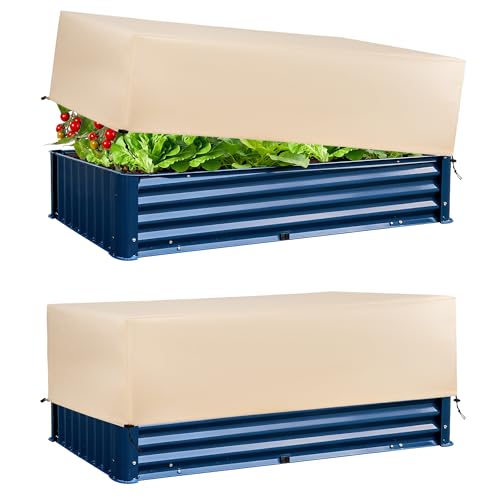
These 2-pack frost protection covers use a heavy-duty 3.54 oz/yd² non-woven fabric. They offer strong cold protection, moisture retention, and UV resistance, making them suitable for planter boxes and raised beds. An elastic drawstring with locking ports at all ends ensures a secure fit, even in windy conditions. The included size (about 43.3″ x 15.7″ x 17.7″) fits many standard planters and small garden beds.
Who it’s best for: homeowners with multiple planter boxes or modest beds who want quick, adjustable protection. Why selected: reliable elastic-fit design for secure coverage. Caution: measure planter boxes carefully to ensure a proper fit; the shape is best suited for rectangular planters rather than irregular beds.
TICONN Heavy Duty Tarp Cover

The TICONN tarp offers extra-thick 5.5 mil polyethylene with a double-sided design and reinforced corners. It provides waterproofing, UV resistance, and enhanced durability for outdoor use. While not a fabric frost blanket, this tarp is excellent for covering large areas such as garden paths, benches, or to protect multiple plant groups during heavy weather or while constructing temporary greenhouses.
Who it’s best for: gardeners needing a robust, multi-use tarp for broad coverage or for creating makeshift weather shields. Why selected: superior edge reinforcement and double-sided UV protection. Caution: plastic tarps can block airflow if used directly over live plants for extended periods; ensure appropriate ventilation for delicate seedlings.
AlpineReach Plant Covers Frost & Sun Protection

AlpineReach presents a thick 1.2 oz/yd² frost cover designed for all-season protection. It aims to balance insulation against frost with breathable permeability to allow light, air, and water to reach plants. This makes it suitable for delicate seedlings, young transplants, and established perennials that need protection without shading them excessively.
Who it’s best for: gardeners seeking reliable all-season protection with a breathable fabric that supports growth. Why selected: consistent insulation without overly reducing light. Caution: like all fabric covers, it’s most effective when used with hoops or frames to create a raised microclimate rather than draped loosely over tall plants.
Buying Guide: Key Considerations For Choosing Plant Tarps
- Climate needs: Choose fabric or tarp thickness based on expected lows, wind, and sun intensity. Frost blankets with breathability help seedlings while heavier tarps protect larger specimens.
- Coverage area: Measure beds, rows, and planters to pick a size that fits with minimal trimming. Elastic or adjustable fasteners reduce displacement in windy conditions.
- Light transmission: For ongoing growth, opt for covers that maintain adequate light (often around 70–85% transmission) so plants keep photosynthesizing.
- Durability and reuse: Reusable non-woven fabrics are lightweight yet durable; plastic tarps offer long-term protection but may restrict airflow if left in place too long.
- Ease of use: Consider drawstrings, buckles, grommets, or frames to secure covers without damaging plant stems or leaves.
- Multi-season versatility: Some covers work for frost protection, sun shielding, insect barriers, and snow protection, offering better long-term value.
FAQ
- What is the best tarp for frost protection? – Frost blankets made from breathable non-woven fabric are typically best for frost protection because they insulate while still letting light and air reach plants.
- How do I prevent covers from blowing away? – Use elastic drawstrings, buckles, or plant hoops to secure covers and anchor tarps with weights or pegs in windy areas.
- Do clear tarps help with heat retention? – Clear or translucent tarps can trap heat but may require careful ventilation to avoid overheating in bright sun.
- Can I cut large covers to fit irregular shapes? – Yes, many fabric covers are easily cut with scissors to fit irregular beds or oddly shaped planters.
- When should I remove covers? – Remove covers when temperatures consistently rise above freezing and when plants no longer require frost protection to prevent overheating or humidity buildup.
- Are these covers safe for seedlings? – Breathable frost covers are generally safe for seedlings, as they protect from cold while allowing required light and air.