
Buy a gauge you will actually read
The weather app says it rained, but the soil beneath your patio planter still looks dry. A rain gauge helps you understand what fell in your own yard, provided you place it sensibly and remember what that measurement can tell you.
For a simple manual reading, consider the AcuRite 00850A3. The La Crosse 705-109 adds a floating marker and removable collector, while the AcuRite 02446M sends rainfall information to an indoor display.
This shortlist concerns routine home-garden observations, not official weather reporting, laboratory accuracy, or flood-warning equipment. It uses manufacturer documentation and exact product listings rather than side-by-side field testing or a claimed personal ownership history.
A gauge measures collected rainfall at one location. It does not directly measure moisture at the roots, and none of the shortlisted products establishes how much water a particular plant needs today.
Best simple manual option: AcuRite 00850A3
The AcuRite 00850A3 is an acrylic gauge with a five-inch rain capacity and a shape intended to magnify its markings. It is the simplest choice here if you are comfortable going outside to read and empty a collector.
That routine can be an advantage when you want a visible reminder to inspect the garden after rain. You can note the total, empty the gauge, and look at which beds or containers actually received water.
Its stated five-inch capacity is the amount the gauge can hold, not a recommendation for garden watering. If the collector overflows, you have lost part of the event and should record the reading as incomplete rather than invent a precise total.
Choose a position where you can inspect the scale at a comfortable height and approach without stepping into the bed. A gauge you cannot read easily may become a decoration instead of the practical notebook companion you intended.
Do not equate magnified numerals with independently verified measurement accuracy. This guide has not calibrated the gauge, and readable markings cannot correct for water collected from a roof drip or blocked by a nearby tree.

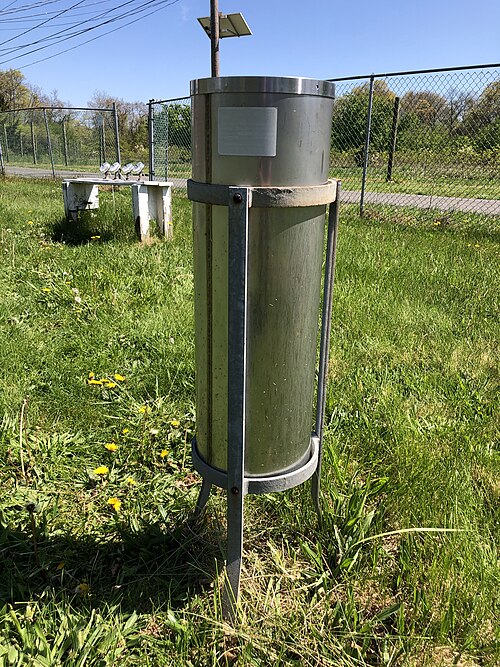
AcuRite 00850A3, 5-inch acrylic gauge · Product image from the linked Amazon listing.
Check Price on Amazon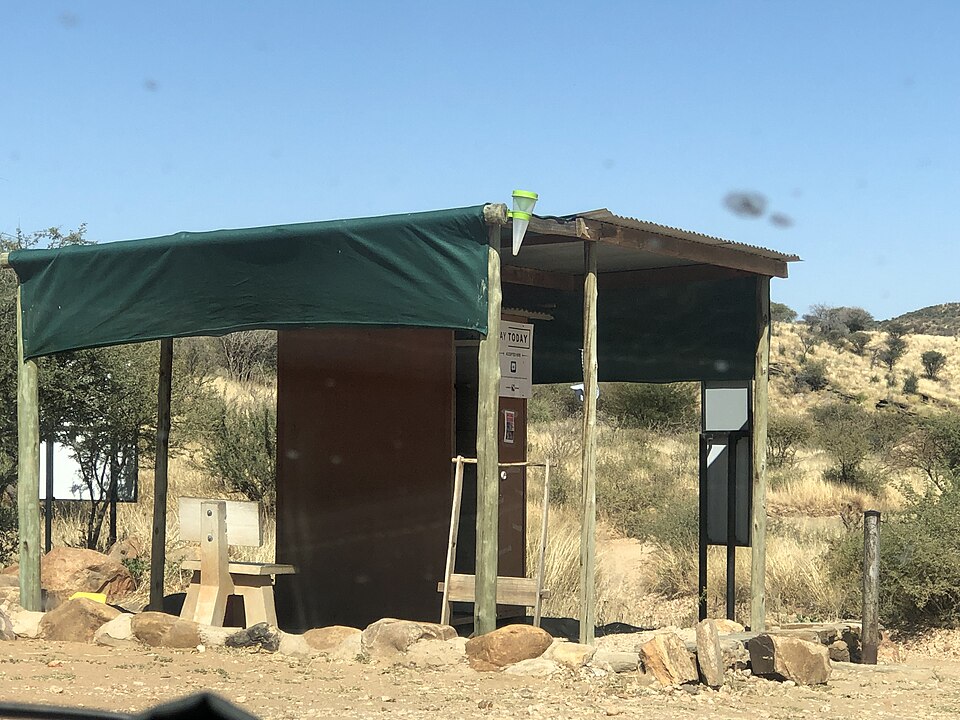

Best slide-off design: La Crosse 705-109
The Waterfall 705-109 is another manual gauge with a five-inch capacity. La Crosse specifies a floating rain marker and a collector that slides off its mounting bracket for emptying and cleaning.
That arrangement makes it worth considering when a fixed mounting location is convenient but you do not want to unfasten the entire support after each reading. Check the actual space behind and above the collector so you can remove it cleanly.
A fence or post can provide a practical mount, but its existence does not make the location representative. If a tall fence shelters the opening, or a nearby roof sheds water into it, choose another position even if installation takes longer.
The floating marker is a viewing aid, not a reason to read the gauge from so far away that you cannot judge the scale. Take a closer look when needed and check that debris is not interfering with the collector.
This is a manual garden instrument with no indoor console, phone app, or automatic logging established here. Choose it for its removable design and readable marker rather than expecting the features of a complete weather station.

La Crosse 705-109 Waterfall Rain Gauge · Product image from the linked Amazon listing.
Check Price on AmazonBest for an indoor display: AcuRite 02446M
The AcuRite 02446M combines a self-emptying outdoor rain collector with an indoor display. Its documentation describes rainfall history, time and date, and an audible alert for a rainfall total you select.
You might prefer this arrangement when going outside for every reading is inconvenient. The display can help you keep an eye on recent rain without leaving the kitchen, while the collector stays in a suitable outdoor position.
AcuRite lists a wireless range of up to 100 feet and says home construction materials affect that range. Treat that figure as a placement limit to check at your property, not a guarantee that every wall and corner will allow communication.
The manufacturer also says the collector cannot be used in below-freezing temperatures. If winter precipitation is part of your project, do not buy this model expecting its rain cup to measure snow or operate as an all-season heated gauge.
Self-emptying does not eliminate inspection. Leaves, dirt, insects, the mounting position, and batteries can still affect whether you receive useful information, so include a quick outdoor check in the routine.
The included display and collector are the package compared here; a phone connection is not established for this kit. Do not assume that another AcuRite accessory or replacement sensor gives the selected bundle extra connected features.

AcuRite 02446M wireless rain gauge · Product image from the linked Amazon listing.
Check Price on AmazonChoose the location before the model
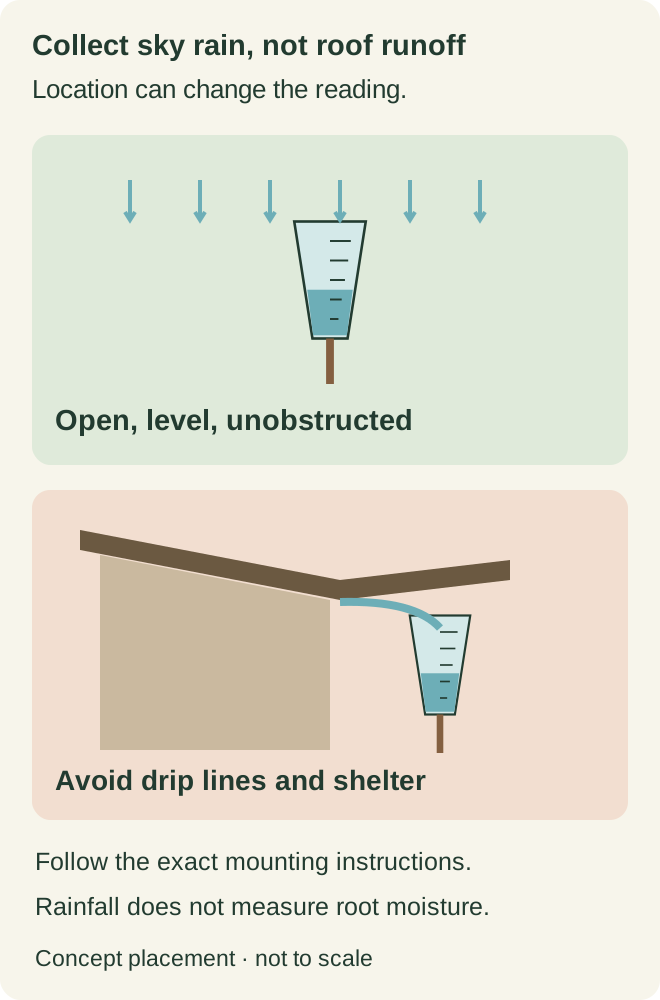
Walk outside after a modest shower and notice where water drips from eaves, leaves, pergolas, and umbrellas. Those are places to avoid when your goal is to collect rainfall arriving directly from the sky.
Pick a reachable area with as little nearby shelter or splash as practical, and follow the exact manufacturer's mounting instructions. Keep the opening level and unobstructed rather than setting a collector on a sloping decorative stake.
The diagram compares an open collection spot with a poor position under an eave. It illustrates the reason for avoiding added runoff and blocked rain, not an official meteorological siting standard or a drawn-to-scale installation plan.
A small yard may not contain a perfect observing location. Write down the limitations of the position you can use, especially if a fence, building, or seasonal tree canopy is likely to influence what reaches the collector.
If you move the gauge later, note the date instead of blending the readings without explanation. A changed position can change your observations, and your record is more useful when you can tell a real weather change from a new setup.
Make the reading useful for your plants
For a manual gauge, choose a consistent reading time and record when you emptied it. A two-day collection can be useful, but it should not be mistaken for a single overnight shower when you review your notes.
Look at the container or bed as well as the number in the gauge. A roof overhang can leave a pot dry while rain falls into a nearby open lawn, and drainage differences can make two planting areas behave differently.
Use rainfall as one observation alongside the plant, the root-zone conditions, and your existing watering routine. Avoid a universal subtraction rule that assumes every inch collected elsewhere becomes an inch of usable water in every pot.
After an unusually large reading, check for a plausible explanation before changing your whole watering plan. A displaced funnel, a tilted collector, or a newly overhanging branch can make the record less representative than it first appears.
When you clean the collector, use the manufacturer's method and keep the opening free of obstructions. Do not add homemade covers or mesh that changes collection without checking the instrument's directions.
When none of these gauges fits
Skip this shortlist if you need accepted equipment for an organized precipitation-observing network. Check that network's current instrument and siting requirements directly, because a garden product's title does not establish eligibility for a reporting program.
You should also choose another approach if your only possible location is beneath a roof or if you cannot maintain the instrument safely. A misleading local number is not automatically better than an honest record of what you cannot measure.
For automatic irrigation decisions, confirm the controller's own supported sensors and wiring requirements. These three products are not presented as compatible irrigation shutoff devices, and the 02446M's audible alert is not a life-safety flood warning.
Match the choice to your routine
Choose the 00850A3 for a straightforward manual notebook routine, the 705-109 for its slide-off collector and floating marker, or the 02446M when an indoor display justifies battery and connection checks. The last option also requires temperatures above freezing.
Before ordering, verify the model number and included parts on the selected listing. Keep your first goal modest: understand rainfall in one usable spot, then combine that observation with what your own garden is doing.
Sources & selection notes
Checked October 16, 2026. Specifications and exact selected listings inform this focused shortlist; no hands-on trials, star ratings, or live pricing claims.