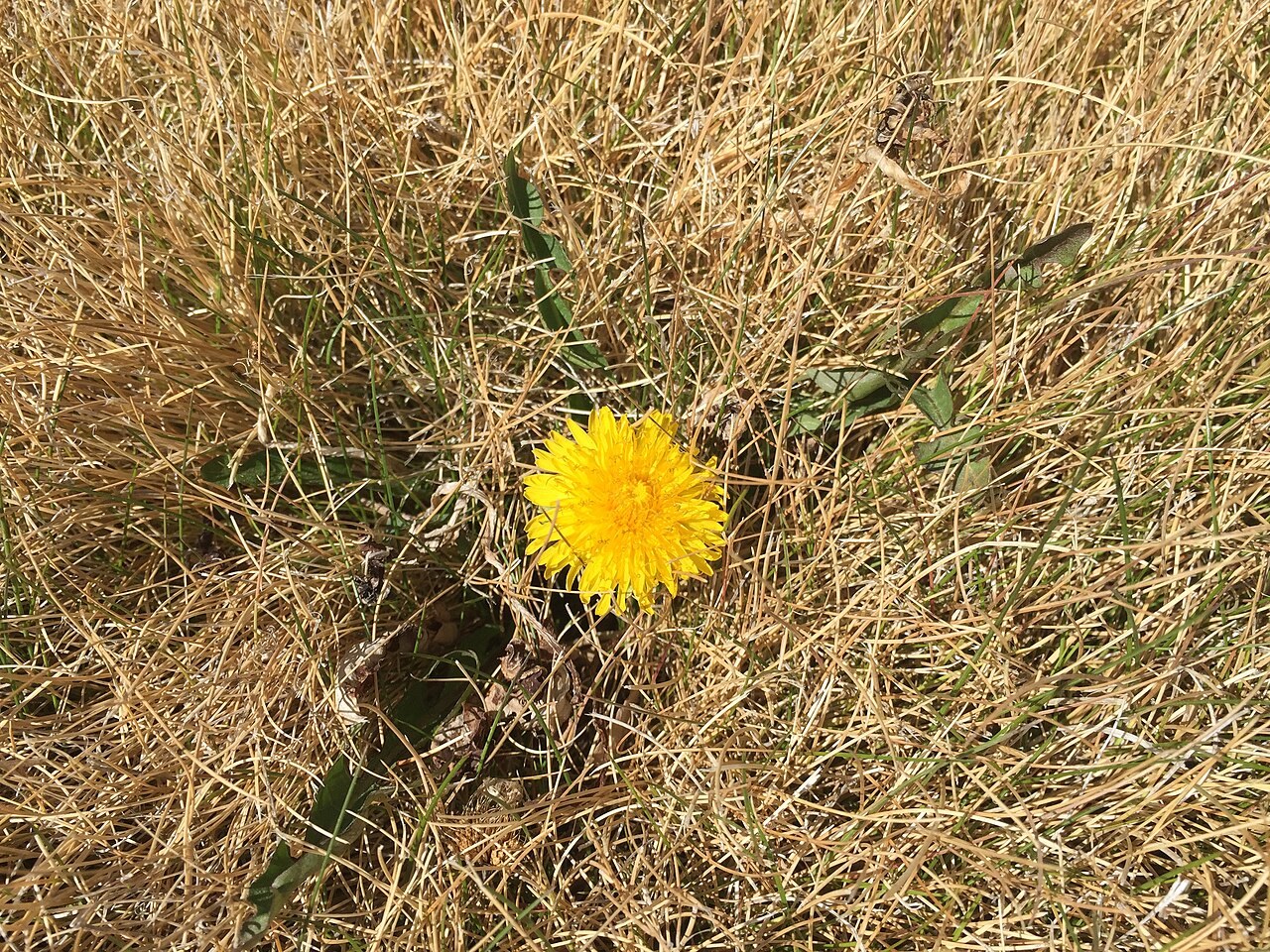
A stand-up weeder makes the most sense when you can point to individual unwanted plants scattered through a small lawn. It gives you a way to work from above, but it will not turn a lawn full of creeping weeds into an instant clean slate.
Choose the Fiskars four-claw puller if a visible placement window and ejector suit your routine, or Grampa's Metal Weeder if you prefer its simple steel construction. The Garden Weasel 95206-A is the alternative for a step-and-twist action with an ejector rather than the same pulling motion as the other tools.
Check the weed before choosing the tool
A dandelion with a distinct crown gives you a clear target for a claw-style head. A patch of spreading stems, an unknown plant beside an ornamental, or weeds threaded through desirable roots asks for a different decision before you put metal into the ground.
University of Minnesota Extension describes hand removal as a practical option for individual dandelions or small patches, while warning that remaining root pieces can regrow. That is why we do not repeat the permanent-removal promise you may see in product marketing.
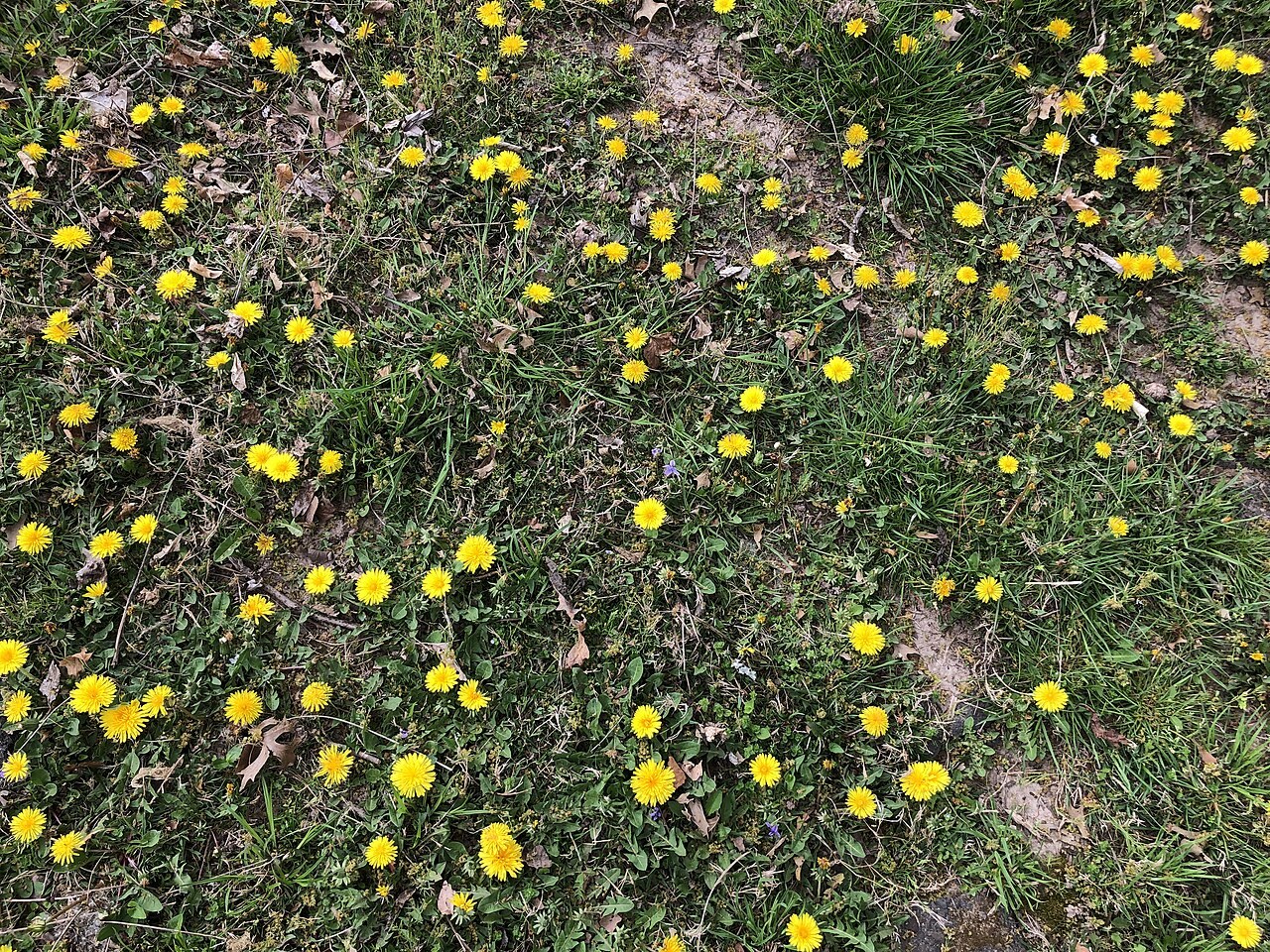
Look at your lawn's condition as well as the weed count: removing a few plants is a short task, but extracting dozens of soil plugs creates a second job. You will need to address the small holes and consider why bare spaces keep opening up.
If you are unsure what the plant is, identify it before buying a tool around it. You may decide to leave a harmless plant alone, change a maintenance habit, or use a more targeted removal method that disturbs less surrounding ground.
What this comparison covers
We compared the exact selected Amazon listings with manufacturer information about construction and operating design; we did not conduct a lawn trial. There are no measured extraction rates, claims of complete root removal, or promises that one tool will feel comfortable for every person.
The selected Grampa's is the three-piece metal-handled version, not the original bamboo model, and the selected Garden Weasel listing identifies model 95206-A. Matching those details matters because a review of a different handle or release mechanism cannot establish how this particular tool will work for you.
| Selected tool | Choose it for | Check before buying |
|---|---|---|
| Fiskars 4-claw | Seeing crown placement | Viewing window and ejector |
| Grampa’s Metal | Simple steel construction | 45-inch, 3-piece handle |
| Garden Weasel 95206-A | Step-and-twist action | Ejector; verify actual model |
Fiskars four-claw puller: for deliberate placement
The Fiskars stand-up weed puller uses four serrated stainless steel claws and has a viewing window in the foot platform. The window is the practical detail to consider if you want a clearer view of the crown while positioning the head.

Fiskars Deluxe 4-claw Stand-Up Weed Puller · Product photograph from the linked Amazon listing.
Check Price on AmazonIts offset handle and ejector give you a different handling arrangement from a plain long-handled fork. You might value clearing the head from above rather than repeatedly reaching down, but check the actual control position against your reach before treating that feature as an automatic advantage.
Fiskars describes an approximately thirty-nine-inch tool, so this is a fixed-length fit decision rather than an adjustable handle you can fine-tune. Consider where your hands would sit in a standing working position and whether you have space to move without leaning awkwardly.
The manufacturer directs you to place the head over the weed and use the foot platform as instructed. Follow the supplied operating sequence rather than copying the twisting action of another brand, since different heads release their grip in different ways.
Skip this or any claw puller when you cannot see where you are placing the head, when it catches a stone, or when resistance feels abnormal. A useful placement feature does not make hidden irrigation tubing or roots disappear.
Grampa's Metal Weeder: for a simple steel design
Grampa's Metal Weeder has a forty-five-inch steel handle assembled from three pieces, with a four-claw head and foam grips. It is the one to consider if you prefer that basic construction and its taller nominal length fits your working posture.


The distinction from the familiar bamboo-handled version matters before you order, especially if you have used the original and expect an identical tool. Steel construction and a jointed handle are specific buying choices, not proof that this version will outlast every alternative.
Check the assembly directions when the tool arrives and make sure the joints remain secure before use. If a connection loosens during the job, stop and correct that problem rather than compensating by gripping harder or adding more force at the head.
The manufacturer says the claws work best in softer soil, which is a useful limit to take seriously. If your lawn is baked hard or full of stones, a longer handle does not turn it into suitable ground for a clean, controlled extraction.
This is a reasonable option for occasional scattered weeds when you want a straightforward tool and can manage its reach. Do not choose it solely because a long handle sounds easier: storage height, lifting, balance, and the actual movement still need to fit you.
Garden Weasel 95206-A: for a twist-and-eject routine
The selected Garden Weasel listing identifies model 95206-A, with serrated steel tines, a step-and-twist action, and a release control. That gives you a different operating pattern to compare with a claw puller that uses a levering motion.

Garden Weasel 95206-A stand-up weed puller · Product photograph from the linked Amazon listing.
Check Price on AmazonYou might prefer the idea of turning the head around an isolated crown and ejecting the collected material into a bucket. The tradeoff is that turning a tool still asks for comfortable hand control and room to rotate without brushing a plant you want to keep.
Do not assume that every WeedPopper page describes this exact model: the manufacturer's current page names 95204, while our selected Amazon listing names 95206-A. We use the selected listing for this model's features and do not transfer the other model's dimensions or weight into this recommendation.
As with the other two tools, a release mechanism is a convenience rather than proof that every weed comes out with its full root. Look at what you removed and revisit the spot later if leaves return, instead of repeatedly enlarging the hole in one impatient session.
Choose this option if its documented action matches the movement you want to make and you can confirm the actual model at checkout. If you need a particular handle length or weight, resolve that specification before ordering rather than relying on a neighboring model's description.
Give the head a clear target
Start with one visible weed in a location away from sprinkler heads, shallow lines, edging, and the roots of plants you want to keep. Move leaves aside gently so you can see the crown, then follow that tool's instructions for positioning and operating the head.
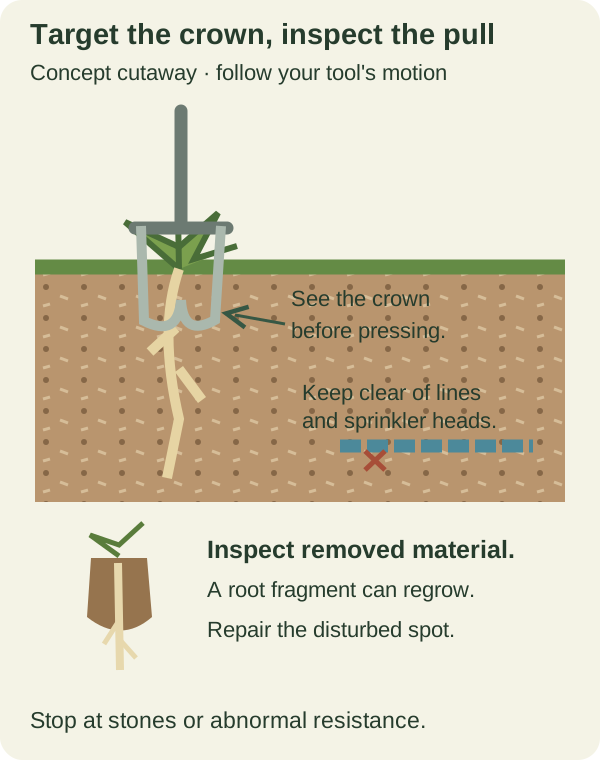
Aim for ground that allows controlled penetration rather than forcing the tool through a hard surface or working in mud. If soil conditions are unsuitable, wait for a better opportunity or choose a careful hand method that lets you see what you are doing.
After extraction, inspect the removed material without putting your fingers among sharp tines, and clear the head as the instructions describe. An ejector can help with that step, but it does not replace checking that the head is clear before the next placement.
Put removed weeds in a container as you work, especially if you are trying to avoid scattering mature seed heads. Keeping the work area tidy also makes it easier to see which small holes need attention before you move to another patch.
Finish the patch, then watch it
Address disturbed spots with a repair approach appropriate to your turf and local growing season, rather than leaving a row of open cavities. Your local extension service can help you choose a grass-specific repair method if the lawn is thinning more widely.
Return to the area later and check for regrowth, since a clean-looking surface on removal day does not prove the root is gone. If the same plants repeatedly return, reconsider identification and the broader lawn conditions before buying another tool with a stronger marketing claim.
For a handful of clearly identified lawn weeds, choose the mechanism and handle arrangement that fit your reach and patience. Buy none of these for unidentified growth, dense spreading patches, or ground you cannot penetrate safely; the right first step there is diagnosis rather than more leverage.
Sources and selection notes
Document-based shortlist, checked October 16, 2026. No hands-on performance or ownership claims; verify the exact model, instructions and current offer before buying.
- Fiskars manufacturer4-claw stand-up weed puller
- Grampa’s Metal Weeder manufacturer product page
- Garden Weasel WeedPopper manufacturerfamily page
- University of Minnesota Extension: dandelions
- Exact Amazon listing: Fiskars Deluxe 4-claw Stand-Up Weed Puller
- Exact Amazon listing: Grampa's Metal Weeder
- Exact Amazon listing: Garden Weasel 95206-A stand-up weed puller