
When selecting a high speed trolling motor, you want reliable thrust, smooth operation, and durable construction for longer trips on freshwater or saltwater. This guide highlights top options for anglers who need strong propulsion, quick response, and dependable steering. The featured models are best for heavier boats, larger lakes, or demanding conditions, with notes on who should choose each and why. Below is a quick comparison table of five strong choices to help you decide at a glance.
| Product | Thrust | Shaft | Best For | Notes |
|---|---|---|---|---|
| Endura C2 Transom-Mount 50 Lb | 50 lb | 36 in | Medium to large freshwater boats | Solid all-around performance with reliable features |
| Newport NV-Series 62lb | 62 lb | 36 in | Larger boats in salt/freshwater | High thrust for tough conditions |
| Newport NV-Series 55lb | 55 lb | 30 in | Medium boats, versatile use | Efficient and compact with solid control |
| Minn Kota Terrova Bow-Mow GPS 55 Lb | 55 lb | 54 in | Tech-enabled boats needing precise positioning | |
| 68LB BODIOO Thrust | 68 lb | 30 in | Large vessels and variable depths | High thrust and robust build |
Minn Kota Endura C2 Transom-Mount Electric Trolling Motor
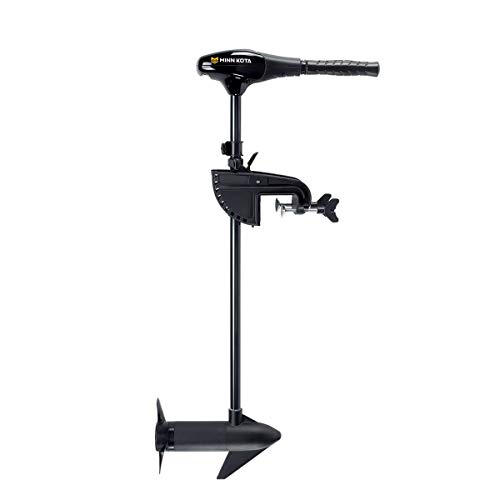
Thrust: 50 lb; Shaft: 36 in; Freshwater use. Features include a 6-inch telescoping tiller for comfortable control, push-to-test battery meter, and a 10-position lever lock bracket for quick angle adjustment. The reinforced composite body resists flexing and UV damage, and the Power Prop for heavy vegetation helps push through thick cover. Best for anglers with mid-sized freshwater boats who need reliable, all-day performance and straightforward setup.
Who it’s best for: Anglers seeking a dependable, straightforward trolling motor for freshwater lakes and rivers, with solid thrust and durable construction. Why selected: It balances power, durability, and ease of use without overcomplicating features.
Caution: The motor is primarily designed for freshwater use and may require additional corrosion protection for extended saltwater exposure.
Newport NV-Series 62lb Thrust Trolling Motor

Thrust: 62 lb; Shaft: 36 in. Features include multiple speed settings, strong 3-blade prop, and corrosion-resistant construction suitable for saltwater and freshwater use. The motor offers a 5-forward/3-reverse configuration and is designed to provide reliable propulsion for larger boats under challenging conditions. Best for: Bigger boats needing robust thrust and dependable saltwater durability. Why selected: High thrust paired with solid durability for frequent or demanding outings.
Caution: Top speed and performance can vary with boat weight, water conditions, and battery setup.
Newport NV-Series 55lb Thrust Trolling Motor
Thrust: 55 lb; Shaft: 30 in; 8 speeds (5 forward, 3 reverse). This model balances power with a compact shaft length, making it suitable for mid-sized boats and kayaks with a need for efficient cruising and precise control. Best for: Boats where space is at a premium but strong thrust is still required. Why selected: Efficient power delivery and a practical shaft length for versatile setups.
Caution: Shorter shaft length may necessitate careful depth placement in deep water or windy days.
Minn Kota Terrova Bow-Mount Electric Trolling Motor

Thrust: 55 lb; Shaft: 54 in. Notable for GPS-based technology, Spot-Lock, and a wireless remote with an LCD screen for automatic positioning. Provides precise position holding and advanced navigation modes (drift, follow, dodge). Best for: Boaters who want hands-free control and advanced positioning in freshwater. Why selected: Robust GPS features and long shaft ideal for larger or deeper water setups. Caution: Higher complexity may require a learning curve for new users.
68LB Thrust Trolling Motor by BODIOO

Thrust: 68 lb; Shaft: 30 in. Features include copper core wiring, LED voltage display, and 5 forward/3 reverse speeds with a 6-inch adjustable handle. It is designed to operate with low noise around 50 dB and to reduce debris accumulation with a debris-resistant 3-blade prop. Best for: Larger boats and shallow-water anglers who need strong power and reliable visibility of battery status. Why selected: High thrust and deburred prop for robust performance in varying conditions. Limitation: Debris resistance may still require periodic prop cleaning in heavy vegetation.
Buying Guide: High-Performance Trolling Motors
What type of boat and environment do you fish in? Choose a motor with thrust that matches boat size and typical load. For saltwater, look for corrosion-resistant builds and non-magnetic hardware. For kayaks or small boats, consider shorter shafts and lighter weight while preserving efficiency.
How important are GPS features and remote control? If you need precise positioning, models with Spot-Lock or wireless remotes offer hands-free control and path recording. If you prefer manual control, a tilting handle with a long shaft may be sufficient.
What about battery life and efficiency? Motors with efficient two- or three-blade propellers and multiple forward/reverse speeds help maximize runtime. Check for battery indicators, and consider higher thrust if you run all day on challenging currents.
Durability considerations: Look for reinforced composites, UV resistance, and corrosion-proof hardware for longevity in marine environments. A motor with a robust build reduces maintenance needs over time.
Frequently Asked Questions
- What is a high-speed trolling motor? A trolling motor with higher thrust (typically 50 lb and above) designed to move larger boats or handle windy, choppy conditions more effectively.
- Is GPS essential for trolling motors? Not necessary for all users, but GPS-enabled models offer precise position holding, automatic paths, and hands-free control that can enhance efficiency.
- What shaft length should I choose? Longer shafts (e.g., 54 inches) are better for deeper water and deeper mounting on larger boats; shorter shafts are easier to handle on small craft.
- Can trolling motors be used in saltwater? Yes, but choose models with corrosion-resistant materials and appropriate maintenance practices to prevent damage.
- How do I maintain a high thrust motor? Regularly inspect propellers, brackets, and electrical connections; ensure the battery and wiring are in good condition; rinse with fresh water after saltwater use if applicable.